
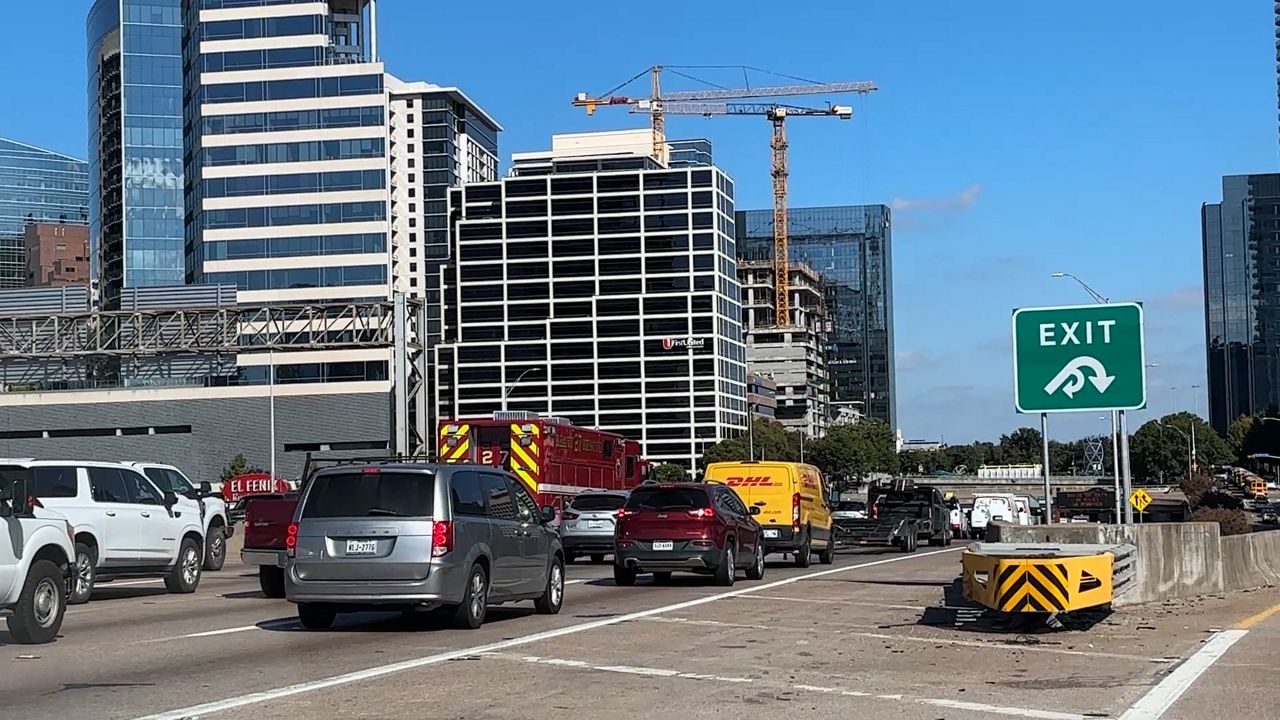
TEXAS — Texas A&M researchers say commute times are increasing up to pre-pandemic levels in Texas. They shared what’s driving up the traffic congestion and what improvements they say you can expect up the road.
The average Houston and Dallas commuters spend the equivalent of more than eight days of vacation time per year just sitting in traffic, based on an Urban Mobility Report released by Texas A&M Transportation Institute (TTI).
That news came as no surprise for Garland resident Christina Winston, who commutes to Dallas for work during the week.
“It takes me an hour to get to work. It’s supposed to be 27 minutes,” she said.
TTI says population growth is driving up traffic congestion and impacting the largest cities in the state, including Dallas.
“We have been estimating and now measuring mobility levels in urban regions in the U.S. since the late 80s,” said David Schrank, a senior research scientist at TTI. “Congestion is climbing. Most regions, we’re nearing where we were pre-pandemic.”
This year’s latest report shows Americans lost an average of 63 hours sitting in traffic in 2024, which is the highest level ever measured.
“One of our key measures we use is the hours of delay per commuter,” Schrank said.
The report also reveals Dallas, Austin and Houston rank in the top 30 for U.S. cities with the worst commute times:
The Urban Mobility Report ranks Los Angeles as first, with 137 hours of delay per commuter each year, above San Francisco and New York City.
Houston is the 15th most congested city, with 77 hours a year wasted in traffic.
Dallas ranks 23rd, having 69 annual hours of delay.
Austin ranks 30th with 64 hours sitting in traffic.
San Antonio ranks at 62 with 48 hours of wasted traffic time.
“Our message really hasn’t changed. ‘What do you do about this? Everything you can,” said Schrank. “You need better management of the roads and better operations…public transportation where it makes sense. Anything and everything is the solution.”
Those solutions will all come with a growing population and Texas-sized construction projects.
“When these projects continue to wrap up, they will continue to make an improvement in the situation in each of these regions. It’s just some patience is needed to get to that point,” said Schrank.