
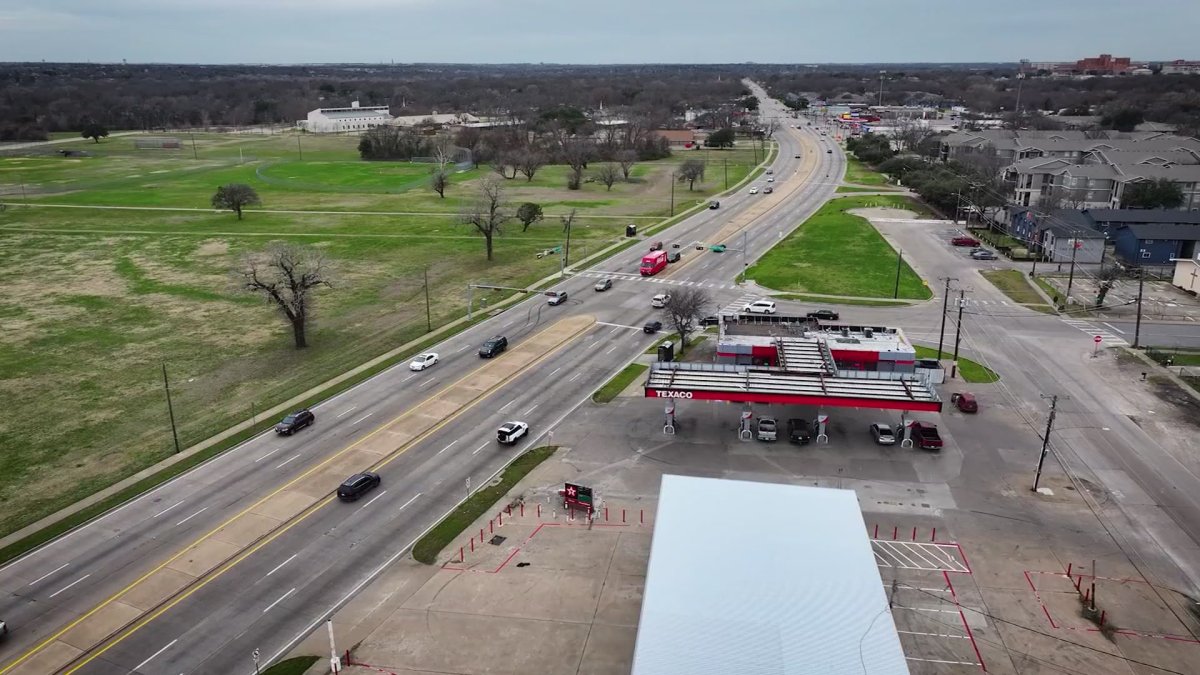
A working group commissioned to study efforts to design safer streets in North Texas found the city of Dallas lacks consistency in its roadway design policies and sometimes fails to follow its own safety guidelines.
On Monday, the Street Design Manual Work Group, appointed by Dallas City Council members, presented 19 recommendations to the council’s transportation and infrastructure committee after issuing a report critical of the city’s current efforts. Among the group’s suggestions: better enforcement of existing design policies and even purchasing smaller fire trucks to allow for narrower lanes, which some traffic safety experts say can help reduce vehicle speeds.
For more than two years, the NBC 5 Investigates series ‘Driven to Death‘ has shown how street design plays a major role in road safety and how Dallas has one of the highest traffic fatality rates of any major U.S. city.
The report presented Monday again emphasized that Dallas has paid a substantially higher price in roadway deaths compared to other large Texas cities.
“On a per capita basis, Dallas residents were killed or seriously injured at a 57% higher rate than the weighted average for Austin, El Paso, Fort Worth, Houston and San Antonio,” the report concluded, citing 2023 traffic data.
Working group members said there is a need for stricter adherence to road design best practices. The group wrote, “Policies governing City streets are fragmented across multiple sources,” and added that “Critical components of safer street design, such as speed limits/design speeds, lane widths and curb radii, are frequently overlooked despite being spelled out in City policies.”
Melissa Kingston, chair of the work group and a member of the Dallas Plan Commission, pointed to one example of inconsistency. She said design standards often call for intersections to include two pedestrian ramps—one for each crosswalk—but in some cases, only one ramp is built, guiding pedestrians into the middle of the intersection.
“We saw several instances where the plans called for two ramps, but the contractor saved a little money by putting one in, and there’s no accountability. So some of these issues are interrelated,” Kingston said.
The group acknowledged improvement since the city merged its Public Works and Transportation departments, but said more work is needed to ensure safety.
The 19 recommendations include updating the street design manual, increasing staff training, and promoting a citywide culture of safety.
The report also notes that streets are often built wider than necessary to accommodate large fire trucks. Traffic safety experts argue that wider streets encourage higher, more dangerous driving speeds.
Kingston said the group has engaged with Dallas Fire-Rescue about downsizing certain fire vehicles to allow for narrower roadways. She said the department appears open to the idea.
Earlier this year, the city approved a plan to add new safety measures to Loop 12, the deadliest street in Dallas.
The changes came after NBC 5 Investigates highlighted the dangers of Loop 12, documenting how pedestrians often cross the six-lane road outside designated crosswalks, risking collisions in areas with few safe crossings.
On Tuesday night, State Sen. Royce West is scheduled to host a Loop 12 town hall meeting with city leaders and the Texas Department of Transportation to share updates on planned improvements. The meeting is open to the public and begins at 6:30 p.m. at For Oak Cliff, located at 907 E. Ledbetter Drive.
The city has already reduced speed limits on portions of Loop 12. TXDOT has committed millions of dollars to safety enhancements, including new traffic signals and crosswalks.