

EL PASO, Texas (KTSM) – El Paso’s housing needs are different from those in other major Texas cities, a consultant told El Paso City Council during an “Envision El Paso” comprehensive update during a work session meeting Monday morning, Nov. 17.
“El Paso is a unique place. It’s not quite the same as other big cities in Texas. It has different dynamics to it, different economies, different issues,” Matt Prosser with Economic & Planning Systems Inc. said. “And so we wanted to account and look at some of those.”
One of the most striking findings from the analysis, Prosser said, is the prevalence of multigenerational living. According to the assessment, nearly 60% of adults ages 18 to 34 in El Paso live with parents or other relatives – a rate Prosser pointed out is far higher than statewide or national averages.
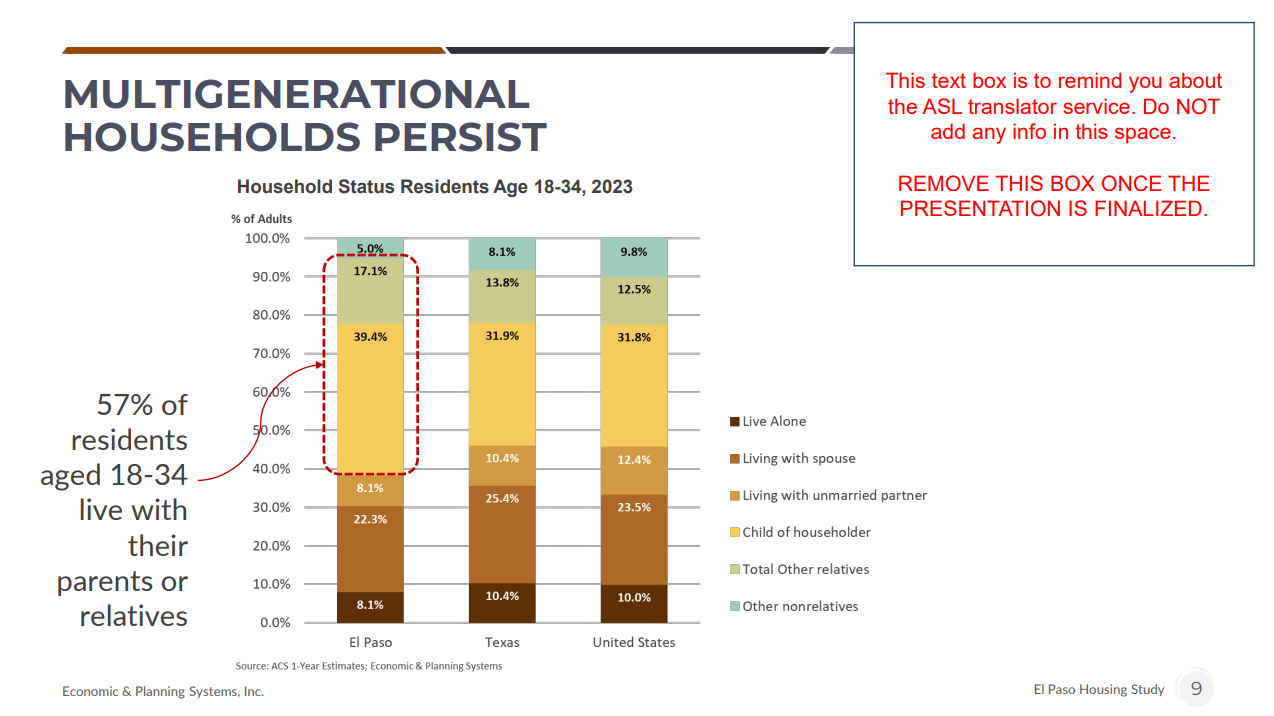
“That’s over 15 to 20 percent higher than you see in Texas or in the U.S.,” Prosser told council members. “So a very strong cultural practice living with family, especially when you’re younger and becoming established. But it also may indicate, perhaps, a lack of options and affordability for some of these folks.”
Prosser said this pattern affects what types of homes the City should prioritize, noting that conventional suburban single-family development does not meet the needs of many young adults, extended families, or lower-income residents.
Prosser also warned that the population for the City of El Paso is “stagnant” and that the City is losing housing production to the County.
The El Paso Housing study delivered to councilmembers outlined several trends that Prosser said should guide the City’s policy decisions in the years ahead.
Envision El Paso Housing Needs Assessment
The study suggested the City must prepare for the aging population, shrinking school enrollment, and a growing number of workers living outside the city.
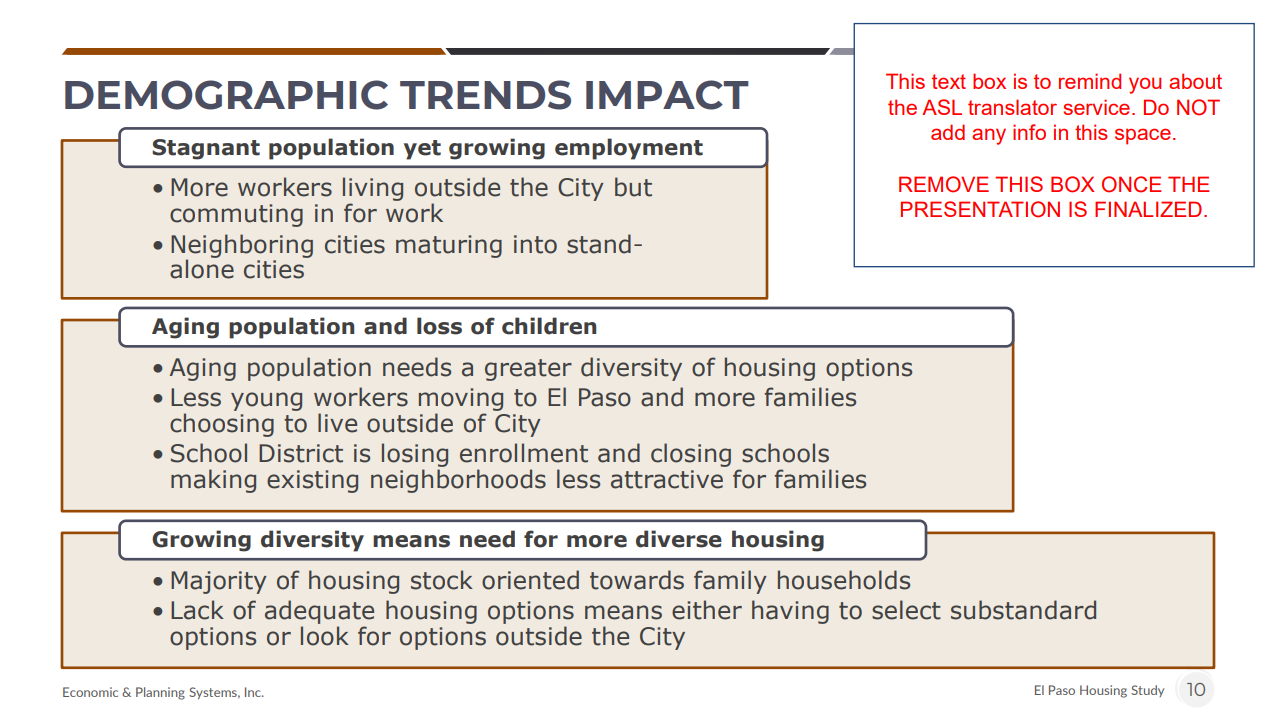
“More folks that are working in our community are commuting from outside of our community for their job,” Prosser said. “That has implications on your transportation systems, and it also has implications on the revenue you generate to provide services.”
El Paso’s aging population should also be taken into account. Prosser said the City’s traditional stock of single-family homes is not well-suited to meet that demand.
“Older folks have more diverse housing needs, so there’s a greater diversity in household sizes and product types,” he told council members.
Meanwhile, as more workers choose to live elsewhere, the City faces a tightening labor pool and fewer young families, an issue councilmembers are aware of that’s showing up in schools.
To move the housing strategy forward, Council voted to create a Housing Strategy Implementation CFT, a multidisciplinary team tasked with crafting policy recommendations to expand housing options citywide.
The group aims at looking at potential zoning and development code updates, identify incentives to spur new construction, strengthen programs that support preservation and rehabilitation, and streamline processes that impact builders and homebuyers.
According to a news release sent by the City, the team is set to meet monthly through the adoption of Envision El Paso, the City’s Comprehensive Plan update.
“We cannot afford to be passive when it comes to housing,” City Manager Dionne Mack said. “El Paso families deserve access to safe and attainable homes in every part of our city. This strategy gives us the structure, urgency and accountability needed to remove barriers, support responsible growth, and make real progress for the community.”
City officials stated the next steps include refining policy recommendations for Council review, continuing engagement with community and industry partners, and developing a public Housing Dashboard that will allow residents to monitor housing conditions and the city’s progress toward its goals.