
The El Paso City Council on Monday was to hear a proposal from the city’s Capital Improvement Department to implement a monthly fee for residents and businesses citywide to create a dedicated fund for street repairs – a basic service city leaders for decades have struggled to adequately fund.
But the so-called transportation user fee was deleted from the agenda in a 5-3 vote without discussion or a presentation from city staffers who put the policy proposal together. The proposal wasn’t up for a vote, but the discussion was meant to be the first in a series of meetings and public presentations before a vote on whether to implement it took place in March.
The fee was pitched by city staffers as a way to create a dedicated revenue source specifically for road maintenance and repair, which City Manager Dionne Mack has consistently said is underfunded by tens of millions of dollars annually. The proposal included three fee scenarios: monthly fees on homeowners of $4.40, $7 or $11.37.
Businesses in the city would have also paid the user fees, which were larger than the household fee and depended on the size of the business.
By deleting the item from the agenda, city leaders or council members can place the proposal on a future agenda for consideration – though it was unclear Monday whether that might happen.
District 7 city Rep. Lily Limón led the push to kill the proposed fee discussion. City representatives Chris Canales, Josh Acevedo and Deanna Maldonado-Rocha voted against deleting the item.
 Lily Limon, candidate for District 7 city representative.
Limón didn’t immediately respond to a request for comment. Canales called to have staff present the user fee information publicly, but didn’t garner enough support.
The idea behind the transportation user fee was to create a pot of cash to repair roads, rather than issue debt to fund road maintenance.
The city in recent years has largely funded street repairs with certificates of obligation – debt that doesn’t require voter approval – and general obligation bonds approved by voters. In 2022, voters approved a bond issue which allocated $237 million for street repaving and reconstruction, lighting and other amenities.
The city allocates about $10 million per year from its operations budget funded primarily through property tax dollars, including $7 million for residential streets and $3 million for collector and arterial streets.
Robert Cortinas, the city’s chief financial officer, said during a press conference last week that funding street maintenance with debt is unsustainable because of the interest cost and fees associated with issuing debt in the form of bonds for ongoing street repairs.
“If the city were to go out and issue $100 million of bonds, issue debt, that’s about a 25-year payback,” Cortinas said. “You’re talking about that $100 million costing the city about $166 million. So, you’re talking about $66 million just in interest costs in the 25-year time period.”
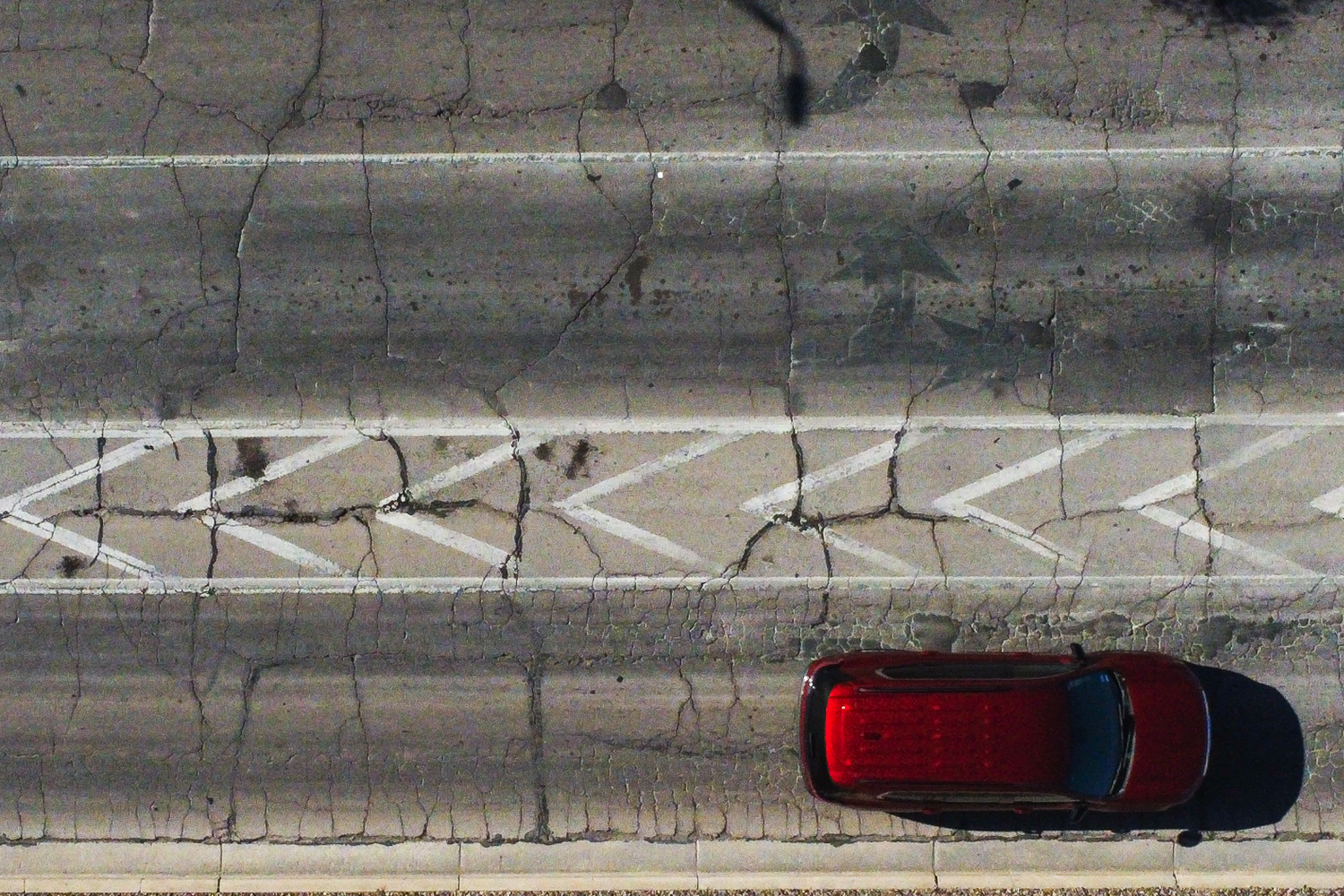
The city maintains over 6,100 streets that span more than 2,400 miles. A city analysis found that 50% of the city’s streets are classified as fair to very poor condition. And 52 miles of city streets need to be entirely reconstructed – meaning they’re too damaged to only be resurfaced.
Cortinas said resurfacing a mile of road costs about $1.5 million, while reconstruction costs about $14 million per mile of road. He framed the user fee as a long-term cost-saver because it would have given the city enough money to resurface roads consistently rather than deferring maintenance until roads deteriorate and have to be reconstructed.
The city’s chief engineer said keeping the city’s street pavement in good condition would require resurfacing around 4% of the city’s streets every year at a cost of about $75 million. The proposed fees would have generated between $29 million to $75 million in revenue each year.
“The city currently has about $1.3 billion of debt outstanding that we need to pay off in principal, so we don’t think that that’s a sustainable source to be able to continue to issue debt for the maintenance piece,” Cortinas said. “If we don’t do something soon, eventually we’re going to run into a situation where streets will not be able to resurfaced.”
City officials said the fee could have been added onto El Paso Water bills, which already contain additional fees including for city trash bins and garbage service.
On Monday, before deleting the user fee agenda item, the council went into executive session to discuss, among other things, a lawsuit filed against the city by former state Rep. Joe Pickett in March 2021 that argued fees the city tacks onto water bills in El Paso are unlawful.
The $6 environmental services franchise fee charged on garbage collection bills was ruled unconstitutional by District Court Judge Patrick Garcia in March 2024. The city is appealing the ruling, but Pickett insists the new fee proposal that city council killed could have resulted in the same situation where not all of the money would have gone toward its intended purpose: street repairs.
“The city created an ordinance to collect this fee, which generates almost $14 million a year, and the ordinance said the revenue is for ‘wear and tear on city streets.’ We proved that the city indeed does not spend all that money on the streets,” Pickett said in an opinion column published by El Paso Matters Monday.
In a Nov. 15 opinion piece published by El Paso Matters, Canales argued in favor of the user fee. He said it could have saved “taxpayers millions in the long run and finally deliver on past promises to improve the condition of our streets.”
During the press conference last week, Cortinas acknowledged the sentiment that street maintenance should be funded by existing property tax revenue – rather than by a novel fee imposed on property owners.
“I think everybody in the community knows the condition of the streets is not at the level that it needs to be at,” Cortinas said.
“You hear people making comments about, “Well, I’m already paying for all of this,’” he said. “Property taxes right now, as I mentioned, right now, we only have $10 million in the annual budget to fund street maintenance. Unfortunately, right now, no, we do not have the adequate number of dollars in the annual budget to be able to fund the street maintenance at the level that we need to.”
Related
LISTEN: EL PASO MATTERS PODCAST