
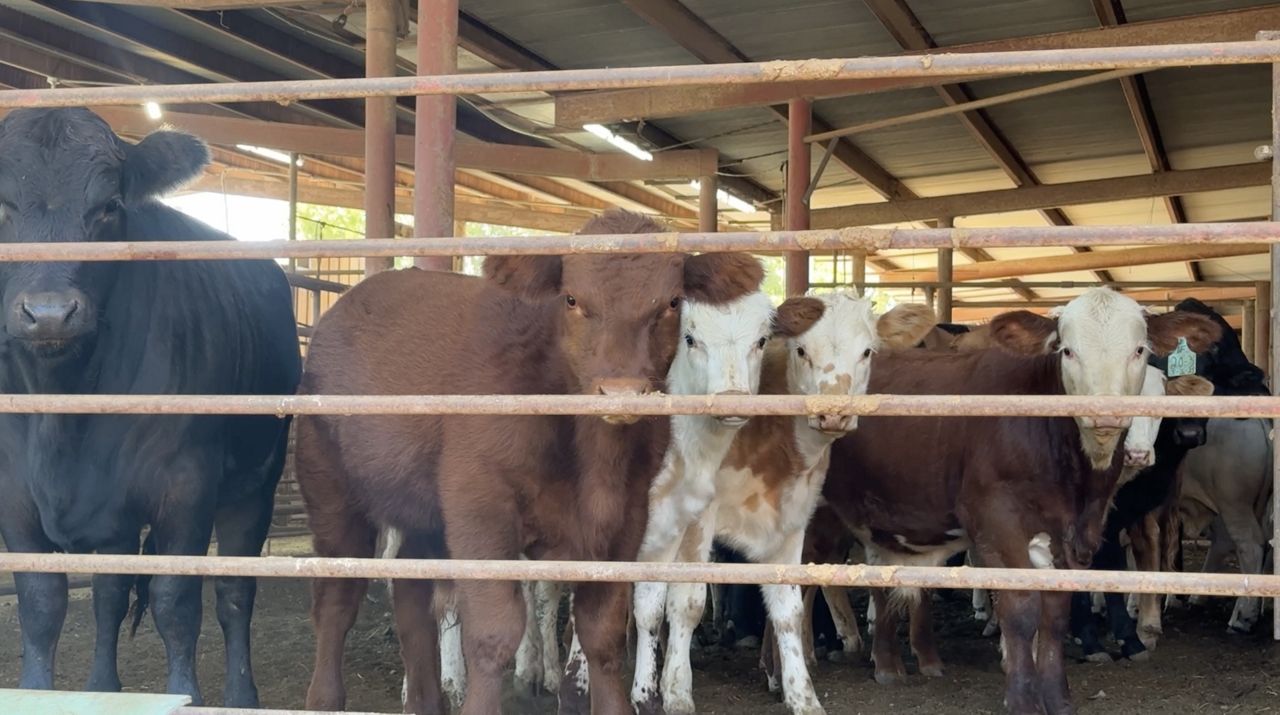
TEXAS — Across the country, the ranching industry has struggled to adapt to lingering drought and inflation, resulting in the lowest cattle supply since 1961 and causing beef prices to soar.
That’s the reason behind the U.S. Department of Agriculture’s (USDA) announcement of a plan to revitalize the industry and hopefully lower prices for consumers.
One problem the plan addresses is the shortage of grass for cattle to eat because of the longstanding drought. Seguin rancher Bryan Luensmann says he’s had to use what he calls “rotational grazing.”
“We just move the cows around the ranch so this grass has a chance to regrow and establish its roots,” Luensmann said.
The USDA’s announcement includes a plan to open up federally managed lands for grazing. Luensmann says it’s a good idea but might not have much impact in the Lone Star State.
“In Texas, where everything is privately owned, I don’t think it’s feasible,” he said.
Over 93% of Texas is private land, according to the Texas Parks and Wildlife Department.
Along with the USDA’s announcement came a proposal from President Donald Trump to import more beef from Argentina.
“It kind of stunned a lot of people. This is a double-bladed sword,” he said.
Luensmann explained that Argentinian cattle are mostly grass-fed, which makes the beef leaner. Because Americans typically like more fat in things like steaks, he says importing lean beef might not bring down the price for prime cuts.
“I could see them bringing in box meat, but it’s lean, and chopping it up with our trimmings to cheapen up hamburger meat. But your prime cuts, I don’t think it’s going to affect them,” he said.
Luensmann believes Texas’ cattle industry can bounce back but needs a new generation to keep it alive.
“If somebody doesn’t step in and make it where kids want to get into it, I don’t see us ever getting out,” he said.