
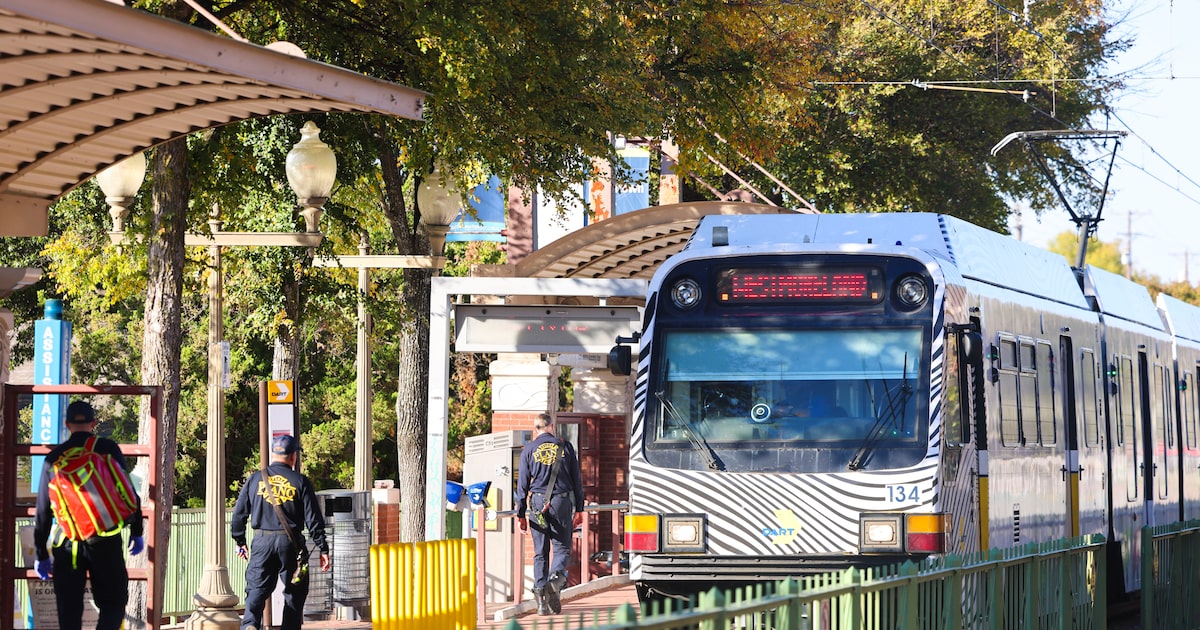

I used to think everyone enjoys watching a train wreck, until it involved the entire public transportation system. Lo, the end is near for DART, and the city of Dallas has its fingerprints all over its slow demise.
I’m terribly conflicted on this subject. As a planner, I absolutely believe in the theory and necessity of mass transit. It is essential to make North Texas into the national powerhouse it can be. At the same time, I do not believe the current system is tenable.
It’s patently unfair that the regional transit service is paid for by only 13 member cities when North Texas has more than 150 municipalities. Talk about a lot of people getting a free ride!
When no city has joined in 40 years, it sends a message. The message is resoundingly simple: The cities that are not in DART are the ones that prosper. Want to know why the Cowboys are in Arlington and Frisco is booming? They have the extra penny to use for economic development because they do not spend it on DART.
What do the 13 member cities get? I believe public opinion about DART is overly judgmental and not informed by firsthand experience. That said, perception is often more important than reality. People believe DART has problems with crime, homelessness and cleanliness. Even worse, people do not know how to use the system and do not think it goes where they want to go. Expertise and accuracy are not required to vote.
Opinion
Now, four local governments, Irving, Highland Park, Plano and Farmers Branch, have called for elections to leave the agency. I believe you will see Carrollton and University Park follow suit. I also think the only member cities truly happy are Garland, Dallas and Richardson.
When DART was created in 1983, the city of Dallas was efficient and well-run. Its professional staffers were sought after for positions all over the region. The elected officials were recognized as regional leaders. Dallas dreamed big. It was the undisputed champion of North Texas, but it worked with suburban cities. The city of Dallas embraced the “area” part of Dallas Area Rapid Transit. Times change.
Dallas no longer carries the prestige or importance it once did. More importantly, suburban receipts outstrip the Dallas contribution: $428.6 million to $423.2 million.
A report commissioned by the agency and performed by EY noted 60% of growth in the region is happening in non-DART areas. Suburban elected officials do not defer to Dallas officials anymore or look to the city for leadership.
Unfortunately, Dallas has a mayor who chooses not to get involved in this issue, a (pardon the pun) stark contrast to the then-mayor, Starke Taylor. He believed, “Someday, area residents will compliment the farsighted voters of the ’80s who decided to build an efficient, cost-effective transportation system to drive Dallas into the 21st century.”
Critics of the transit agency would argue the system is neither efficient nor cost-effective, but that’s not what’s most responsible for causing its demise. That rests with the lack of willingness of the city of Dallas appointed board members to assist in the growth of the system.
Since the city of Dallas lacks the gravitas it once held, it enforces its will on DART because it has the majority of the votes. When Dallas-appointed board members have thought it wise to make concessions or advance the agendas of the suburbs, they’ve been replaced. The Dallas delegation simply forgets the second word, “area,” and has routinely taken advantage of its superior voting position. They ignore that the flow of dollars comes from outside more than inside. Those actions will now have consequences.
It reminds me of the Declaration of Independence: “when in a long train of abuses and usurpations.” Indeed, Dallas has taken power and not shared.
That’s a lot of inside baseball, but people get it, and when they go to the polls they’ll “Dexit.” I suspect all six of those cities will leave. With the state providing caps on taxes, cities need their sales tax. They want their penny more than they want transit. Those six cities will take $305.6 million of sales tax revenue with them, or roughly 36% of the agency’s revenue.
These elections will get ugly. I’m already hearing people complaining that Irving wants to leave so that they can use their penny and buy a sports team. Others are unhappy that transit will be provided to the 2026 World Cup soccer matches in Arlington by bus.
I feel really bad for Randall Bryant, who was selected to serve as chair of DART on Oct. 28. That’s a little like being made captain of the Titanic after it hit the iceberg. At 38, he’s the youngest chair ever. He certainly did not create this mess.
He’s joined by Nadine S. Lee, who has served as CEO since 2021. The decision to hire Lee, seems curious now. She boasts impressive credentials on the transit side, certainly needed in completing the Silver Line. Unfortunately, her position has traditionally been a political one. Some DART leaders I spoke to foresaw this as a potential problem.
Now the pair serves as a new sort of DART, a Death Awareness Response Team.
Can you imagine what people are gonna say when they come for the World Cup and find out that the Hatfields and McCoys are talking about ending public transportation? I think the international crowd will be disappointed in the transit we have and then stupefied that we are giving up on it.
The new CEO of the Dallas Regional Chamber, Brad Cheves, will have his hands full playing peacemaker. These elections and the lack of transit are going to hurt corporate relocations and the perception of North Texas as a major player.
It’s why I hope the Legislature fixes this. Regionalism largely does not exist. It sounds good, but in my experience, it’s purely tribalism in practice. Regional transit is necessary and appropriate, but there has to be a wider payer mix.
The state needs to create a large, multicounty transit agency for North Texas. The funding mechanism could be an additional charge of vehicle registration fees. It might also include car rental taxes or hotel occupancy to pass the cost along to outsiders. It’s a giant region that needs transit, and it needs more than 13 cities paying into the fund. Regionalism has to be forced.
The current leadership team at DART is not to blame. The blame comes from how Dallas has bullied and ignored the suburbs for years. The train has been coming off the rails for a while. It’s death by a compilation of paper cuts and declining public perception.