
More than two years after Texas Senate Bill 14 took effect, some El Paso health care advocates say the political climate is making it difficult to practice in the state – adding pressure to a region that already suffers from a shortage of medical specialists.
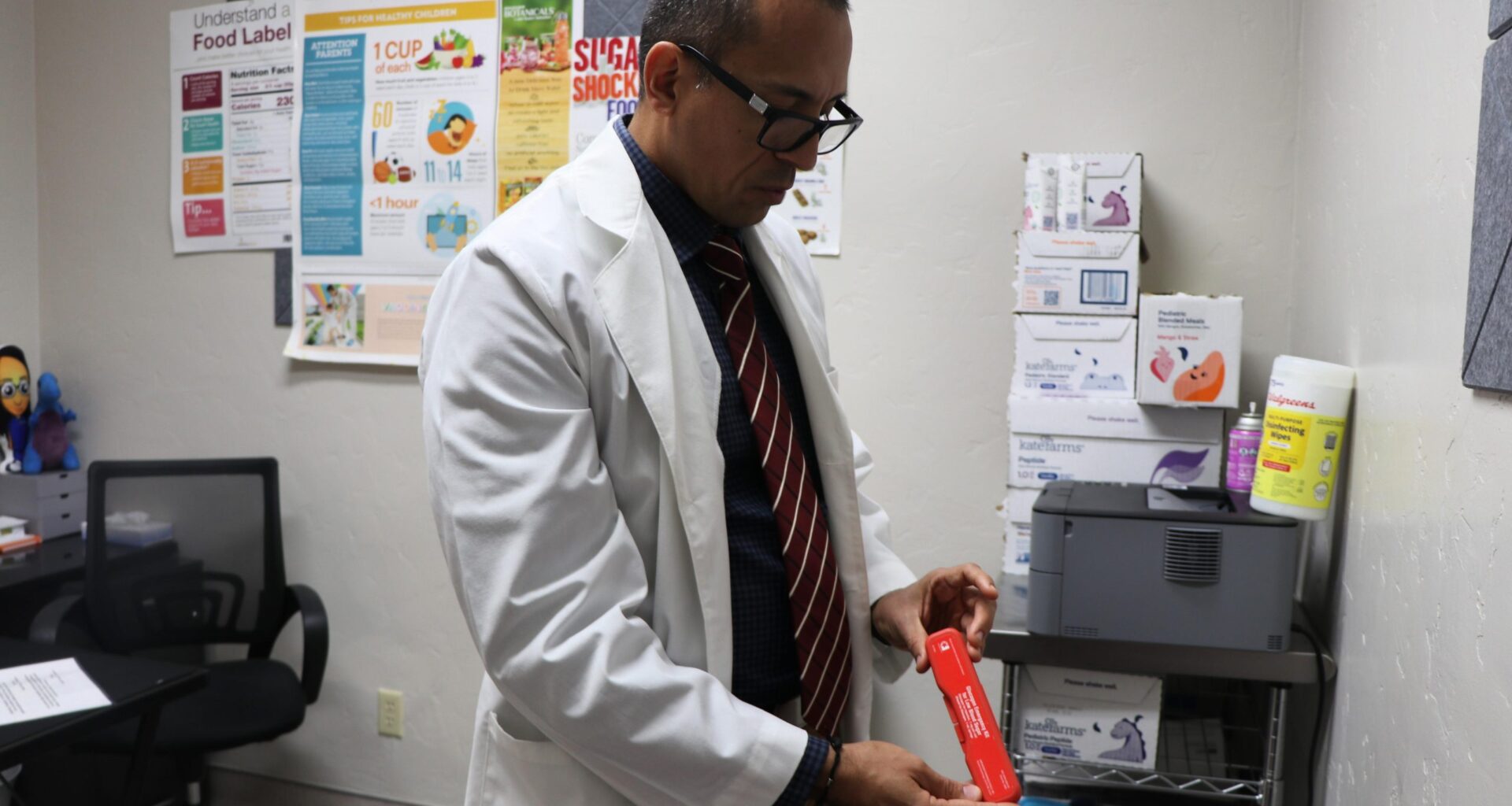
Texas Attorney General Ken Paxton has sued multiple pediatricians for allegedly violating SB 14, which bans physicians from providing gender-affirming treatment to minors. One of his targets was Dr. Hector Granados in El Paso, one of only two pediatric endocrinologists in the region. His clinic serves patients from Far West Texas to southern New Mexico.
In 2024, the attorney general accused Granados of prescribing puberty blockers and testosterone for transgender care under the guise of treating precocious puberty, a condition where children start puberty at an unusually early age. Granados denied the allegation and the Attorney General’s Office dropped its lawsuit against Granados in September after reviewing the evidence.
“Dr. Granados is thrilled with the result and is glad he can move forward with caring for his patients in El Paso,” his attorney Mark Bracken wrote in an email to El Paso Matters.
Granados declined to comment further.
The Attorney General’s Office did not respond to El Paso Matters’ request for comment, but said in a statement to the Associated Press that “no legal violations were found.”
Another targeted pediatrician, Dr. Mary Lau in Dallas, maintains her innocence, but surrendered her medical license last month and moved her practice to Oregon. The state’s lawsuit against a third pediatrician, Dr. Brett Cooper in Dallas, is ongoing.
“Doctors who permanently hurt kids by giving them experimental drugs are nothing more than disturbed left-wing activists who have no business being in the medical field,” Paxton said in an Oct. 24 news release.
The U.S. Food and Drug Administration approved puberty blocking medication in 1993. The drug is reversible, according to the Endocrine Society.
Dr. Toni Ramirez, a family medicine physician in El Paso, said she doesn’t blame doctors who choose to leave Texas. Ramirez provides primary care as well as gender-affirming care for adults.
“Policies that restrict physicians’ ability to provide full care impacts people’s decisions on whether they would like to move to El Paso or stay in El Paso,” Ramirez said. “Physicans are trained to provide evidence-based, culturally appropriate medical care. When state law restricts that ability… they factor that in.”
The ripple effect of banning trans health care
In addition to gender dysphoria, pediatric endocrinologists treat a variety of hormonal disorders in children and teenagers, including diabetes, thyroid diseases and growth hormone deficiency. Gender dysphoria describes the distress someone experiences because their gender identity doesn’t match their biological sex.
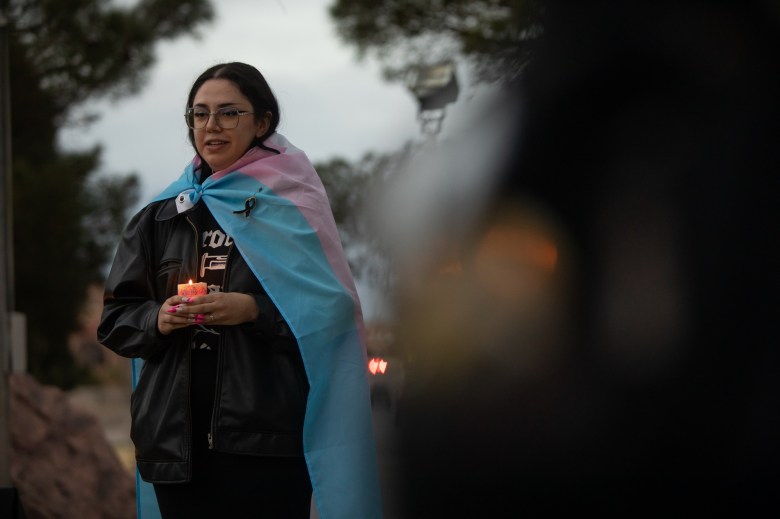 Diaz Camacho speaks at a candlelight vigil in Memorial Park held for 16-year-old Nex Benedict, a non-binary student who was born in El Paso and died after an altercation in a school bathroom in Oklahoma, Sunday, Feb. 25, 2024. Camacho said that trans and non-binary people often believe they will die young due to high rates of bullying and abuse. (Corrie Boudreaux/El Paso Matters)
Researchers have found transgender youths have higher rates of depression, anxiety and suicidal thoughts – and that gender-affirming care can improve their mental health.
The Pediatric Endocrine Society and American Academy of Pediatrics provide clinical guidelines for gender-affirming care, including puberty blockers and hormone replacement therapy, or HRT. Doctors do not recommend stopping HRT all of a sudden because the abrupt hormonal drop can cause severe withdrawal symptoms.
In a 2023 affidavit opposing SB 14, Cooper wrote that care for gender dysphoria is individualized and medical treatment should be a discussion between the patient, patient’s guardian and physician.
But against medical guidance, Gov. Greg Abbott signed SB 14 in June 2023 banning gender-affirming health care for minors. The law went into effect in September of that year, causing a ripple effect across the state.
Dallas-based pediatric endocrinologist Dr. Ximena Lopez closed her practice in 2023 and moved to California because the political climate in Texas put her and other physicians in “an impossible situation,” Lopez told the Texas Tribune.
Lopez started a clinic in Dallas that treated gender dysphoria in 2014, the same year Granados joined Texas Tech Health El Paso and opened the city’s first transgender clinic. He later opened his own private practice, taking in his former pediatric endocrinology resident Dr. Sanjeet Sandhu.
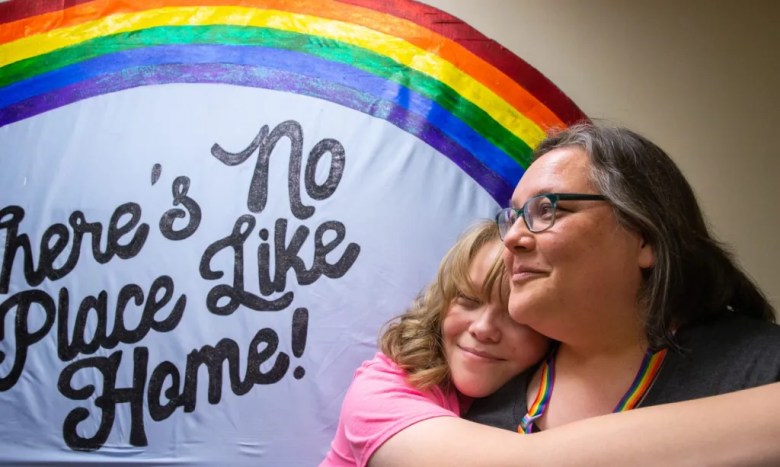 Emily Edwards, 16, hugs her mother, Lori Edwards, at Rainbow Borderland Center on May 18, 2023. The Edwards family is weighing options before the implementation of SB14, which bans care such as hormone treatment and puberty blockers for trans minors. (Corrie Boudreaux/El Paso Matters)
El Paso parent Lori Edwards said Granados turned her and other families away for gender-affirming care months before the ban took effect. Edwards’ daughter Emily had followed Granados from Texas Tech Health El Paso, seeing him first for puberty blockers, then HRT.
Emily, now 18, continues to see a doctor in New Mexico for HRT.
“We feel like he was pivotal in making it to a place where our daughter did not suffer from debilitating gender dysphoria,” Edwards said. “We had only read about it, but never had to see her go through the mental anguish. He adequately treated her at a time when we were scared.”
When pediatric specialists leave town, they leave behind a hole that harms families most, Edwards said.
Paxton’s attempt to revoke Granados’ medical license would have affected patients who saw the doctor for chronic conditions unrelated to gender dysphoria. Children with type 1 diabetes make up a significant patient load and oftentimes he sees a diabetic patient for the first time when they’re hospitalized, Granados told El Paso Matters in January.
“I don’t think legislators care about this collateral damage,” Ramirez said. “Their goal in the immediacy is to establish a precedent or value system that they think we need to be aligned with. Meaning gender diversity doesn’t exist.”
 Jaelynn Oguete, left, and Abby Antonini, 8, show their Dexcom glucose monitors while at Jaelynn’s ninth birthday party, Jan. 12, 2025. Both girls have Type I diabetes and are patients of Dr. Hector Granados. (Corrie Boudreaux/El Paso Matters)
Edwards recalled what health care was like in El Paso in the 1990s to early 2000s. El Paso did not have a children’s hospital and she worked in the emergency room of R.E. Thomason General Hospital, the county’s public hospital now named University Medical Center of El Paso. Edwards also has a daughter with disabilities, Emily’s older sister, who has since died.
When El Paso’s only pediatric surgeon left, Edwards moved her family to California because it felt irresponsible to stay, she said.
“We had one pediatric surgeon, one gastroenterologist, one pediatric neurologist, one of every specialty and that meant a long waiting list,” Edwards said. “She (my daughter) was special needs and had to see every one of those specialties. If a physician was sick, it would create such a backlog and all the patients were negatively impacted.”
“We would have to fly level one traumas, if they were children, to Lubbock,” she continued. “And sometimes they would die.”
Texas health care restrictions impact both physicians and patients
El Paso has more than 2,000 residents per primary care provider, which is higher than state and national benchmarks, according to the El Paso County 2022 Community Health Assessment. Survey participants listed availability of health care providers as a top priority for improvement.
Ramirez said SB 14 is only one of several Texas policies that lack support from the medical community, and can make it difficult to attract and retain doctors.
SB 8, outlawing most abortions, has hamstrung obstetrician-gynecologists in El Paso and forced Texas abortion providers to close or relocate, turning cities such as Las Cruces, New Mexico, into a battleground over reproductive health care.
Low Texas Medicaid and Medicare rates mean payments fall below the cost of care. Providers can either absorb the rest of the cost or drop critical services. The Texas Health and Human Services Commission is also proposing to further cut reimbursement rates for dozens of services provided through Medicaid, such as ventilators, feeding tubes and wheelchairs.
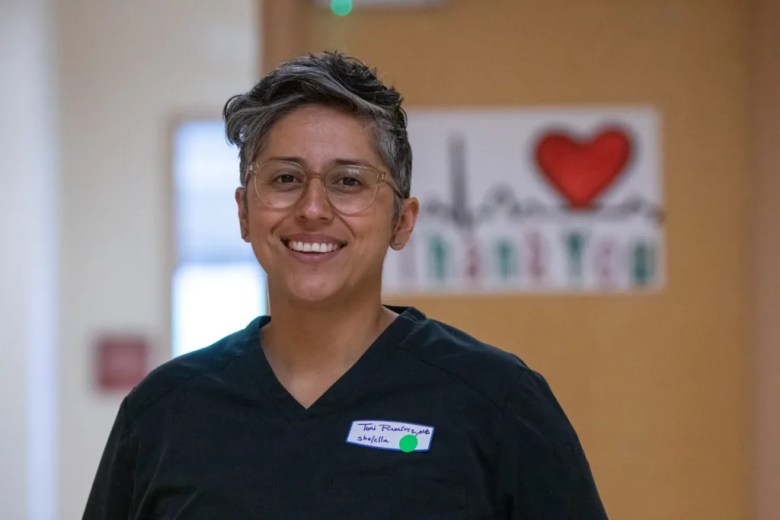 Dr. Toni Ramirez attends the BLOOM Trans Health Education workshop on May 19, 2023. (Corrie Boudreaux/El Paso Matters)
“El Paso is home to me, so I continue to work in Texas precisely because of the limitations,” Ramirez said. “I have a connection to this community that makes me want to stay or help people navigate a restrictive health care system, but it doesn’t come without a cost. It’s very weighing and causes a lot of stress on my own personal wellbeing.”
Dr. Michele Zerah, a former pediatric endocrinologist at Texas Tech Health El Paso, retired last year – a decision she didn’t take lightly knowing she was the institution’s only subspecialist in that field. Zerah advised her employer to hire more than one pediatric endocrinologist to replace her so they could share the workload, she told El Paso Matters earlier this year.
Daniel Veale, a spokesperson for El Paso Children’s Hospital, confirmed the hospital works with Texas Tech Health El Paso to recruit pediatricians.
“We are currently in the recruitment process for many pediatric subspecialists, including pediatric endocrinology to assist with the growing volumes in the El Paso region,” he wrote in an email statement.
Texas Tech Health El Paso did not respond to El Paso Matters’ request for comment.
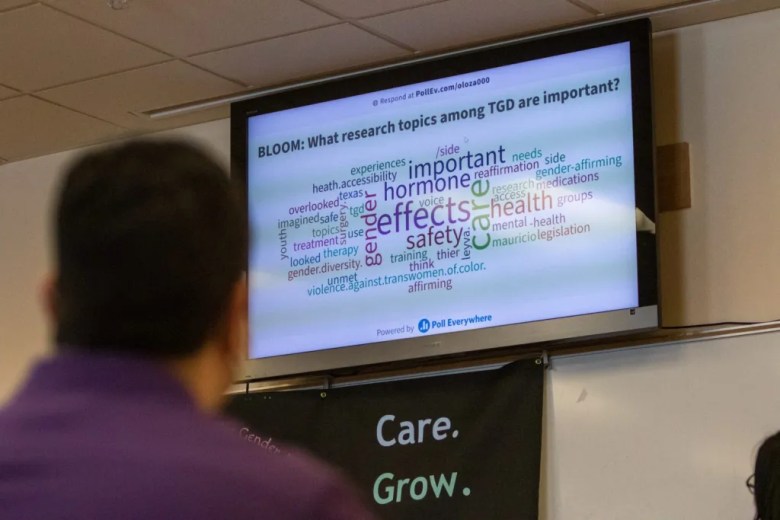 Participants in the BLOOM Trans Health Education workshop in May 2023 create a word cloud on health topics important to them. (Corrie Boudreaux/El Paso Matters)
Ramirez said the accumulation of Texas’ anti-trans policies – SB 14, the “bathroom bill,” the deadnaming of trans students, among them – have taken a toll on some of her patients’ mental health.
After treating mostly transgender teenagers in California, Ramirez in 2020 moved back to El Paso, where she began working in family medicine. The majority of her patients are cisgender and receive general care, such as for acute pain and high blood pressure. But she also sees a minority of transgender adults for gender-affirming care.
Many of those patients expressed fear that Texas’ slew of anti-LGBTQ policies will empower the general population to villainize them. Some have become isolated, choosing to not go out or engage with people, Ramirez said.
Depression and anxiety screenings are “off the charts” for transgender patients. While SB 14 only blocks minors from health care, her adult patients are already making plans for when the Texas government goes after them.
“They talk about how they worry walking to the bus stop, going shopping, going to the movies, going to get their hair done,” Ramirez said. “They worry about their safety. There is such a spotlight on this very, very small population that they feel vulnerable.”
Resources for El Paso’s Gender-Diverse Community
Borderland Rainbow Center: Substance-free LGBTQ+ space providing therapy and peer support groups. borderlandrainbow.org
PFLAG El Paso: Nonprofit advocating for LGBTQ community. facebook.com/pflagelpaso
UTEP Voice Modification Clinic: Free gender-affirming voice training. Read more on El Paso Matters or contact Patricia Lara plara2@utep.edu.
Centro San Vicente: Community health clinics for underserved population. sanvicente.org
Project Vida: Community health clinics for underserved population. pvida.net
Planned Parenthood: Health center that provides sexual health services and gender-affirming care. Website
Related
LISTEN: EL PASO MATTERS PODCAST