
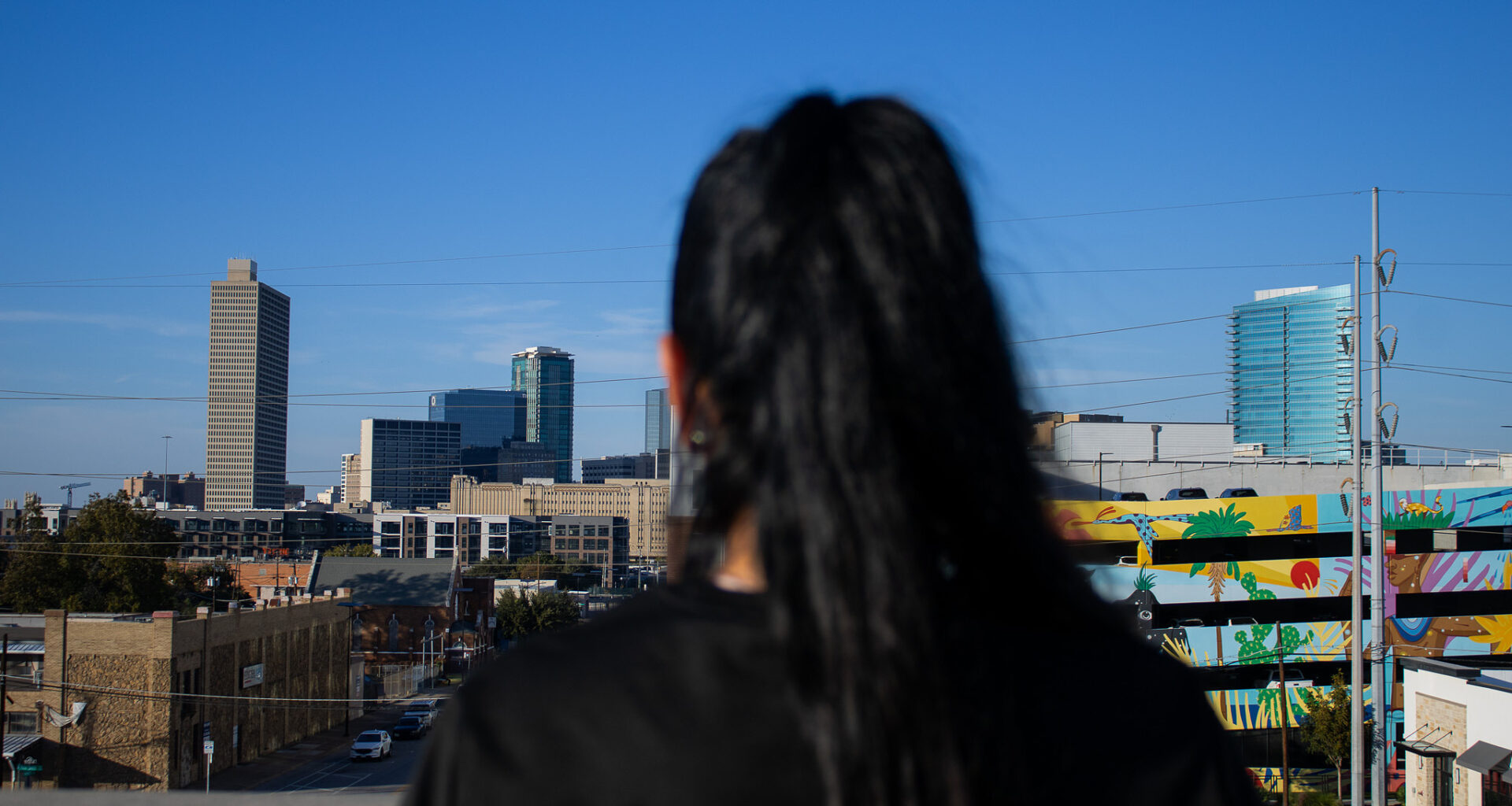
Marisa recalls one of her bleeding episodes very well.
At a boxing tournament for her youngest son, Marisa began to experience vaginal bleeding. She remembers that her eldest son had to grab towels from the gym to help her clean up.
“I don’t know what I did when we were at the tournament, but all of a sudden I started (bleeding),” she said. “I tried to make sure no one could see it. It felt horrible.”
The 48-year-old Fort Worth resident made repeated emergency room visits for two years because of bleeding caused by fibroids, benign growths within the uterus. A doctor told Marisa, who only wanted to be identified by her first name because of her immigration status, that she needed a hysterectomy.
However, she had no insurance to help offset the cost of surgery, meaning she would have to pay out-of-pocket.
“The down payment alone was almost what I make in a year,” recalled Marisa, who works in cleaning.
Her health condition affected her in other ways. She missed several days of work. She could no longer go to the gym, exert herself at work or lift heavy things for fear of straining her uterus. She began exclusively wearing black clothing to conceal any potential bleeding.
Marisa accepted it as a part of her life.
Then a small nonprofit in the Near Southside helped her get the surgery in June at no cost.
Project Access Tarrant County provides ancillary and surgical care for low-income and uninsured Tarrant County residents by connecting patients with doctors volunteering services.
From 2011 to 2024, program officials estimate the group has provided $20 million in donated health care services to those at or below 200% of the federal poverty level, providing procedures to over 2,200 in-network patients.
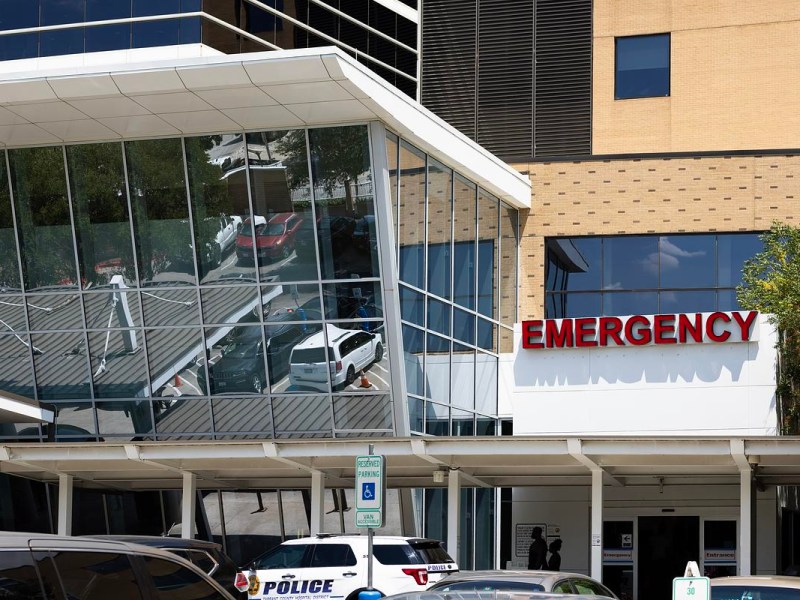
One year after Gov. Greg Abbott’s executive order requiring hospitals to report data on undocumented patients, here’s what the numbers show.
September 4, 2025 6:09 pmSeptember 4, 2025 6:09 pm
The nonprofit, in collaboration with Cornerstone Assistance Network and Mission Arlington, received more than $385,000 in grants from Texas Health Resources for their MATRIX program. It was the largest grant the nonprofit had received since their startup funding.
The money allowed Project Access to screen and direct uninsured residents with hypertension or diabetes who live in five Tarrant County ZIP codes — 76010 and 76011 in Arlington as well as 76104, 76105 and 76119 in Fort Worth — to service providers.
Project Access used the grant to hire a community health navigator who works alongside Cornerstone Assistance and Mission Arlington to sift through patient waiting lists to identify people eligible for other medical assistance under the program, said Kathryn Keaton, director of Project Access.
“The biggest thing it’s done is maximize efficiency, where we’re able to really connect with potential patients almost immediately,” Keaton said.
Nearly 300 patients were helped in some capacity because of the MATRIX program, Keaton said. At least five surgeries were provided with several additional ones pending, she said.
Before MATRIX began, Project Access had more than 80 people on waiting lists for general surgeries and about 30 for gynecological services. Now about 30 people are on the general surgery waiting list, officials said. The only wait for gynecology is time needed to schedule appointments.
“We’re ecstatic,” Keaton said. “We’ve been able to have patients who, through our original model, would not have been able to get through to their surgery because of other barriers they face.”
Dr. Michelle Arevalo, an obstetrician gynecologist at Grace Obstetrics & Gynecology, was the doctor who performed Marisa’s surgery and one of the more than 300 physicians that volunteer their time and services to Project Access.
Prior to performing Marisa’s hysterectomy, Arevalo found that Marisa had endometrial intraepithelial neoplasia, a condition that could cause endometrial cancer if untreated.
 A sign sits in the Project Access Tarrant County office on Nov. 6, 2025. (Ismael M. Belkoura | Fort Worth Report)
If Marisa, who has both diabetes and hypertension, had not received the hysterectomy, she would have “very likely” gotten cancer, Arevalo said.
From the doctor’s perspective, working with Project Access is a very easy choice, she said.
“It’s a life-threatening illness that has a very straightforward surgical solution,” Arevalo said. “Not every medical problem has a simple surgery that can save the life and quality of life of the patient. But in this case, abnormal uterine bleeding from massive fibroids is definitely one of them.”
For Marisa, life is better now, she said, but not just because she avoided cancer and no longer has fibroids.
Her four sons, two of whom are adults and no longer live in Tarrant County, are more at peace and have less stress worrying about their mother, she said. Marisa can move around more freely and has less anxiety about day-to-day tasks.
“This experience changed my mentality — that there are people that may not know someone but still care about them,” Marisa said. “Sometimes, people aren’t willing to donate five minutes of their time, so the doctors giving their services and time is incredible.”
Interviews for this story were translated from Spanish.
Ismael M. Belkoura is the health reporter for the Fort Worth Report. Contact him at ismael.belkoura@fortworthreport.org.
At the Fort Worth Report, news decisions are made independently of our board members and financial supporters. Read more about our editorial independence policy here.
Related
Fort Worth Report is certified by the Journalism Trust Initiative for adhering to standards for ethical journalism.
Republish This Story

Republishing is free for noncommercial entities. Commercial entities are prohibited without a licensing agreement. Contact us for details.