

As Houston rounds out its third month of unseasonably warm fall weather, many residents have joined a chorus of complaints over the city’s “never ending summer” and wonder whether climate change is to blame.
Experts say carbon emissions trapped in the atmosphere have had a hand in Houston’s rising autumn temperatures, but climate change doesn’t tell the whole story of this year’s balmy fall.
WEATHER: Why Houston can’t keep its chill this fall
Long-term weather trends over the years show fall heat has been gradually rising thanks to climate change, said state climatologist John Nielsen-Gammon. Because this year’s temperature spike is so severe, analysts say that climate change isn’t the sole reason for the heat. Unique weather patterns, such as a high-pressure “ridge” in the atmosphere, are also causing temperatures to rise.
“We can analyze the long-term trend and get an estimate of what climate change is doing,” Nielsen-Gammon said. “This year, we are well above the trend line, so it’s not all climate change causing it.”
While the area’s rising fall heat in 2025 is approaching record levels, autumn 2024 was even warmer, becoming the hottest fall on record by over a degree. Nielsen-Gammon said hotter-than-normal falls are expected to continue as temperatures rise overall.
The high temperatures through November are causing a longer allergy season, an increased risk of wildfires, and other unusual problems. Many frustrated Houstonians have been saying across social media that the prolonged air-conditioner weather also just seems wrong.
As one Redditor put it, “I’m sweating looking at Christmas decorations, lowkey getting concerned for our planet.”
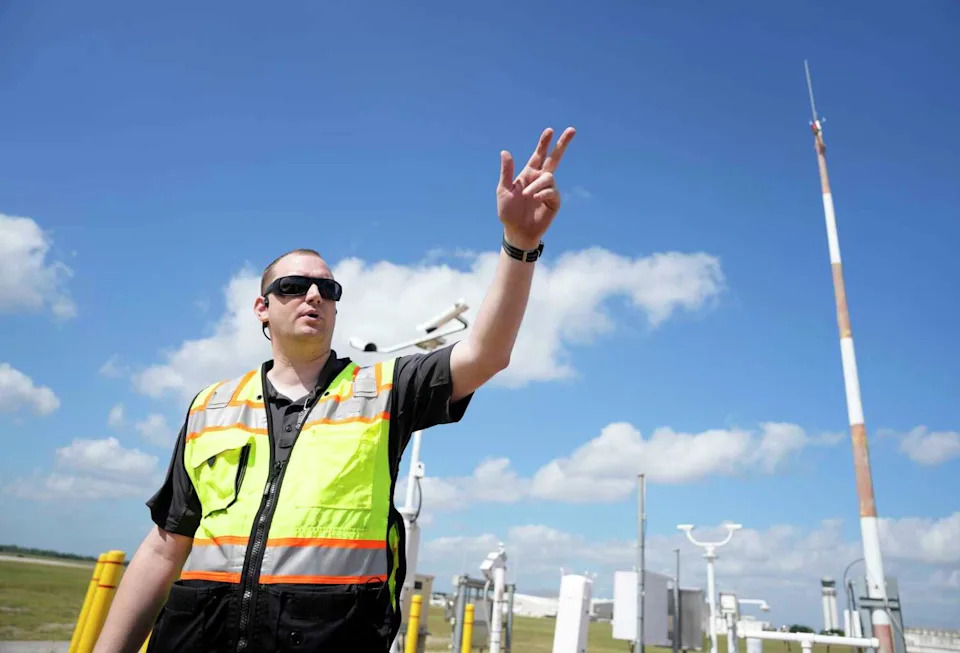
Andrew Sullivan, an airside operations coordinator, talks about the equipment used by the National Weather Service at William P. Hobby Airport on Wednesday, Aug. 9, 2023, in Houston. (Melissa Phillip/Staff Photographer)
What’s causing the warmer weather?
According to climatologists, greenhouse gases like carbon dioxide raise average temperatures by catching and re-emitting some of the heat that would otherwise escape into space.
A Climate Central analysis of federal data released in August found that the fall season has “warmed in every county across the contiguous U.S. since 1970.”
READ MORE: Houstonians react to Trump climate rollbacks
Researchers found the average fall temperature has increased in Harris County by 3.8 degrees Fahrenheit since 1970, while neighboring Fort Bend County went up by 4 degrees. A city-specific analysis found that Texas was home to the second-fastest warming falls in the country, as El Paso’s average temperatures have risen by 6.5 degrees.
Other factors are also responsible for the season’s higher temperatures.
These include a high-pressure atmospheric ridge that Houston Chronicle meteorologist Justin Ballard referred to as “the fall version of the dreaded heat dome,” and the fact that many of the cold fronts that reached Houston have come from the northern Pacific, whose waters were warmer than normal this year.
From Sept. 1 to Nov. 10, the average high temperature at Bush Intercontinental Airport was 88.3 degrees. The only year when the airport sensor recorded a higher average for the same period was last year, in 2024.
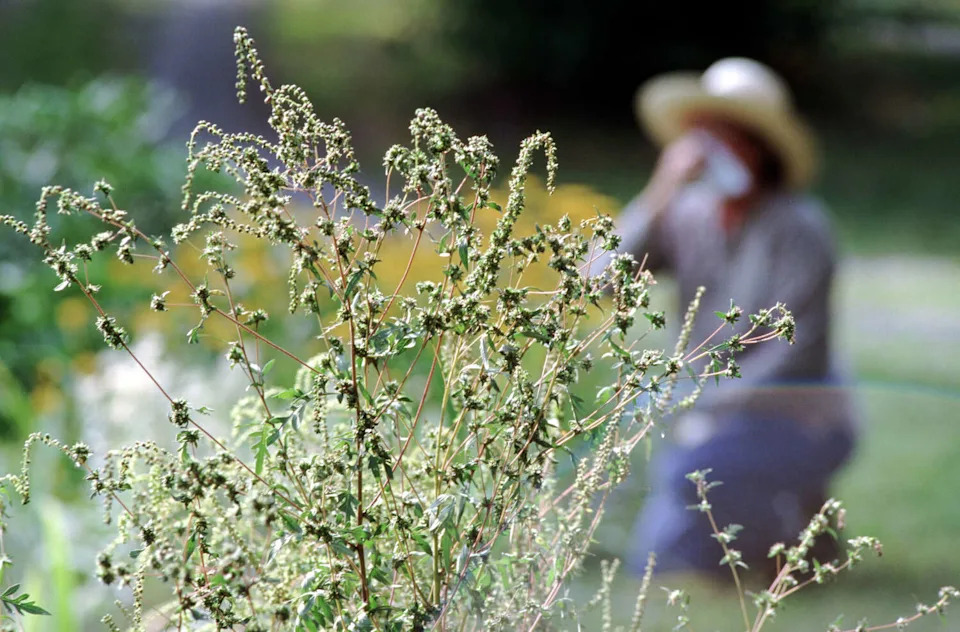
Experts say warming weather increases the length and severity of the allergy season. (Roy Morsch/Getty Images/Getty Images)
Why worry about warmer autumns?
Warm-weather lovers may relish the city’s last couple of balmy falls, whose impacts are less obvious than the acute dangers of sweltering summer days.
Persistent warm temperatures do have a slew of impacts on Houston’s human population and ecosystems, though.
Recent years with longer stretches of warmth into the autumn have prolonged the city’s allergy, mosquito and tick seasons. Sanjiv Sur, director of Allergy and Immunology at Baylor College of Medicine, identified a rapid increase in the city’s pollen count even before the past two record-warm falls, making life difficult for allergy sufferers.
“As there’s global warming, the pollen season is increasing,” Sur said in a spring 2024 write-up for the Association of American Medical Colleges.
ALLERGIES: Houston pollen, mold counts have seen a recent spike
Warmer falls can also extend the area’s active hurricane season, contribute to heightened wildfire risks and increase fall ozone pollution levels. The smoggy pollutant ozone forms fastest in heat, when nitrous oxides mix with volatile organic compounds.
Seasonal shifts are also impacting the area’s flora and fauna. Native plants can face stress from warm autumns, and the shift delays the passage of migratory birds, disrupting cues that should tell these species when to fly further south to have the best chance at feeding themselves during winter months.
Meteorologist Justin Ballard contributed to this reporting.
This article originally published at ‘Never-ending summer’: Is climate change driving Houston’s unseasonably warm fall weather?.