
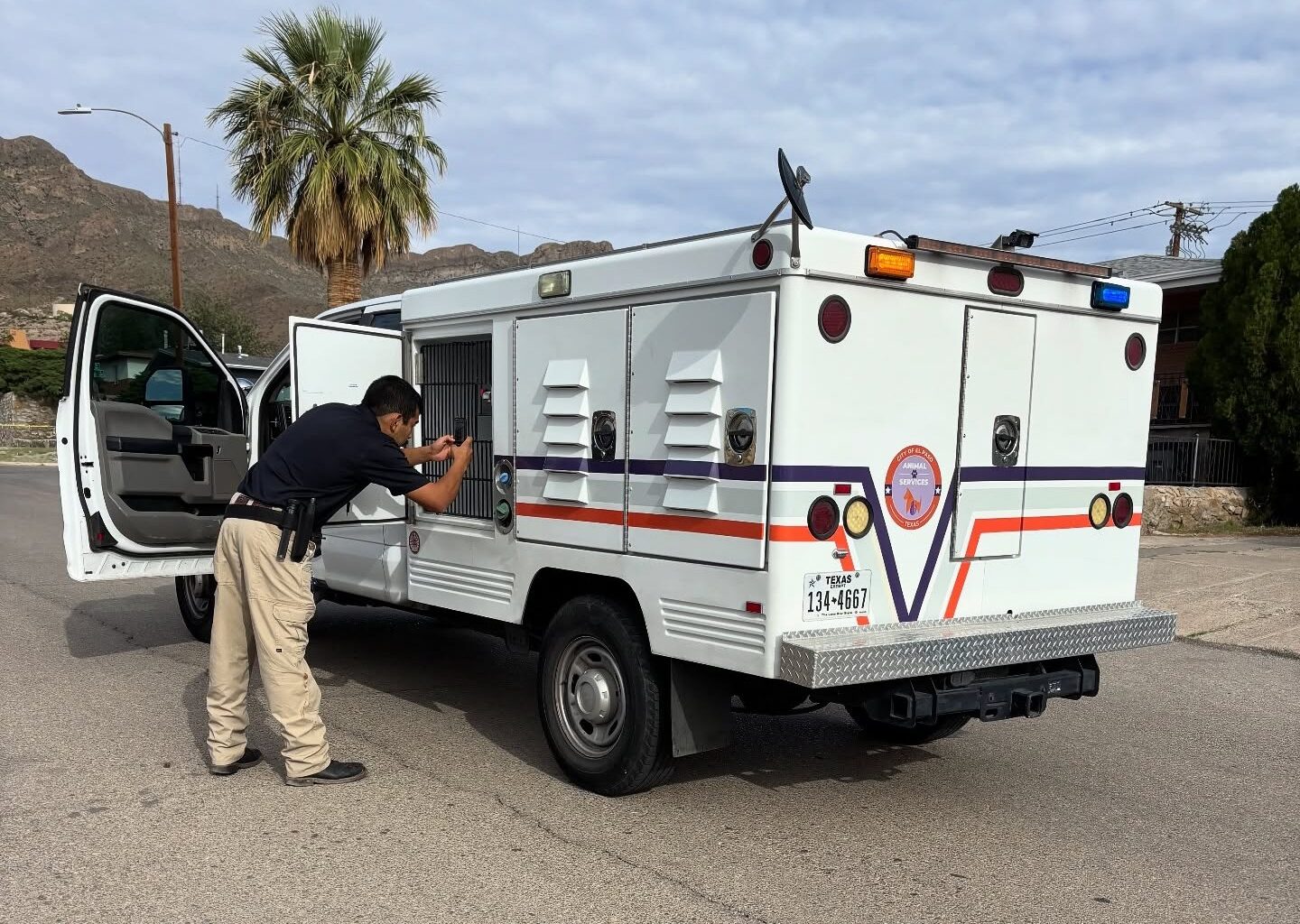
The city of El Paso is considering tougher regulations and penalties for residents who have aggressive and vicious dogs that attack other pets, adding provisions to its animal ordinance that would go beyond existing state health and safety codes.
Those codes – which are outlined in the city’s ordinance – only address dog attacks on humans, but not on other domestic pets.
Some animal advocates say the change is welcome and needed to strengthen public and pet safety standards and create consistent, enforceable procedures for handling dangerous or aggressive dogs.
“It goes on all the time – we just don’t hear about all of them, and nothing has ever been done,” said animal advocate Karen Washington, who operates Pawsitive Rescuers of El Paso. She said the law change is needed to address these types of dog attacks she regularly hears about.
The proposed ordinance changes were to be introduced Nov. 18 to the City Council, which would have triggered a public hearing Dec. 2. But city staff requested the item be deleted from the meeting. City Rep. Chris Canales, chair of the Animal Services Advisory Committee, said it was deleted so the committee could review them first. The proposal was on the agenda of the advisory committee’s November meeting, which was canceled. No agenda for the board’s December meeting has been posted, so it’s unclear whether the changes will be discussed then.
The two key provisions involving vicious dogs and aggressive dogs would cover animal-on-animal attacks and repeat incidents.
The proposal outlines detailed enforcement procedures, including investigations, owner notification, hearings and appeals. Dogs designated as aggressive or vicious would be required to be registered and microchipped. Owners of these animals would be required to display warning signs, keep the animal securely confined and complete a responsible pet owner course.
A companion measure would update the city’s animal code definitions to align with the new rules and set a $50 registration fee for vicious dogs. The registration fee for dogs is now up to $35 depending on whether the pet is spayed or neutered.
The city’s animal ordinance coincides with the Texas Health and Safety Code that stipulates a dog that is suspected of being dangerous may be impounded or quarantined while the city investigates. If a dog is declared dangerous, the owner has 30 days to meet all safety and registration requirements or the dog may be considered abandoned. The city cannot euthanize the dog if the owner files an appeal in court and the final determination has not been made.
It also defines a dangerous dog as one that attacks or threatens to attack someone without being provoked outside its enclosure. The state code does not address dog attacks on other domestic animals or other dogs.
The penalties for dog bites vary depending on the severity.
“While the city does not have a strict-liability ordinance for all dog bites, it does enforce the dangerous dog process described above and may require a 10-day quarantine when appropriate,” said city spokeswoman Laura Cruz-Acosta.
The interim director of Animal Services or Local Rabies Control Authority may designate the dog as dangerous if it bites a person outside of its enclosure. If that designation is met, the dog’s owner is required to carry at least $100,000 in liability insurance in order to keep the dog. The owner may appeal the determination in Municipal Court.
However, if a designated dangerous dog bites again, charges may be pursued in state court through the District Attorney’s Office, Cruz-Acosta said.
“The city also has additional enforcement tools under Title 7 of the City Code. Violations such as failure to register, microchip, vaccinate or properly confine a dog can result in fines of up to $2,000,” Cruz-Acosta said.
Other animal advocates say changing the law is only part of the solution.
“Do we need some stronger-worded law? Absolutely, but it’s not going to do any good without the actual enforcement to back that up. It’s just going to be a moot point if you’re just going to put the law out there but you’re not going to enforce,” said Barbara Valencia, owner of Huckleberry Hound Dog Rescue.
Other Texas municipalities such as Dallas, Fort Worth, San Antonio and Georgetown have adopted ordinances that address the gap in state law for animal-on-animal attacks.
Animal ordinances in other Texas cities
Here is how some Texas cities address dog-on-animal attacks:
An “aggressive dog” means a dog that on at least one occasion, while not legally restrained, killed or injured a legally restrained domestic animal or livestock.
The ordinance also sets procedures for investigation, owner notification, impoundment, and appeals for dogs designated as aggressive as well as specific requirements for how the owner must restrain the dog in public.
The “aggressive dog determination” is defined as a dog that has made an unprovoked attack on another domestic animal that causes bodily injury to the animal and occurs in a place other than an enclosure in which the dog was being kept.
The section also outlines owner responsibilities and penalties for dogs designated as aggressive.
Has “aggressive dog” incident levels. An at-large dog that causes a severe injury to any domestic animal or livestock – except poultry – can be deemed as aggressive is a Level 2.
An at-large dog that kills or causes the death of any domestic animal or livestock – except poultry – can be deemed as aggressive Level 3.
The ordinance also sets procedures for investigation, owner notification, impoundment, and appeals for dogs designated as aggressive.
Related
LISTEN: EL PASO MATTERS PODCAST