
Sign up for our newsletter and get our latest content in your inbox.
On a clear December evening in Fort Worth, as the city hums with its usual end-of-year bustle, a different sound rises above it: the slow, confident rumble of two radial engines turning over. People on the ramp at Meacham Airport look up instinctively.
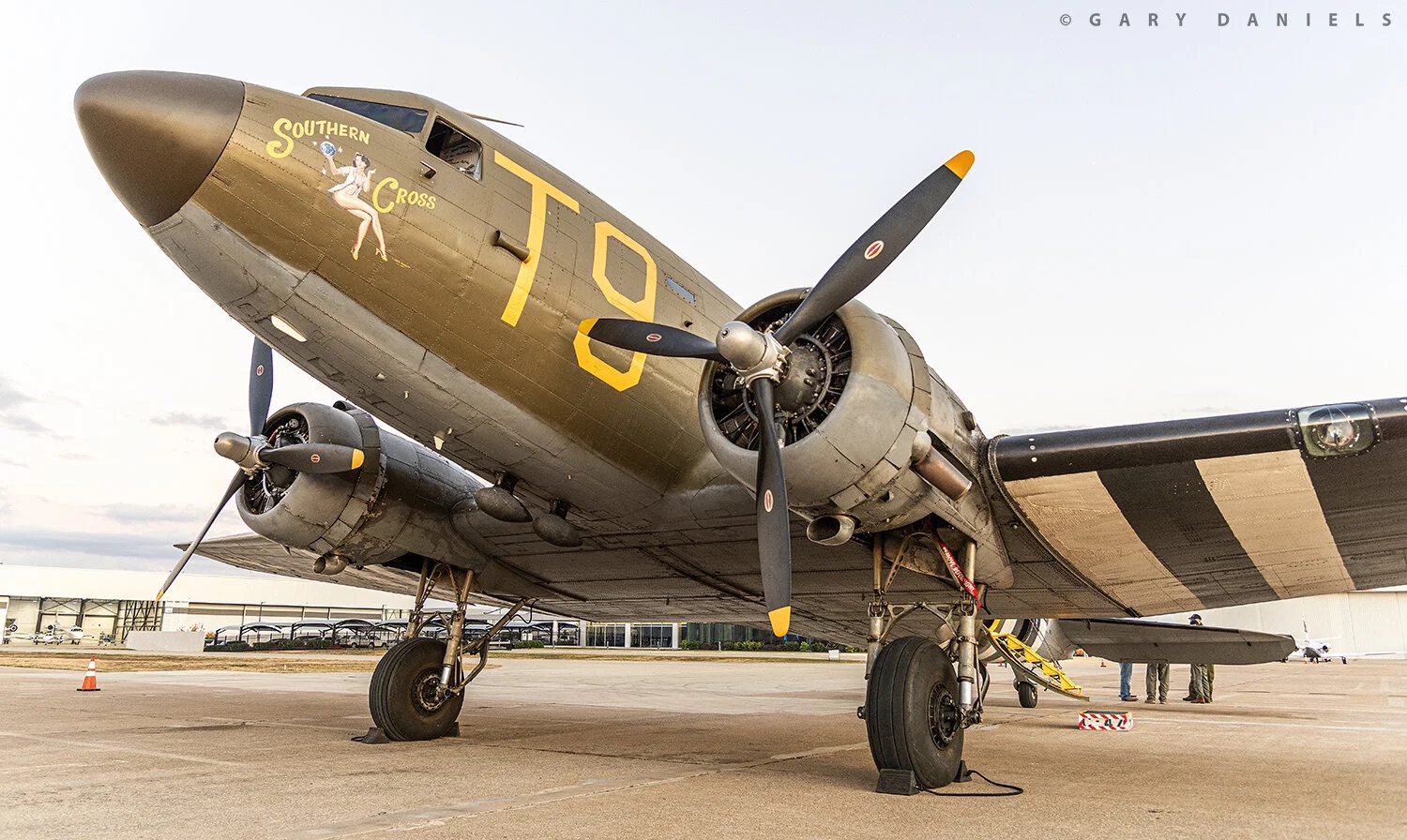
Long before the aircraft appears, you can hear it. And when it finally emerges from behind the hangars, bathed in yellow floodlighting, it still seems slightly unreal. A 1942 Douglas C-49J, its cabin glowing with soft red lights, crew in Santa hats, preparing once again for its Christmas light flights.
This tradition began more than a decade ago and lives on as the crew readies Southern Cross for the 2025 season.
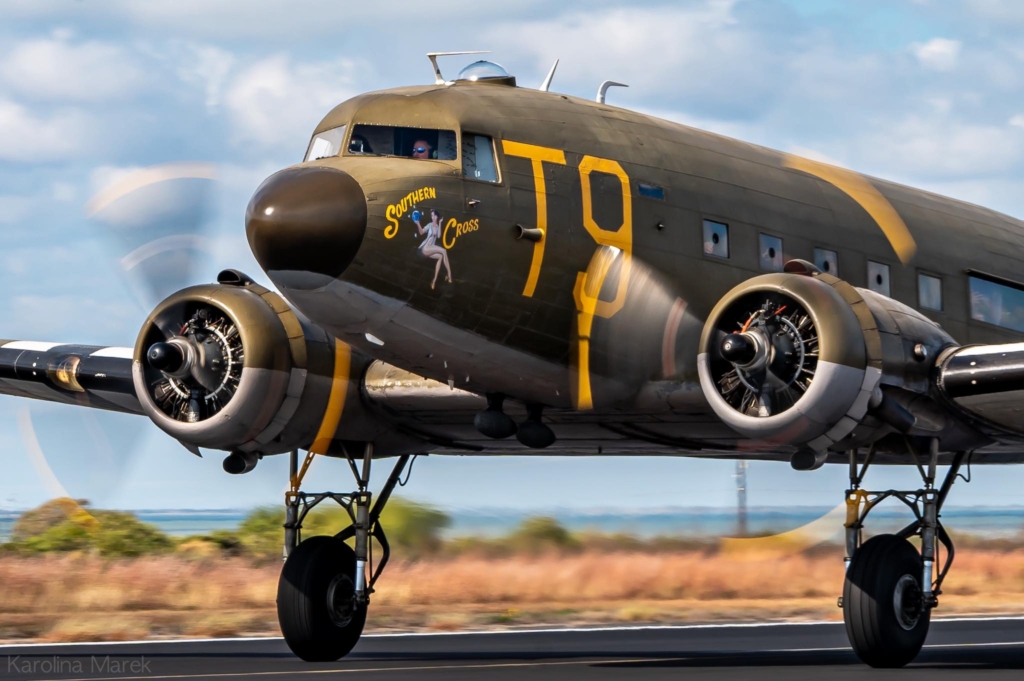 Photo: Karolina Marek / Greatest Generation Aircraft
For the volunteers of Greatest Generation Aircraft, the non-profit that keeps the aeroplane airworthy, this marks the start of their busiest and most cherished weeks of the year. Vintage Aviation News reports that throughout December, families, enthusiasts and returning regulars board Southern Cross for a 45-minute night flight over Fort Worth and Arlington.
The idea is simple: to see the city’s Christmas displays from the air, yet the aircraft turns it into something far more evocative.
Christmas light flights over Fort Worth and Arlington from a vintage DC-3
Once airborne, the DC-3 climbs to around 1,000 feet and settles into a gentle circuit towards Arlington. Below, the neighbourhood of Interlochen appears as a patchwork of colour. Cars on the ground queue for hours to see the lights, but from above the display stretches out like a river, shifting as the aircraft banks slowly over the rooftops.
A few minutes later, downtown Fort Worth comes into view, the skyline wrapped in seasonal lights and the Trinity River reflecting the glow.
“One of the main targets of the flight path is Interlochen… but the best part is that Southern Cross does not have to wait in traffic,” organisers told Vintage Aviation News. “Passengers get a first-class experience seeing light displays from above, including the traffic lights of all the cars waiting to get in.”
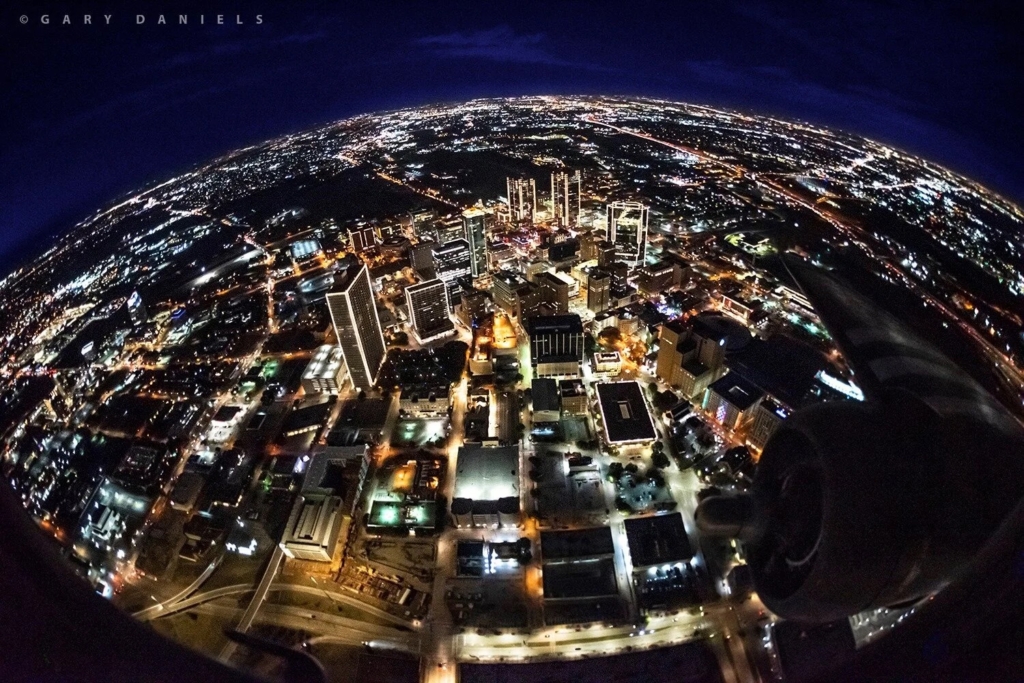 Photo: Greatest Generation Aircraft
There is nothing formal about the flight. Once level, passengers are free to move around the cabin, lean towards the windows, or peek into the cockpit where the gauges shine red in the dark. Seating is first-come, first-served, and conversations between crew and families often reveal regulars who return every year — some with grandparents who remember flying on DC-3s, others with children who have never flown at all.
The combination of the old airliner, the lights below and the warmth inside the cabin creates an atmosphere that feels more like stepping into a memory than taking a sightseeing tour.
Keeping Southern Cross in the air, one Christmas at a time
The flights also serve a practical purpose. They are the organisation’s largest annual fundraiser, helping to keep Southern Cross flying for another year and supporting the wider mission to preserve aircraft from the Second World War through Vietnam.
In that way, every December connects generations: a wartime transport still earning its keep by giving families a small seasonal adventure.
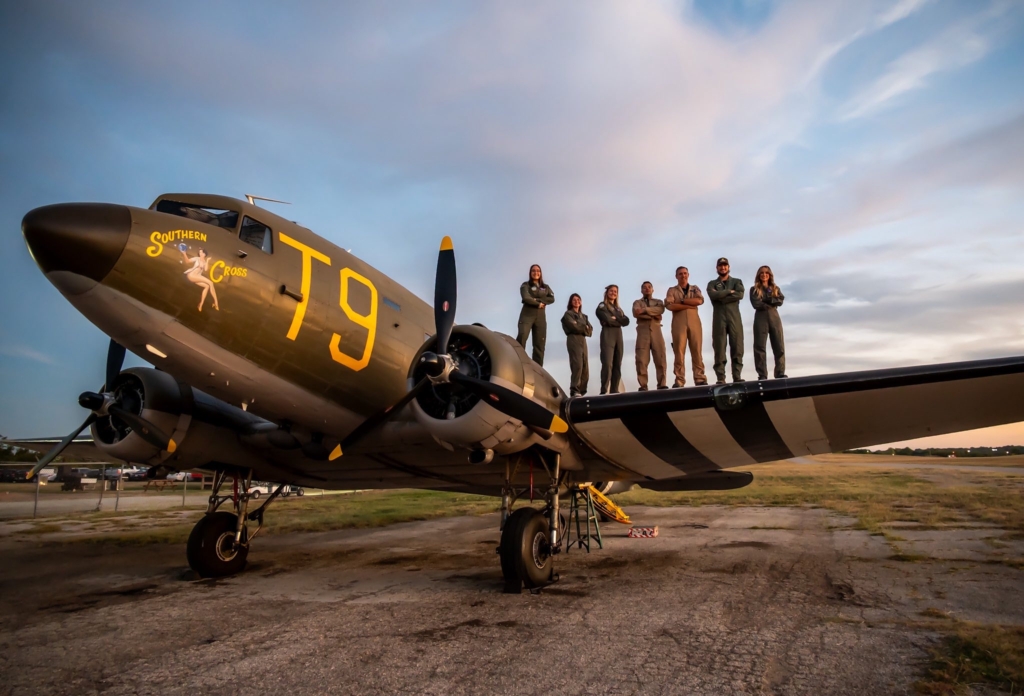 Photo: Greatest Generation Aircraft
When the aircraft touches down at Meacham and passengers step into the cold with flushed faces and full camera rolls, the crew is already preparing for the next group. What could have been a novelty has settled into something more durable: a local holiday tradition built around an aeroplane that has already outlived several eras of aviation.
Why a 1940s DC-3 is now at the centre of North Texas’s favourite Christmas aviation experience
The Douglas DC-3 and its wartime derivatives, including the C-49, remain among the most enduring aircraft ever built. Designed in the mid-1930s, the DC-3 carried airline passengers by day and sleepers by night before being pressed into wartime service across every theatre imaginable.
It has a presence modern aircraft lack: rounded wingtips, polished metal, the steady rhythm of twin radial engines. Inside Southern Cross, the cabin smells faintly of varnish and engine oil, the lights are soft, and the bulkheads carry signatures of veterans who once flew in similar aircraft.
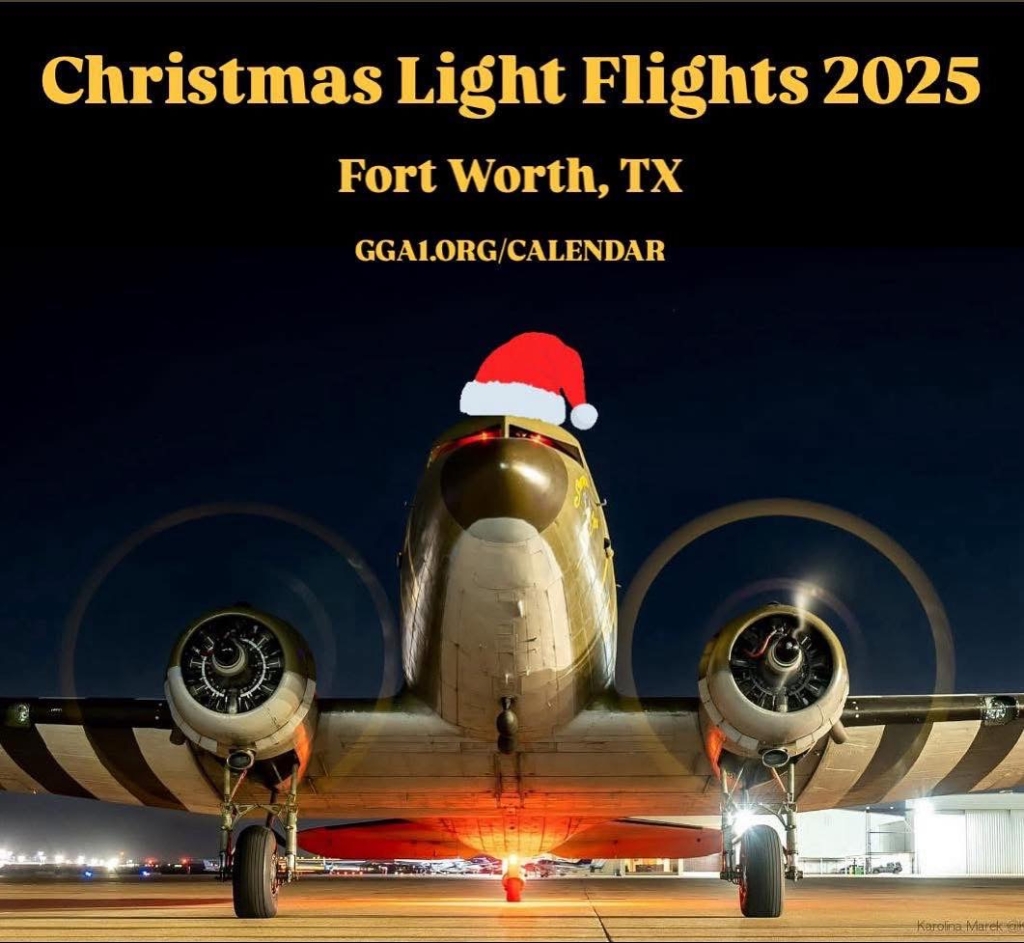 Photo: Greatest Generation Aircraft
Built for American Airlines before being requisitioned for military use, Southern Cross has lived a long life; airline service, private owners in the US and Mexico, and finally restoration in Fort Worth after it arrived in 2003.
Volunteers spent years rebuilding the interior, including its radio and navigator’s compartments. Today, it is the world’s last airworthy C-49J, a fact that lends the Christmas flights an extra sense of occasion.
Inside the Douglas DC-3: the historic airliner behind Fort Worth’s Christmas flights
The DC-3 reshaped global air travel. After its first flight on 17 December 1935, it quickly became the first US airliner capable of turning a profit without subsidies. By 1939, it accounted for around 90% of global airline traffic. It was reliable, economical and remarkably tough — equally at home on polished runways or rough-graded strips.
During the war, the military adapted the passenger carrier into the C-47 and several other variants. Many civilian DC-3s destined for airlines were diverted from production lines and converted into military transports, including C-49s like Southern Cross.
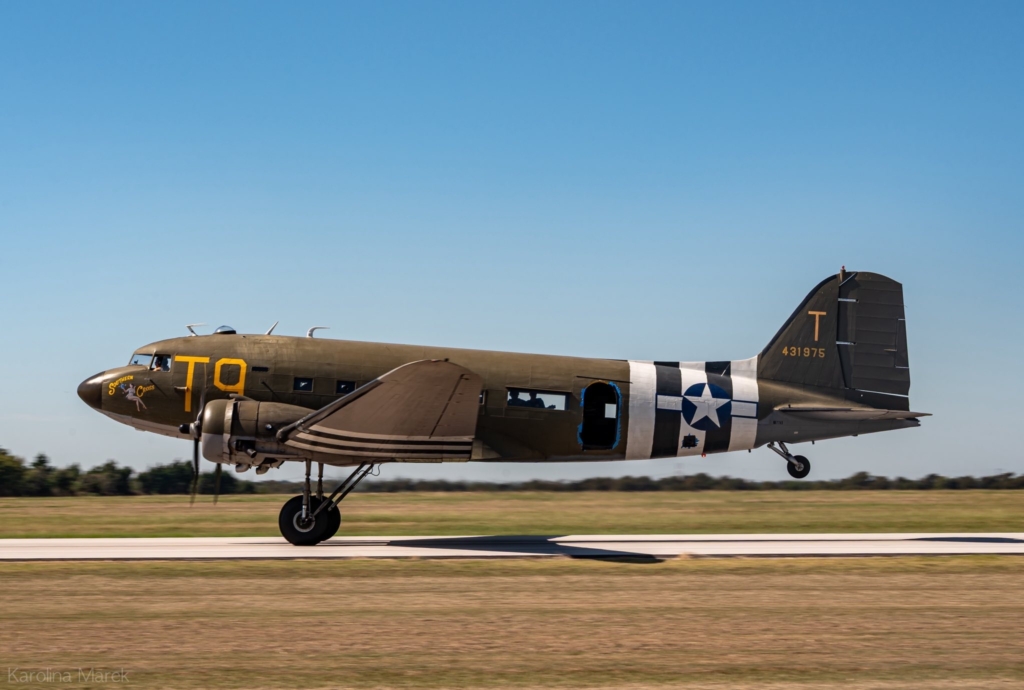 Photo: Karolina Marek / Greatest Generation Aircraft
After 1945, the DC-3 simply refused to retire. It flew passengers for decades, hauled freight into remote regions, and remained in front-line use well into the jet age. Even in the 1990s, it still flew commercially in parts of the world.
Southern Cross sits within this remarkable lineage. Its wide fuselage, drawn from the early sleeper-transport design, its radial engines, and its cockpit glow make it instantly recognisable. Passengers feel that history as soon as they step aboard — a blend of nostalgia, engineering heritage and holiday magic.
Flying on Southern Cross isn’t just a seasonal treat; it is a brief journey back into the story of an aircraft that shaped modern aviation and continues to bring joy nearly ninety years after it first took to the sky.
Sign up for our newsletter and get our latest content in your
inbox.