
A Win Rooted in Community
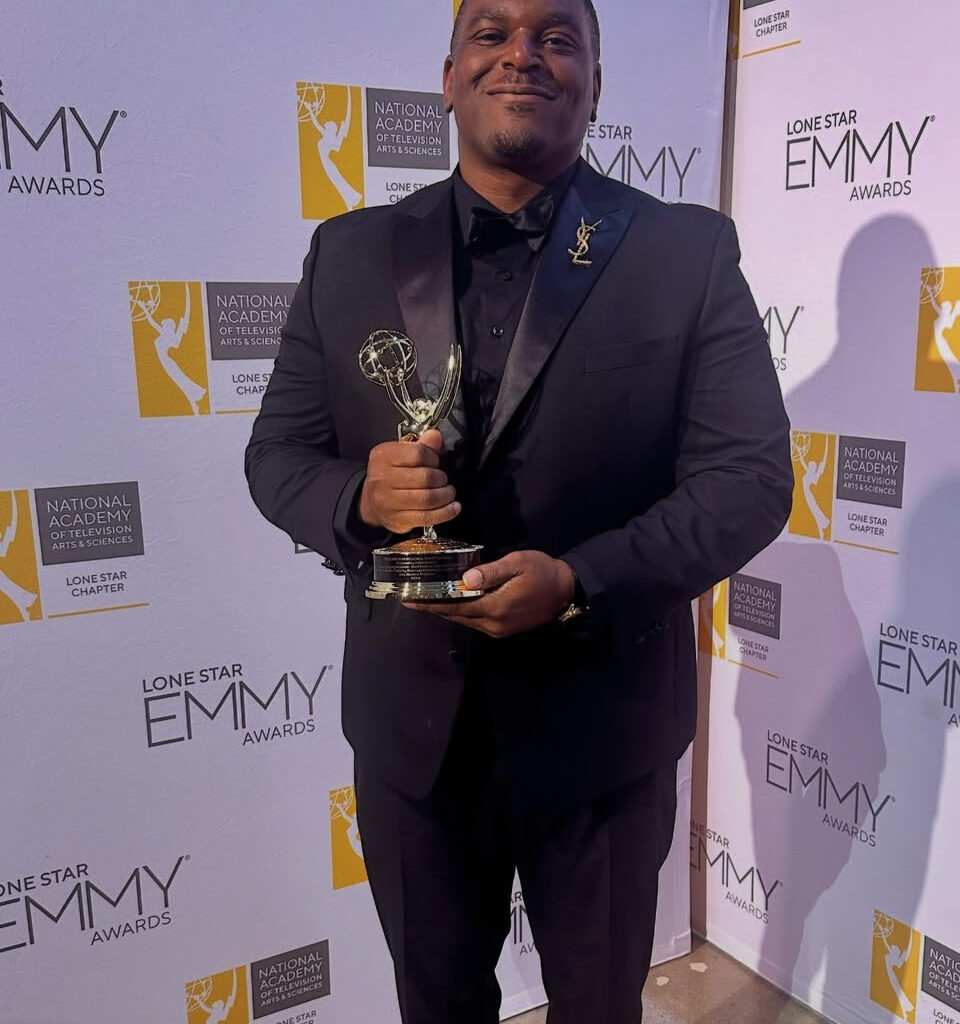
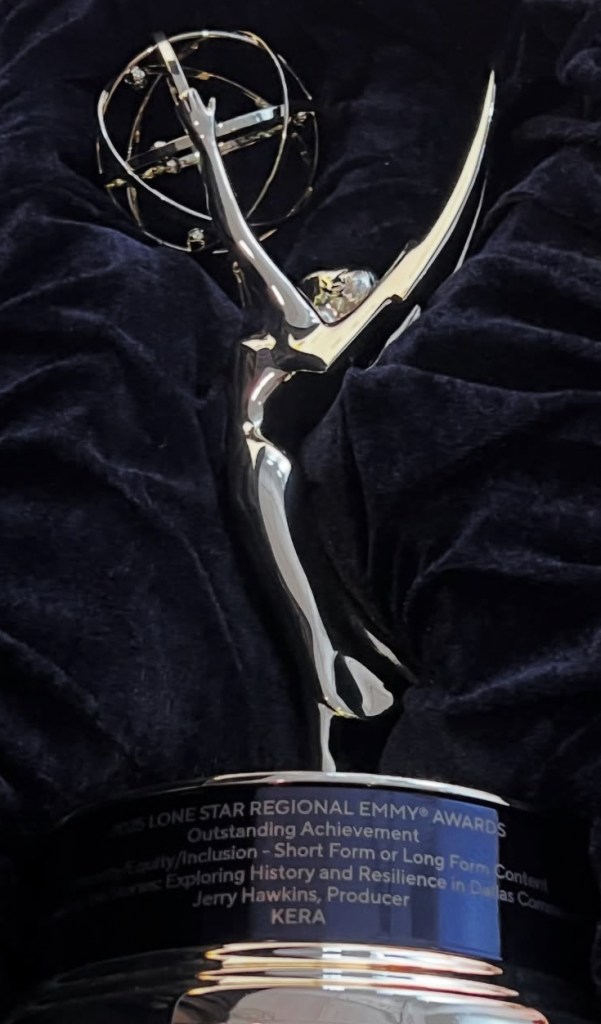
When Dallas Weekly sat down with Jerry L. Hawkins fresh off their Emmy win for Recovering the Stories, the conversation opened with a laugh. Hawkins joked that between the Emmy and a community Tony recognition years ago, he was now “halfway to an EGOT.” But beneath the humor was a deep gratitude—for the award, for the people who helped bring the project to life, and for the communities whose histories it uplifts.
Recovering the Stories is a documentary series that traces overlooked chapters of Dallas history. The project originated not at KERA, where it ultimately aired, but at Dallas Truth, Racial Healing, and Transformation (TRHT), Hawkins’ former organization. Its spark came from a Dallas history tour given years ago for visiting racial equity leaders. What stunned Hawkins most was not the guests’ reaction, but the lifelong Dallas residents who admitted they had never heard these stories.
“That stuck with me,” Hawkins said. “The last comprehensive documentary on Dallas was 40 years old—and it wasn’t equitable. We needed something new. Something ours.”
Supported by a willing funder and a community advisory board made up of historians, activists, archivists, and local leaders, the team narrowed more than 100 potential stories down to six communities. After three years of interviews, research, and filming, the series launched on KERA last October.
Why Local Storytelling Matters
Hawkins’ acceptance speech at the Emmys was limited to 20 seconds, nowhere near enough time for a true Emmy acceptance speech. But in an exclusive conversation with Dallas Weekly, Hawkins expanded on a theme that mattered deeply: public media is under threat, and storytelling like this is part of how we keep it alive.
The Corporation for Public Broadcasting, once the key conduit for federal funds to NPR, PBS, and their affiliates, has been defunded. That leaves local stations scrambling for sustainability.
Documentaries like Recovering the Stories, Hawkins said, show what public media can still do at its best: partner with communities, highlight suppressed histories, and make those stories accessible to all.
“It can start as small as working with a neighborhood-based organization,” they said. “And it can turn into something award-winning. That’s the power of local media.”
Hawkins encouraged viewers to actively support KERA. “They bring news that actually impacts you. And most of it is accessible. You don’t have to pay to participate in local media.”
The People Behind the Project
If the Emmy belongs to anyone, Hawkins said, it belongs to the community.
Hawkins credits KERA’s video team, led by Casey Ellison, and the Dallas TRHT crew, including lead interviewer Dr. Caroli Climchock, as foundational partners. But the most profound credit went to the residents of West and South Dallas who volunteered their stories.
“These were harrowing stories: bombings, gangs, resettlement. But they were also stories of resilience,” Hawkins said.
One familiar example of these stories: young people, under the leadership of Juanita Craft, integrating the State Fair of Texas.
RELATED: The State Fair Was The Worst Thing To Happen To Fair Park
“If they didn’t do that, many of us wouldn’t be welcome in that space today.”
What Comes Next
The Emmy has already sparked new ideas. Hawkins hopes to produce a similar series in Fort Worth.
The win also reinforced something personal. “The racial equity field has been hollowed out,” Hawkins reflected. “This was deeply personal for me. It reminded me why storytelling matters.”
 Credit: Jerry Hawkins via Instagram
A community celebration is already in the works. Hawkins plans to carry the Emmy with them everywhere for a week so Dallas residents can see it, touch it, take photos with it—because in their words, “it belongs to them.”
Closing Reflections
Hawkins ended the conversation with another round of gratitude for the community members who trusted them with their stories, for KERA’s Casey Ellison and veteran journalist Sylvia Komatsu and for Dallas Weekly itself.
“It’s a dream to be associated with a historic institution like Dallas Weekly,” Hawkins said.
Hawkins’ Emmy win is more than a milestone for a dedicated journalist. It’s a moment of affirmation for Dallas, local media and the generations who fought to ensure their stories wouldn’t be forgotten.
Related