
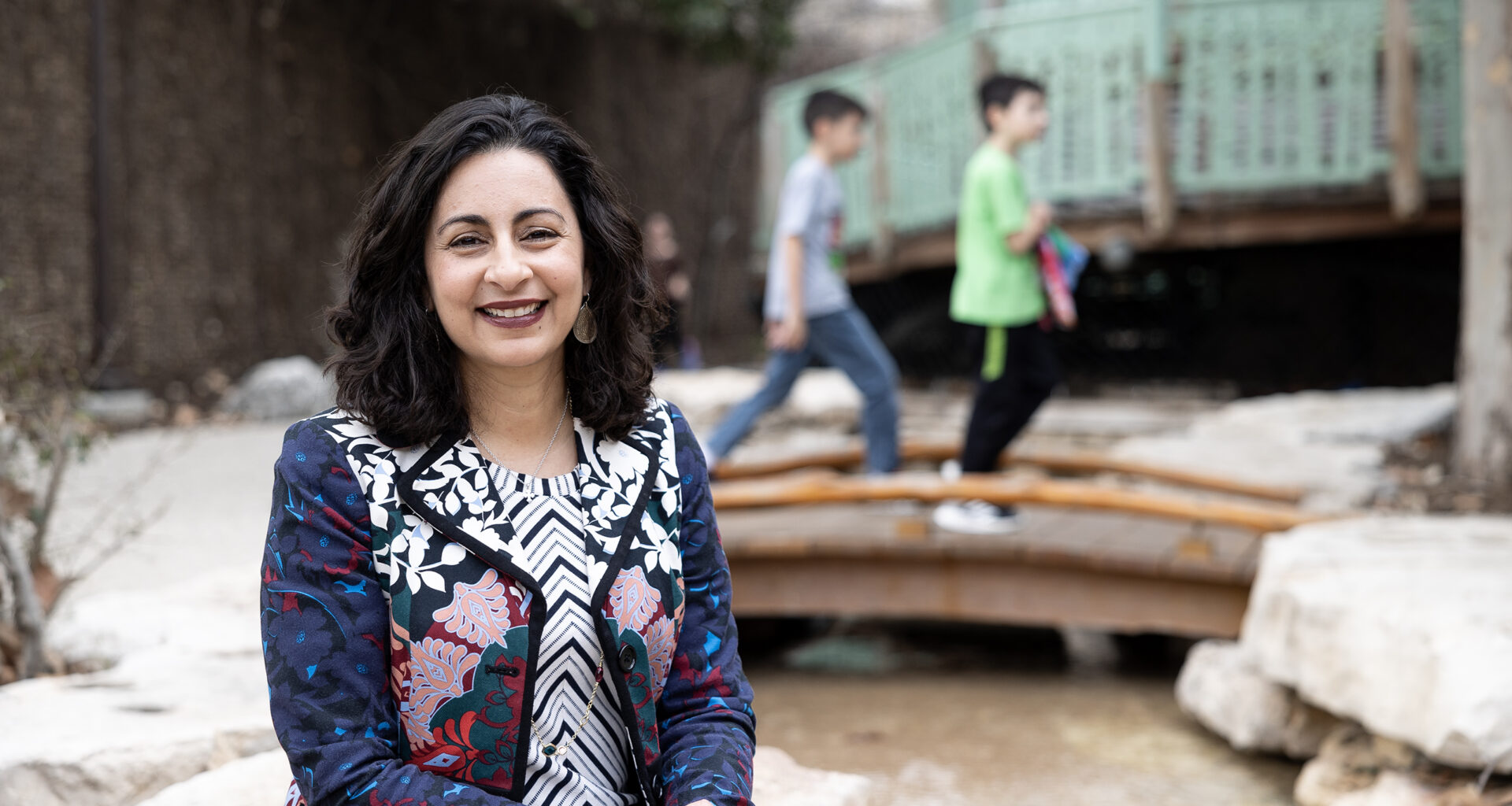
Early access to dyslexia diagnoses, therapy and education, could change the entire life of a child with the condition, which today affects 1 in 5 children, said Celebrate Dyslexia founder and CEO Jasmin Dean.
Dyslexia is a neurodevelopmental condition that affects a person’s ability to read, write and spell. Early intervention before the age of 9, she said, is key to prevent a child from falling too far behind.
“There’s no escape, if you can’t read, what subject is going to be a subject that you thrive in?” Dean said. “Teaching a student to read is non-negotiable in elementary school. It’s not going to get easier the later on they progress in education.”
On the latest podcast episode of bigcitysmalltown Dean dives into her personal experience of navigating the education system with a child with dyslexia.
This was the catalyst that prompted her to start a nonprofit organization with a mission to better equip teachers, students and parents with knowledge to identify and support children with dyslexia.
“I can tell you what I was told, ‘Give your student the gift of time,” Dean told host Bob Rivard. “And really by the time we got the necessary identification for my oldest son, it was too late.”
Celebrate Dyslexia was founded in 2019 and today it offers professional development for educators, certificate programs and support to parents.
The organization’s mission goes beyond the classroom. Dean believes policy at the state and federal level is needed to recognize dyslexia as a medical issue that should be covered by insurance to address diagnosis and early intervention.
Insurance covers billable conditions through Medicaid in public education, Dean explained, so if the school is using occupational therapy and speech, then they can bill Medicaid. The same can be true for dyslexia, she said.
“With prevention, which is a lot less expensive than dealing with the comorbidities of incarceration rates, low economic mobility, anxiety, depression… it would actually save both industries a lot of money in the long run,” Dean said.
In public schools, intervention calls for struggling students to be pulled out of general education, which is viewed as Tier 1, to be taught in a small group setting, or Tier 2, and when this fails students are moved to special education.
By then, Dean says it might be too late.
“When we have that, the student has already experienced failure,” Dean said. “So if we can catch them early, if we are really looking at the science of teaching, reading and equipping teachers to know how to teach every student how to read, then we are throwing that net wide and we’re catching more students earlier to avoid that academic failure earlier on.”
Dean also talked about the opening of Celebrate Dyslexia Schools, a public charter school that opened in 2024 and is currently serving 100 children grades kindergarten through 4th grade.
The school was founded through grants and donations. But this isn’t meant to be the sole solution, Dean said, as the hope is to get more teachers trained in early childhood identification of dyslexia, and more districts interested in partnering with the organization for curriculum and preventative measures.
“I don’t have a traditional education background, and I, again, started this journey at my dining room table, with my children,” Dean said. “If we were able to accomplish this in a few short years, I know our school systems could do it.”