
I was probably 13 years old.
It was near the end of middle school, during a wintry holiday vacation back home in Connecticut. I was at my best friend Kate’s house, sitting in her bedroom, and listening to her dish with other girls from my class. Honest, unfiltered talk. Complaints about boys.
“Wait a minute,” I asked. “What about me? Aren’t I one of the boys?”
Oh Kit, don’t worry, you don’t count, they all assured me.
I remember later, when I returned home, I asked my mother, “What do they mean I don’t count as a boy?”
I don’t even remember what advice she gave me, but we both recalled this incident recently, when I called my mom to tell her I’d started taking estrogen. That remembered question, “What do they mean I don’t count?” had popped back into both of our heads 34 years later.
Now it’s taken on a new shape.
I’ve had the chance, in the intervening years, to assemble moments like the one at Kate’s house into a narrative. Each one as if connected by a bright red string. The times I stood out from others. Ones where I made a choice to be different, or sometimes when others’ simply recognized that difference in me, no matter how hard I tried to fit into the box I’d been assigned at birth.
I remember laying under a giant tent at Burning Man in 2002, hiding from the unrelenting sun, wind, and dust. I was with a friend from Austin. “Where,” I asked him, “did you get that fabulous leopard print catsuit?”
Kit, you need to start shopping in the women’s section, he replied.
It was like a lightbulb clicked on in my head: I’m allowed to do that? No one will stop me?
I started following his advice as soon as we got back to Texas. I quickly became agile at finding fabulous or cute things in thrift stores. But it took a while longer to realize that the reason I felt bored, frustrated, and uncomfortable with men’s fashion was because I’m not a man at all.
For me, these moments transform in retrospect. Transitioning didn’t begin when I decided to start estrogen, but decades ago, when I realized — one revelation at a time — that I was becoming an adult free to make my own choices about my identity and its expression. Small moments which led me to be here now, writing to you.
Even with all the queer life — joy, discrimination, and everything in between — I’ve experienced, there’s still an intrusive little voice in the back of my head that questions whether y’all will think I’m trans enough, Texan enough, or a real enough journalist to be here, writing to you. But if Olivia can be brave in this space, so can I.
My name is Kit O’Connell.
I’m a transgender enby, usually a femme, and I use they/them pronouns. Starting this week, I’ll be covering queer and trans life in Texas for Big & Bright — The Barbed Wire’s first underwritten vertical. I’ll be your host as the section’s newsletter writer, contributing two pieces per month. Look for pop culture takes, news features, and personal essays like this one.
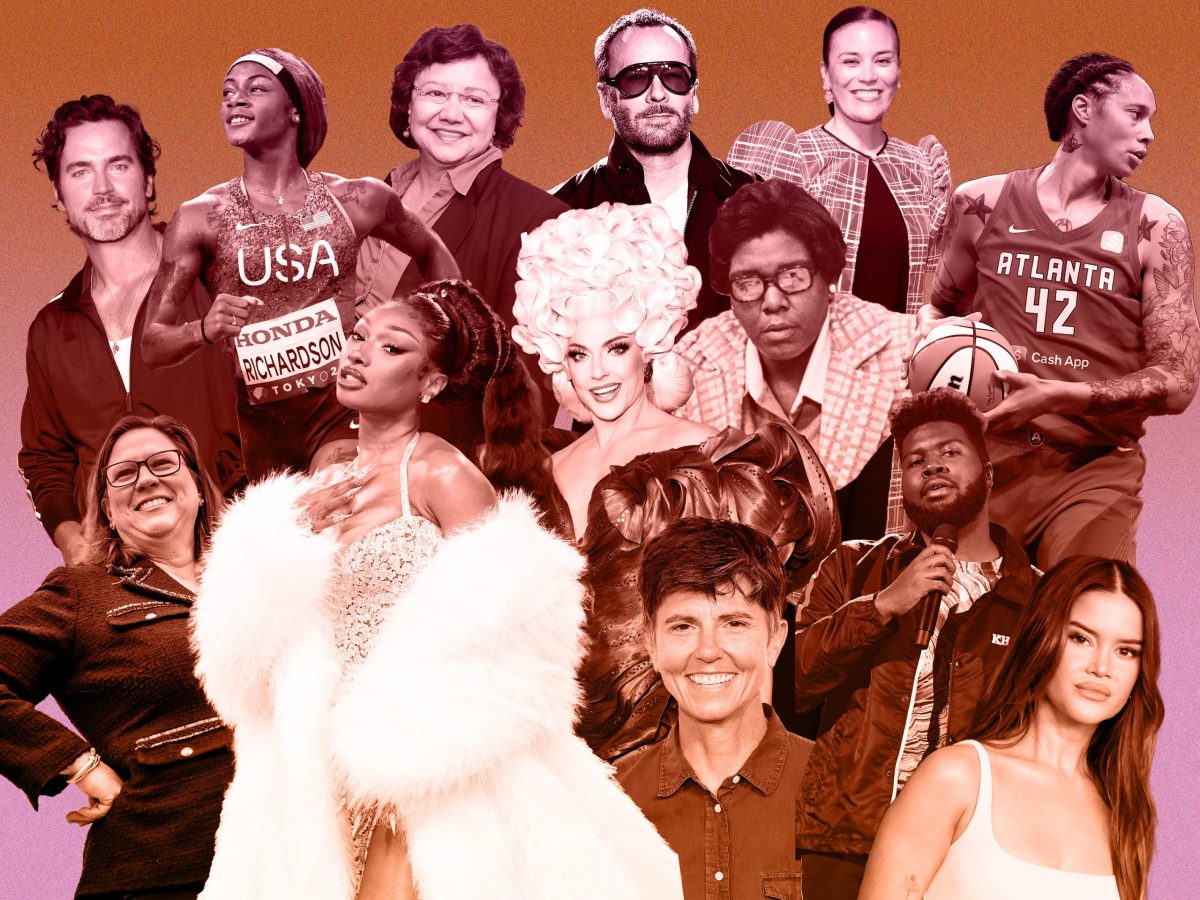
I’m so excited to be a part of this new project because Texas desperately needs a place where we can tell our stories, where we can be ourselves, mourn our losses, and celebrate our victories.
As I mentioned, I’m originally from Connecticut. I moved to Austin at age 19 because I’d fallen for a woman on the internet; after two whole visits to Texas, I packed up my metaphorical U-Haul to follow her here. Our relationship fell apart about a month after my plane landed, but I have remained unceasingly in love with Austin. The possibilities, the vibrancy of its culture, and its embrace of open queerness turned a crush into a long-term relationship with this city.
I did spend a while bouncing around other parts of the state, including Houston, before I returned to Austin just in time for the kickoff of the Occupy Wall Street movement in 2011, and its satellite branch in our city. Another inflection point for my life came one night in February 2012, as I live-tweeted the city’s sweep of the Occupy Austin encampment. My coverage of the arrests, the marches, and the police’s destruction of the tents led to the start of my journalism career at a now-defunct political blog.
As years passed, I stayed in Texas despite the hostile laws against LGBTQ+ residents and even the death threats. I was the editor in chief of a website about industrial hemp, then worked as the digital editor at Texas Observer from 2023 to 2024. My reporting has been profiled in the Columbia Journalism Review. Particularly in Austin, I have found belonging in the ecofeminist pagan coven I joined, the festival where I found my first skirt at a costume swap, the Little Gay Book Club, and so much more. As I documented in Big & Bright two weeks ago, there’s everything from hiking clubs to Magic: the Gathering nights geared towards the rainbow umbrella.
Even with gay campgrounds, it’s not easy living in Texas. If you’re part of the LGBTQ+ community and reading this, I don’t need to tell you that. I have covered bomb threats over gender inclusive bathrooms and written about the aftermath of a violent anti-trans attack at Barton Springs — and the way the community gathered afterward. I worry, too, about the new “bathroom bill” that bans transgender people from using their preferred bathroom in certain public buildings, and whether it will make random strangers accost me when I’m just trying to go in peace. I’m scared of the targeting of our healthcare and worry about how I’ll keep getting my E. The rise of fascism keeps me up at night. Still, I can’t escape from the feeling that this state is where I belong, and it’s where my community lives.
If I eventually do leave, I want it to be because I’ve found that same kind of community elsewhere, not because I’m driven out. As Gwen Howerton, the Chron’s transgender Texas culture reporter, told OutSmart magazine: “This is my home … I want to leave on my own terms, not because some people don’t like who I am.”
Journalists and queer folks have a lot in common, including our propensity for piecing together disparate moments and making a narrative out of them. For queer people, it’s usually the story of our coming out, our transition, or our journey to finding a place where we belong.
Belonging can mean any number of things: Seeing yourself represented in your community, feeling supported by allies, finding someone whose journey here mirrors your own. As a journalist, I’m not covering the community from the outside. And I’m not pretending to — instead, I understand the weight of hostile legal and policy decisions, hate crimes, and discrimination because I am directly impacted by them.
But I’ve never had any pretense of being neutral when it comes to issues that matter to us all, including supporting LGBTQ+ rights. For that reason, I’ve always been more at home in progressive publications, where I can be a movement journalist — “a journalist in service to liberation,” to quote the Press On collective — while disclosing my perspective, and backing it all up with solid, fact-based reporting.
It hasn’t escaped me that the parts of the media we’d previously carved out for queer voices, and the voices of other marginalized groups, are rapidly disappearing. Earlier this month, just a couple of weeks after I’d finally been published in Teen Vogue, a personal bucket list goal, Conde Nast announced it was abandoning the title as a stand-alone magazine. The company laid off six employees, mostly BIPOC women plus the nonbinary politics editor, Lex McMenamin, who had pushed Teen Vogue’s progressive news coverage to international prominence. Last month, NBC News eliminated teams that covered queer, Black, Latino, and Asian communities. According to GLAAD, queer and trans characters are rapidly disappearing from TV, too.
I would never begrudge someone for leaving a state where they feel unsafe, but the more that marginalized voices disappear from legacy outlets, the more it matters to fight for our corner instead of abandoning it.
It matters to have places in journalism, in media, where we belong and where we can see ourselves.
I had brunch with a transmasculine friend recently, hiding from overcast skies under an umbrella at the Vegan Nom Food Court in East Austin. He laughed when I told him about that afternoon in Kate’s bedroom, because he’d had a nearly identical moment to mine, except with the genders reversed: Don’t worry, you’re just like one of the boys.
It reminded me how important it is to share these smaller, sometimes overlooked parts of our journeys with each other, because so often they’re actually the common experiences that bind us together.
They help us remember that we aren’t alone.
I hope everyone will enjoy what we publish in Big & Bright. But I’m also glad it’s a space for our stories: stories of our struggle to survive, but also about our resilience, our joy, and our journeys of self-discovery — stories other publications sometimes reject because they aren’t sad or “serious” enough.
This is a space where we can be our biggest and brightest, messiest and most complex selves. I look forward to sharing that with you.
Do you have a story about queer Texas survival, joy, or even hardship? Do you think nobody else will tell it? Send me tips to kit@thebarbedwire.com.
Related