
Ironically, when we think of Spanish music, the immediate associations are often works by French composers: Bizet’s Carmen and orchestral works by Lalo, Chabrier, Debussy and Ravel.
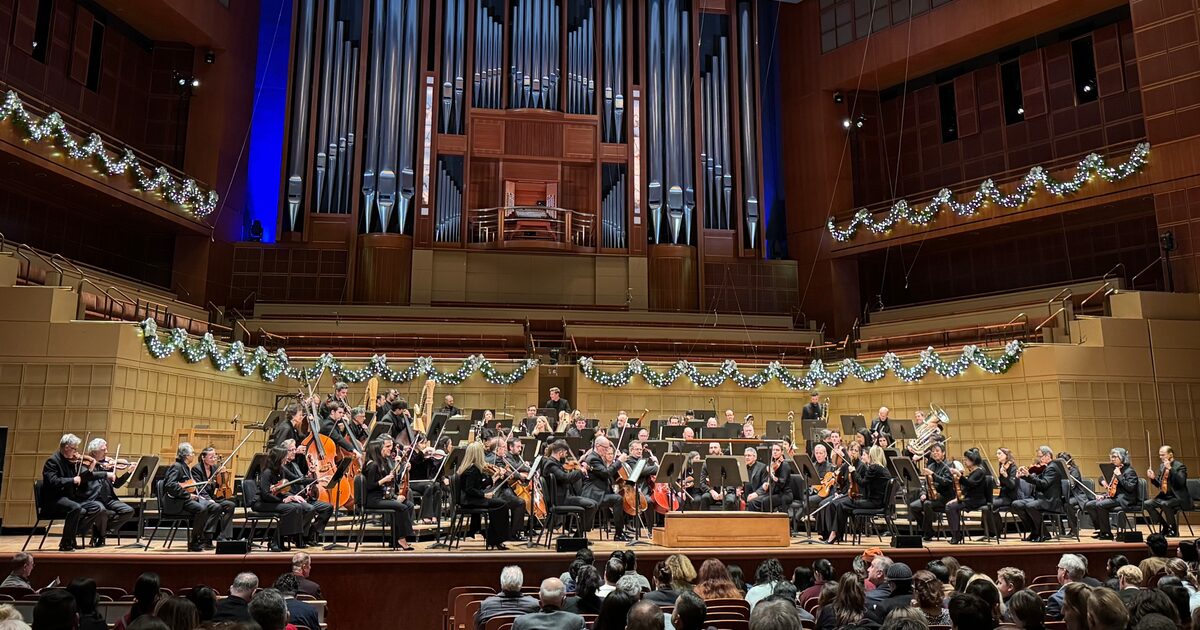
Friday night’s Dallas Symphony Orchestra concert framed two works by a genuine Spaniard, Manuel de Falla, with two Spanish-inflected works by Ravel. Jun Märkl was the guest conductor, with pianist Javier Perianes as soloist in Falla’s Nights in the Gardens of Spain.
Märkl, who’s guest-conducted here a number of times, holds simultaneous music director/principal conductor positions with the Indianapolis Symphony, the Residentie Orchestra in the Netherlands and the Taiwan Philharmonic. Conducting entirely from memory, with gestures quite demonstrative but clear, with fastidious cueing, he had the orchestra playing fabulously in three of the four pieces. Occasional out-of-sync slips in Gardens seemed more issues with the pianist.
Ravel’s Alborada del gracioso (Morning Song of the Jester) and Rapsodie espagnole speak Spanish with a heavy French accent. Son of a French father and Basque mother, the composer was born a mere 11 miles from the Spanish border, although his family soon moved to Paris. Falla, who spent important formative years in Paris, learned much from Debussy, Ravel, Dukas and others, but he already had absorbed Spanish song and dance idioms. Adding to the program’s logic, the composers were born within a year of each other, in the mid 1870s, and all four pieces were premiered between 1908 and 1919.
News Roundups
In a concert whose every work is a display of orchestration alternately brilliant and delicately tinted, the acoustics of the Meyerson Symphony Center gave the music visceral impact but also glorious spaciousness. Ravel’s works, of course, have an elegance and subtlety all their own. Falla favors brighter colors and earthier rhythms, although much of Gardens floats in a dream world.
None of the program’s 11 movements is one you can set on auto-pilot; each challenges a conductor to manage myriad shifts of pace, texture and mood. That Märkl was fully in command of every detail was immediately evident in the opening Alborada (the composer’s orchestration of an earlier piano piece). From edgy opening pluckings to great explosions of sound, from atmospheric delicacies to final razzle-dazzle, the orchestra played splendidly, with gorgeous solos from principal bassoonist Ted Soluri.
In the Rapsodie espagnole Märkl no less fastidiously managed the barest wisps of sound, the dreamy reminiscence of a habañera and the accumulating excitement of the final feria, with just the right stretchings at pivotal points.
The Second Suite from Falla’s score for the ballet The Three-Cornered Hat was another display of a sure and sympathetic hand on the baton, and the DSO’s keen responsiveness. The music really danced.
Nights in the Gardens of Spain is one of those pieces that probably require a first-rate performance to come off. Alas, Perianes exhibited a limited range of color, and often a too-hard touch, and some rhythmic waywardness challenged Märkl and the orchestra to synchronize.
Märkl spoke charmingly during stage re-setting for Gardens, but between his accent and murky amplification much was a blur.
Details
Repeats at 7:30 p.m. Saturday and 2 p.m. Sunday at Meyerson Symphony Center, 2301 Flora St. $37 to $180. 214-849-4376, dallassymphony.org.