
For over three decades, Jessica Roberts never knew the identity of the person who fatally shot her mother before dumping Cynthia Gonzalez’s body in a wooded, rural stretch of Johnson County.
But in early November, her phone rang.
Roberts was shocked when she received a call from Arlington police saying they had made an arrest in the unsolved case that had grown cold during the ensuing years.
“I was just beside myself,” she said tearfully, during a news conference at Arlington police headquarters on Nov. 17, when the department first announced news of an arrest. “I’m still processing this.”
Police said Janie Perkins, 63, a woman considered at the time to be a friend of Gonzalez, was now in custody and charged with capital murder in the slaying. Investigators say now they believe Gonzalez and Perkins were in a love triangle with a man, who had recently ended his relationship with the accused gunwoman in order to be exclusively with Gonzalez.
Crime in The News
Related
Arlington police had help potentially cracking the case.
Fifteen students enrolled in a new class offered by the University of Texas at Arlington called Special Topics in Crime and Criminology: Forensic Assessment of Cold Case Files, who brought new eyes to an investigation that had long perplexed the original Arlington homicide detective, who died without ever identifying a suspect.
The students are now reviewing two other unsolved homicide cases in Arlington PD files, sparking hope that lightning will strike a second and third time for relatives of those victims who are still waiting to get a call like the one Roberts did.
“This is going to give so many families so much hope,” Roberts said. “Families who have been wanting closure for their family members.”
CSI comes to UTA
Locked cabinets with case files. Hundreds of pages of documents holding information about three cold homicide cases. Fifteen students. One professor.
Patricia Eddings, a senior lecturer in UTA’s Department of Criminology & Criminal Justice, presides over the class and students who helped solve Gonzalez’s slaying.
The students — split into three groups — were handed three cold case files by the Arlington Police Department in September at the start of the fall semester, allowing them to review notes, evidence and information that had sat dormant for years.
The students provided new lines of questions for detectives and came up with new notes to ask police about.
“I wasn’t really expecting for anything like that to happen,” said Jenna Lewis, a senior who was part of the group that worked on Gonzalez’s case. “I know me and my group, we were just so happy that we were able to be a part of it and help out.”
Lewis said she took the class because she wants to explore the field of forensics in the future and thought this would be a good way of gaining real-world experience. She said the cases were assigned at random, and over the course of the semester, her group worked together to find information that stood out to them.

A flash drive holding case files is given to each group of the UT-Arlington Forensic Assessment of Cold Case Files course. The Arlington Police Department provides students with a flash drive containing all of the case’s information, besides physical evidence.
Christine Vo / Staff Photographer
The hundreds of pages of material that were provided to the students on a flash drive included lab reports, photographs and videos from the crime scene along with autopsy reports, Lewis said.
“We all only have one computer, so we’ll kind of sometimes take turns looking at it,” she said.
About midway through the semester, the students from each group compiled all their notes and questions and shared those with the detectives at the police department.
New eyes help in old case
Police arrested Perkins on Nov. 6 in connection with the slaying of Gonzalez, who was 25 at the time. Gonzalez was reported missing by her ex-husband and her body was found a few days later, dumped on private property in rural Johnson County.
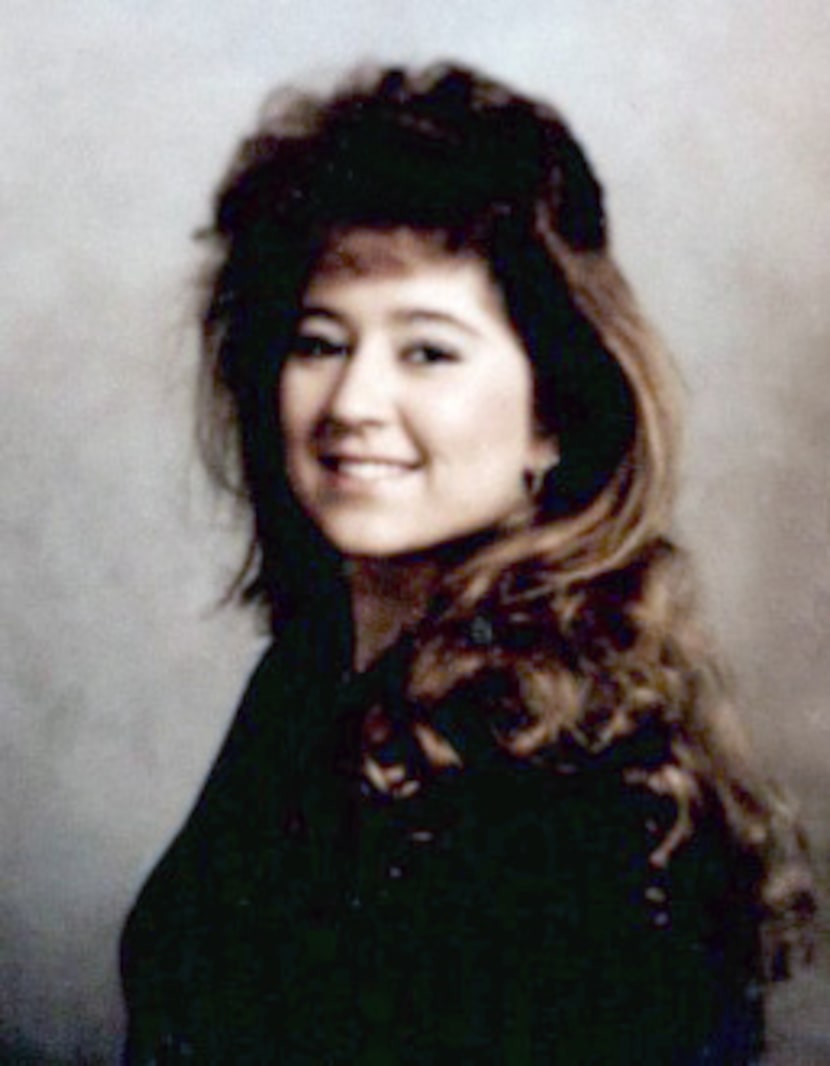
Cynthia Gonzalez, in an undated photo provided by Arlington police.
Special Contributor
Arlington police did not provide specifics about their original case and why they didn’t identify Perkins sooner as a suspect in the slaying.
In an earlier news release, police said Perkins had been initially investigated after they found she and Gonzalez shared a romantic partner.
Perkins could not provide the original Arlington detectives with an alibi for where she was the night Gonzalez went missing. Police did say the woman failed two voluntary polygraph tests when she was asked if she killed Gonzalez or knew who did.
But police, saying polygraph tests are not admissible in court, never charged Perkins in the years that followed.
Arlington investigators told The News that the evidence against Perkins is largely circumstantial, and in the 1990s the criminal justice system favored cases where physical evidence and DNA played a larger role in helping to prove the guilt of suspects.
The Law Offices of Gill & Brissette, the law firm reportedly representing Perkins, did not respond to an email and phone call request for comment from The News.
For several years, detectives pursued many leads but never made an arrest. In 2024, the case was assigned to a homicide detective who kept the case open as he investigated newer cases.
Arlington police told The Dallas Morning News that Gonzalez worked as an “adult entertainer” before she was slain. Given the nature of her work, the homicide detective primarily focused on potential male suspects during his initial review and found no new leads.
The case eventually made its way into UTA’s Department of Criminology and Criminal Justice, where students began asking questions about the possibility that Gonzalez had been slain by a woman.
This intrigued the detective and he went back to the case files to learn everything he could about Perkins.
“He learned about the concerning statements she made to investigators in the 1990s,” Arlington police said in email response. “He began comparing her previous statements to other evidence in the case and ultimately felt there was probable cause to arrest.”
Police said now that they have identified Perkins as a suspect in the murder, they are conducting additional DNA testing on the evidence.
The Arlington Police Department does not have a dedicated cold case unit and their unsolved cases are assigned to homicide detectives who have to work on their old and new cases.
“Regretfully, we have a lot of violent crime in Arlington, so they’re very busy, and that gives them very little time to work on these cases,” Eddings said.
According to Arlington police, the department has about 100 unsolved murder cases that date back to the 1970s.
Solving murders for college credit
Eddings, who worked with the police department to put together this course for the fall term, said this was the first time in her career that she witnessed students help potentially solve a real-world case.
When the course was initially announced, Eddings received between 20 to 25 applications and picked 15 students for the fall semester. Amid the national attention garnered by the Gonzalez case, Eddings said she has had a spike in students reaching out to express their interest in joining her class for the next semester.
“I am pretty much assured I’m going to have hundreds of applications for the next class,” she said.
The selection process consists of an initial review of applications by the professor and an array of required courses to be completed as a prerequisite, including introduction to forensics, forensic death investigation and crime scene investigation, Eddings said.
Lewis said those preliminary courseshelped her navigate the material in the case files. She said it is important to have the foundational knowledge to know what to do with the information.
Even though the anticipated number of applications is high for the next semester, Eddings said she intends to limit class enrollment to 15 students. .
“We feel like 15 is a very adequate number, because five people to evaluate one case seems to have worked beautifully this semester,” she said.
Ella Morrow, a senior majoring in criminal justice and criminology, said working with real cold cases is a unique opportunity.
“I feel like that’s not an opportunity that college students get,” she said. “That’s something unheard of.”
The class has piqued the students’ interest to a point where they put in extra hours to work on the cold cases. The students often arrive three to four hours early and stay hours after the class to work on the cases assigned to them, Morrow said.
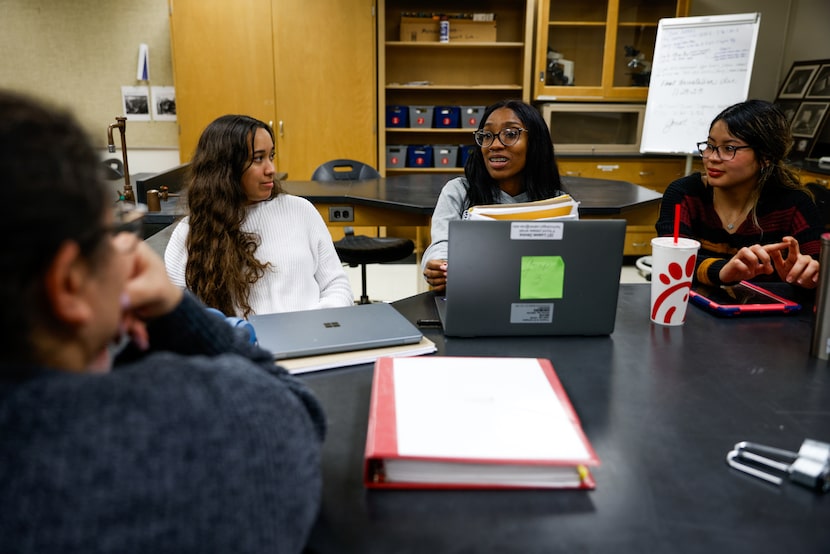
Left to right: Biology student Roxana Carpenter, criminology and criminal justice junior Charlotte Bitsoin, senior Joie White and senior Shelly Cruz discuss how they will divide up the rest of their case in the Forensic Assessment of Cold Case Files course Thursday, Nov. 20, 2025, at UT-Arlington. The course is a partnership with professor Patricia Eddings and the Arlington Police Department.
Christine Vo / Staff Photographer
“We have our materials, and we just work and work and work … and see what gaps we can find and try to solve a cold case,” she said.
While there was no written contract on confidentiality signed by the students, they adhere to strict rules when it comes to the information in the case files.
Eddings said each student had to verbally state that they will not share any information about the cases outside of the class — including family. She said she knew most of the students from previous semesters and felt confident they would not break their promise.
Eddings said she is planning to incorporate a formal agreement of confidentiality for the upcoming batch of students.
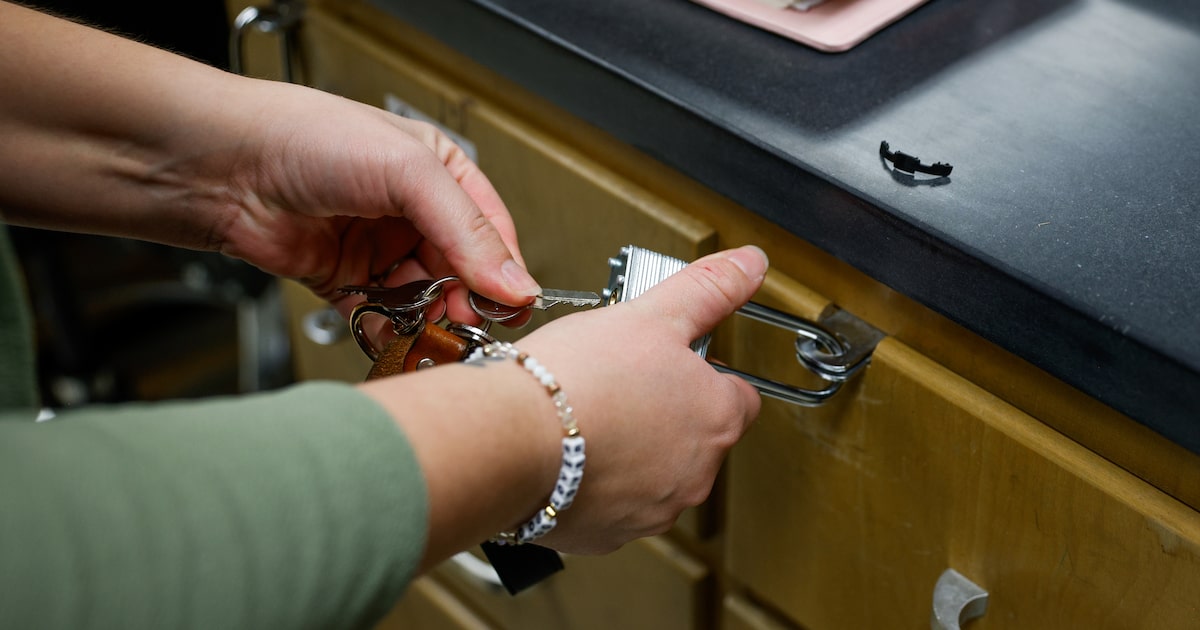
Each group shares a computer and materials that are related to the cases are locked in secure cabinets in the classroom. Nothing leaves the classroom.
“We don’t want to do anything that could, like, hinder the process of doing the case,” Lewis said.
The relatives of the victims of the three cold cases have no idea the students worked on them throughout the semester, Eddings said.
Joie White, a senior majoring in criminal justice, said one of the biggest things she learned in the class was that detective work requires a lot of time and energy.
“I’ll say that every little detail matters,” White said. “So, I learned to, like, look over details multiple times.”
The Gonzalez case was picked as one of the cases to be reviewed by the students because the supervisor of the Homicide Unit believed there was value in having the students go through the case file with “a fine-tooth comb.”
“It ended up paying off,” police said in an email.
“If we’re able to get somewhere with these cold cases, there’s so many more cold cases to be solved,” Morrow said.