
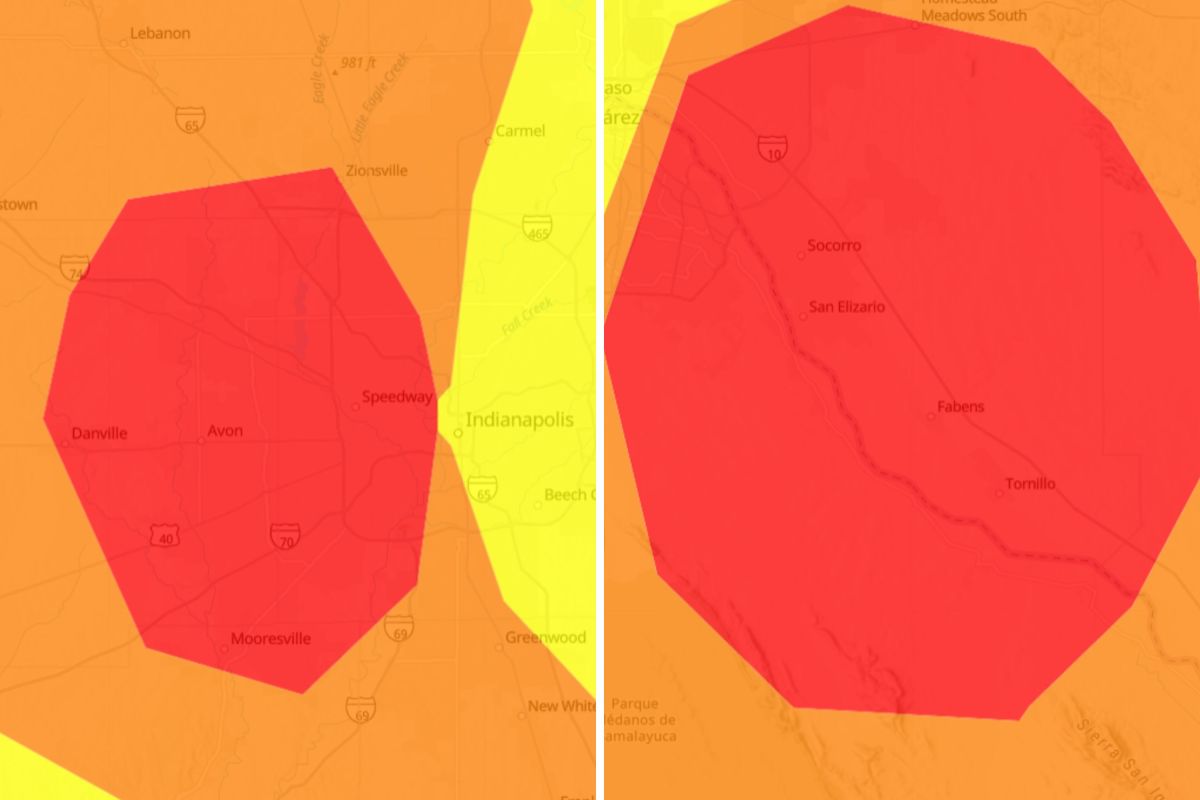
Thousands of residents in parts of Texas and Indiana face potentially unhealthy levels of air pollution early Saturday morning, a live map from AirNow shows.
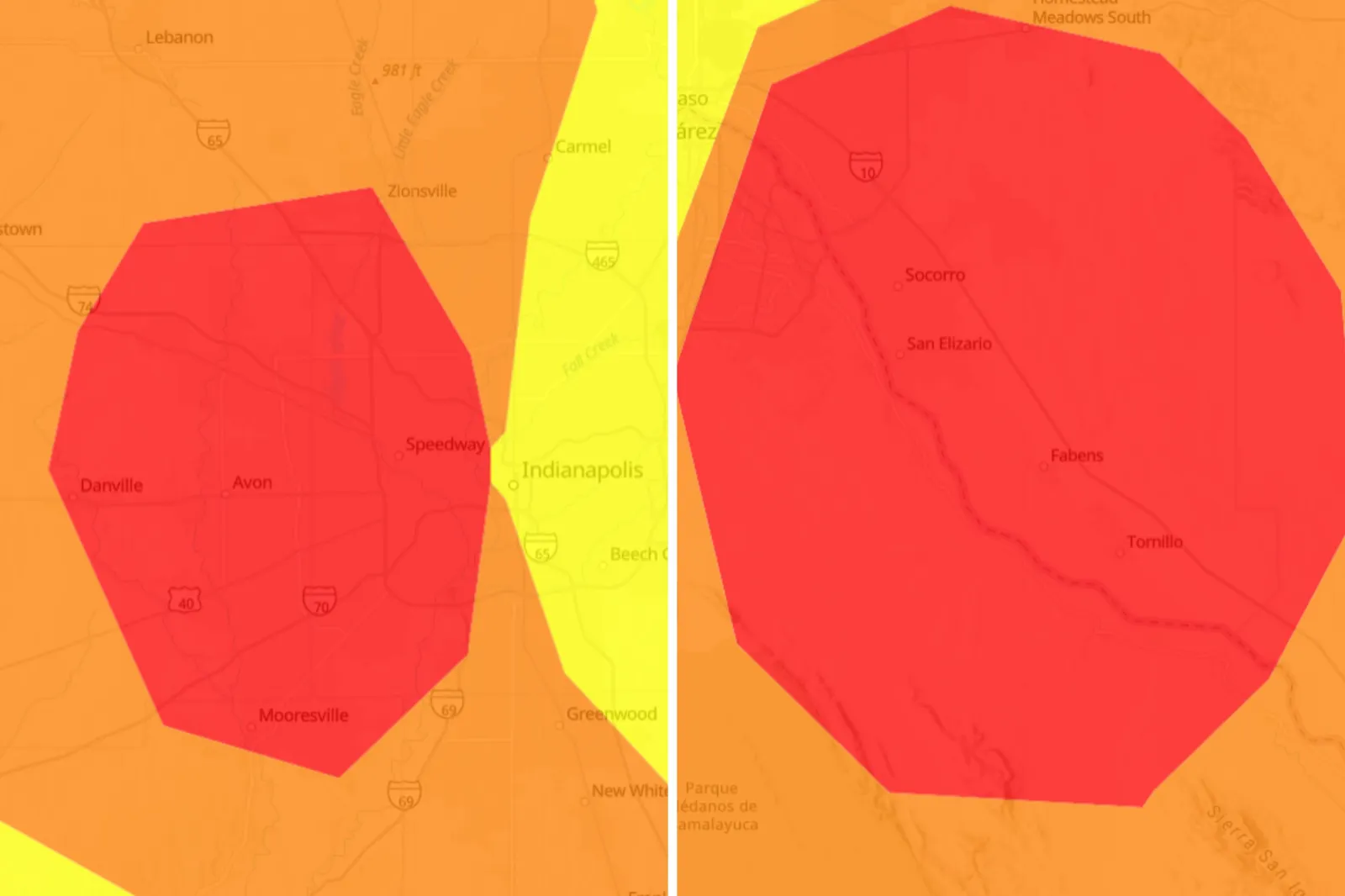
In Indiana, the map shows an area of fine particle (PM2.5) pollution in the “unhealthy” Air Quality Index (AQI) category spanning western Indianapolis, along with Mooresville and Danville.
In Texas, a pocket south-east of El Paso, including the towns of Socorro, San Elizario, Fabens, and Tornillo, face ozone and particulate matter (PM) readings in the “unhealthy” category.
At these air pollution levels, the Environmental Protection Agency (EPA) recommends that sensitive groups avoid long or intense outdoor activities and consider rescheduling moving them indoors.
The EPA also advises that the remainder of the population reduces long or intense activities, and to take more breaks during outdoor activities.
 Why It Matters
Officials and experts say that worsening air quality increases health risks for vulnerable groups, including older adults, children, and people with respiratory conditions.
What To Know
The Air Quality Index measures air pollution on a scale from 0 to 301 and above:
0—50 (Green): Good — air quality is satisfactory, and air pollution poses little or no risk.51—100 (Yellow): Moderate — air quality is acceptable. However, there may be a risk for some people, particularly those who are unusually sensitive to air pollution.101—150 (Orange): Unhealthy for sensitive groups — members of sensitive groups may experience health effects. The general public is less likely to be affected.151—200 (Red): Unhealthy — some members of the general public may experience health effects; members of sensitive groups may experience more serious health effects.201—300 (Purple): Very unhealthy — health alert. The risk of health effects is increased for everyone.301 and higher (Maroon): Hazardous — health warning of emergency conditions. Everyone is more likely to be affected.
AirNow, an air quality data resource, is a partnership between the EPA, National Oceanic and Atmospheric Administration, and several other agencies.
Separately, a mandatory wood-burning ban for residents in the South Coast Air Basin in California—which includes Orange County and non-desert portions of Los Angeles, Riverside, and San Bernardino counties—is in effect for Saturday.
The rule bans burning wood, pellets, and manufactured fire logs in any indoor or outdoor wood-burning device.
An air quality alert for the area published by the National Weather Service said: “Particles in smoke can get deep into the lungs and cause health problems (including asthma attacks), increases in emergency room visits, and hospitalizations. No-Burn Days are needed to protect public health when fine particle pollution levels are expected to be high anywhere in the South Coast Air Basin. No-Burn Days are based on fine particle pollution levels that are forecasted for an entire 24-hour period, which may not be reflected in real-time air quality maps.”
Exemptions from the no-burn day alert include areas above 3,000 feet in elevation, the Coachella Valley, the High Desert, homes that rely on wood as a sole source of heat, low-income households and those without natural gas service.
What People Are Saying
The Texas Commission on Environmental Quality said in a forecast for Saturday: “Light winds will persist in far West Texas and when combined with limited vertical mixing could keep urban fine particulate matter slightly elevated, with the daily PM2.5/PM10 AQIs netting out in the lower end of the ‘Moderate’ range in parts of the El Paso area.”
The EPA says on its website: “The size of particles is directly linked to their potential for causing health problems. Small particles less than 10 micrometers in diameter pose the greatest problems, because they can get deep into your lungs, and some may even get into your bloodstream.
“Exposure to such particles can affect both your lungs and your heart. Numerous scientific studies have linked particle pollution exposure to a variety of problems, including: premature death in people with heart or lung disease; nonfatal heart attacks; irregular heartbeat; aggravated asthma; decreased lung function; increased respiratory symptoms, such as irritation of the airways, coughing or difficulty breathing.
“People with heart or lung diseases, children, older adults, minority populations, and low socioeconomic status populations are the most likely to be affected by particle pollution exposure, either because they are more sensitive or may have higher exposures.”
What Happens Next
AirNow’s interactive map is regularly updated.
Update, 11/29/2025, 4:11 a.m. ET: This article was updated with additional information.