
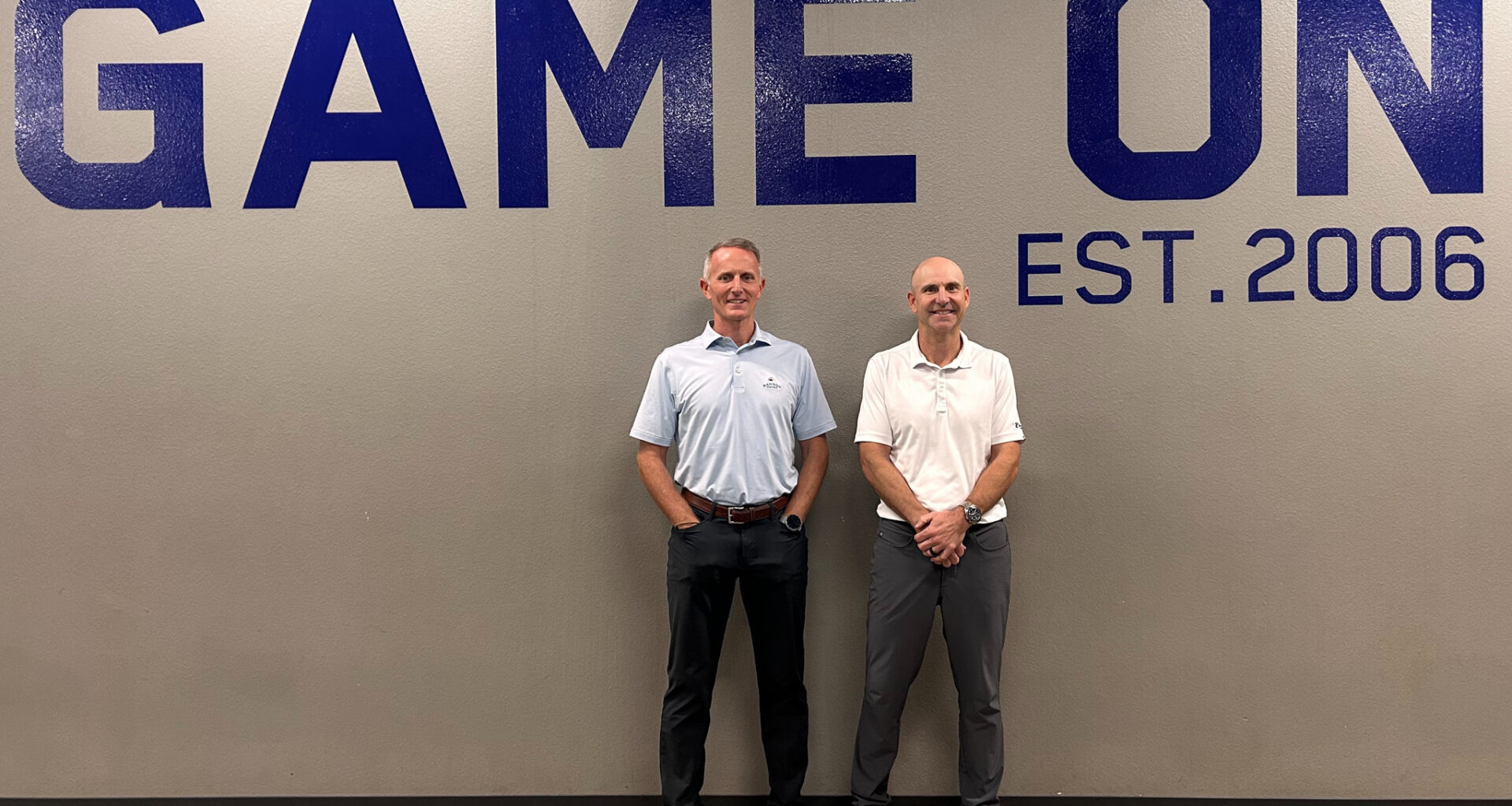
Trevor Armstrong and Larry Auth purchased Game On – Fort Worth in 2012. The company has two sports centers in west Fort Worth that house pickleball, soccer, volleyball and football. The duo also owns an apparel shop called Game On Soccer Shop and consults with others who want to start their own center offering courts, fields and other spaces for sports.
Local leadership has continued to push for additional sports complexes across Tarrant County.
Game On – Fort Worth
Contact information
Phone: 817-367-7800
Addresses:
Game On Arena Sports – 251 Settlement Plaza Drive, Fort Worth.
Game On Sports Complex – 2600 Alemeda St., Fort Worth.
Facebook: Game On Sports Complex.
Website: Game On – Fort Worth.
This interview has been edited for length and clarity.
Ismael M. Belkoura: Can you talk a little bit about how you started the business? What was that like in the early days?
Trevor Armstrong: Larry and I both come from an extensive background in hospitality, from management to sales. We actually met here in Fort Worth through networking and found we had a shared passion for soccer. We formed our partnership after playing an indoor soccer game in the parking lot at Game Monitoring Sports.
We wanted to leverage our really great hospitality to this industry. Larry and I are both parents. We’ve experienced it both as participants as well as having kids. We wanted to bring our knowledge of the business world and hospitality to the sports arena.
Larry Auth: We found that there was a need or a niche in Fort Worth that needed to be filled. A lot of families were driving east to Dallas or the Mid-Cities — whether it be for soccer, volleyball, basketball. We thought if we could build an environment or a community over here, the sports could grow and folks could still get great competition, a great learning environment, and not have to commute so much and give some time back to their families.
Belkoura: Talk a little bit about serving that niche. How has it been trying to fill that space?
Auth: (The complex) was built in 2006. We took it over in 2012. It was one field. We took it to two fields. We added football because we knew there was a need. And we added a store component.
The thing that was interesting at the beginning is most sports are played outdoors, and another small select group of sports — like basketball, volleyball — are played indoors. So the first journey was a lot of grassroots marketing. We had to go out and talk to soccer clubs and football organizations, and let them know that we existed in the area.
Soccer in particular is played 12 months a year, but most of that’s played outdoors. You’re trying to pull folks indoors, but usually they’re only going to come indoors for four out of the 12 months. So we had to make sure we communicated well and provide that.
Every business that we’ve seen in Fort Worth, it’s usually a three-to-five year ramp up time, and so we knew that it was going to take us several years. For the first few years, to be totally transparent, we actually kept our other jobs. And then we grew this up — we grew from a team of six associates, and now we’re 475.
Belkoura: What are the three services that you guys serve?
Auth: We have, technically, four businesses. Our first business is Game On Arena Sports, where we serve soccer, football and lacrosse, if needed. Over there, we have a store called Game On Soccer Shop, where we do uniforms and apparel. We’ve now expanded out to baseball, basketball, volleyball, etc. The other niche we found was in the basketball and volleyball community, so we built this facility (Game On Sports Complex) where we have basketball, volleyball, pickleball, baseball, sand volleyball, a performance center, a wellness center and golf. Then from there, folks have been approaching us over the last decade because they want to do similar facilities around the country. So we’ve now expanded that to Texas and other cities where we go and help them build their dream.
Belkoura: It is quite rare for these sports complexes to be locally owned, locally grown, and to have the success that y’all have had. When you give that advice to other people that are trying to enter the business outside of Fort Worth, what is that special sauce that you try to share with them?
Armstrong: We consider ourselves extremely blessed to be in Fort Worth. The community has been growing since we’ve started and before, so lots of new families and folks move to the area, and that’s really helped us. We grow a lot through word of mouth. That’s why we concentrate a lot on hospitality, running great leagues, running great training classes, really delivering a great product for folks to continue to not only come back, but also tell others. That’s really fueled our growth.
So when we go into other folks that hire us for consulting, we want to understand what’s special about that community and help them uncover their needs. What demands are being filled already there? What competition is there in other facilities? What’s the demand for the different sports that exist? What could it be in the future?
Auth: In DFW, we have more indoor sporting facilities than any place in the United States. To be transparent, we’re probably oversaturated at this point. As we go into other communities and speak to them, we’re going to look at feasibility, look at the market. Most of these places moving forward are going to need a subsidy of some sort from a city. We are one of the few in the country that don’t have a subsidy from the city or the county, truly privately held. Most of these, as they’re going up nowadays, are being either partially or fully funded by a city or county.
Going back to our secret sauce, we make sure that we give a personalized touch. We bring in the hospitality component. We’re going to give them honest feedback — this makes sense or doesn’t make sense. We probably tell people not to build just as much as we tell people to build because we want it to make sense for them.
The big piece is having the right capital set aside. These are high-volume, low-revenue models. You may have 5,000 people come through the doors, but they’re paying a low-revenue amount per transaction. So you’ve really got to set up the community with the right sports and the right team.
Belkoura: On top of this being y’all’s dream, you identified in Fort Worth that there was this need. In 2025, how do you view this ecosystem, specifically in Tarrant County?
Armstrong: What people don’t have an appreciation for is that sports are seasonal. For everybody that has kids, they’re transitioning from baseball season to soccer. They might do two sports at once, but typically you’re rotating throughout the year. So from a facility standpoint the challenge becomes, “How do you utilize the facility throughout the year?” The facility is a big box. The bills don’t go away just because it’s a slower season.
We’ve found unique ways and developed additional revenue streams to fill out the whole year. That’s really what we’ve learned to do over the last 13 years.
Auth: When we first opened up it was the Fieldhouse in Frisco and us. I think there were 14 soccer facilities. Now there’s close to 20. About 50% of those have already turned over.
Trends are going to change. Yes, basketball has been around for decades, as has volleyball, soccer. But the pickleball craze, even though it’s been around for years, it’s only been probably the last 10 years where it’s really picked up steam. We have to continue to be innovative with new sports or take a variation of them and make it to where we do a thing called multisport camps. We do 57 camps a year. And with those multisport camps, how do you create an environment where kids who play soccer all year-round now have access to 15 sports in one camp? Some kids are good with their hands. Others are good with their feet. So we’re trying to create an environment where they learn different things and figure out what their niche and their passion is.
Belkoura: When you guys think about the future for Game On, what are some of the things you have planned or ideas that you have that you’re looking to implement?
Auth: Let’s speak to the county we’re in right now. We’ve had additional land around us, and we’ve had many conversations. Do we have additional volleyball and basketball courts? The capital these days for those types of ventures is considerably up compared to five to seven years ago.
The other niche that we’ve talked about is outdoor space. As much land as we have in Texas and DFW, we do not have enough soccer fields or baseball diamonds. It’s really trying to figure out how we can help the county or the city expand in that space so we can give more offerings to the entire community.
Belkoura: How has that community support been? Has it grown over these last couple of years?
Auth: Yes. Business each year has continued to do well. We’ve been blessed there. We want to make sure that we don’t lose track — with our associates and Trevor and I — that we’re here to serve other people. We’re true servant leaders, and we’ve tried to instill that in our staff day to day, that we’re here to serve a community and serve athletes from 2 years old up to 80 years old and everything in between.
The community has been nothing but welcoming and growing. So we want to make sure that we’re always listening to them, adjusting, whether it be our services or hospitality, whatever the case may be. We want to make sure that we’re always listening to what the community needs are and adjusting the course for that. We’ve been blessed from our sponsorships and partners.
We’ve got a wellness center with Fort Worth Concierge+, great partners. APEC, our performance center, great partners. Cook Children’s, they’ve been with us for years, and they’re going to be with us for years. They serve the children of our community. We serve the children of our community. So that’s been another great partnership. We have many wonderful club partners. Whether it be volleyball, soccer, basketball, they’re running their businesses out of our buildings, so we’re helping them provide jobs for coaches.
We look at it as a family business on many different levels.
Belkoura: How important has that partnership aspect been to not just your economic stability, but also your role and position here in the county as this service provider?
Armstrong: We’ve really invested a lot of time and energy in identifying and then nurturing great partnerships. Partnerships are critical because you’re wanting to offer a great product for everybody. We have so many different offerings, it is fantastic to have professionals in each one of those areas concentrating solely on that area.
Auth: I was blessed to move here four years ago to Fort Worth, and back then, what I really enjoyed about the city was everything was truly done in a handshake. Because you’re looking somebody in the eye, you said you were gonna get something done, but you were also there to help them be successful. Mayor Mike Moncrief used to say the Fort Worth Way, we’re all here to help each other out and help each other be successful. So Trevor and I, along with our team, the mindset is, “How do we help our partners be successful?” Going back to our secret sauce you asked about, a big part of our success is the wonderful partners that we have.
Belkoura: For other people that are looking to create their own business, what advice would you give to someone who’s looking to start a business?
Auth: As we go to other places, we’ve tried to help other folks start their companies. We were taught at the beginning, surround yourself with like-minded people and people that truly have each other’s back. Go into business for the right reasons. Yes, you’re in it for profits. You’re trying to make money. But you’re also serving a niche and serving a community and serving a need. We want to make sure we always keep that in mind.
From a business perspective, one thing where we see many businesses not do so well is they don’t put together a true business plan, a business model, and have the right capital dollars. So you start to make some poor decisions because of that. We wanted to make sure at the beginning that we truly vetted our business model in-depth.
In regards to capital dollars, make sure you have the right dollars set aside so you make the right decisions for the business, and not necessarily for yourself. Once that starts to play a little bit of a factor, you may make some decisions that weren’t the best for the business.
Armstrong: One of the big things is you have to identify a need and then determine if you are an expert at fulfilling that need. Who else do you need to surround yourself with to bring that to fruition? We always try to look at everything, every decision that we make as “Is this best for the long term?” That goes for anything from investing in things to purchase or replace in the facilities. If we’re starting a business, that’s a big commitment. Are you willing to make that commitment and weather all the challenges that lie ahead?
Auth: For ourselves, and as we’re talking to other folks, as they’re building their facilities, you want to scale at the right time. There were times we could have added more and built bigger. And we could have built more facilities, but we probably would have stretched ourselves too thin and not become experts in the space we were in. We always had to go back to what was our why and what was our mission — serving the community we live and breathe in every day and work in. We wanted to make sure that we were giving the top-notch experience here before we took it to other places.
Ismael M. Belkoura is the health reporter for the Fort Worth Report. Contact him at ismael.belkoura@fortworthreport.org.
At the Fort Worth Report, news decisions are made independently of our board members and financial supporters. Read more about our editorial independence policy here.
Related
Fort Worth Report is certified by the Journalism Trust Initiative for adhering to standards for ethical journalism.
Republish This Story

Republishing is free for noncommercial entities. Commercial entities are prohibited without a licensing agreement. Contact us for details.