
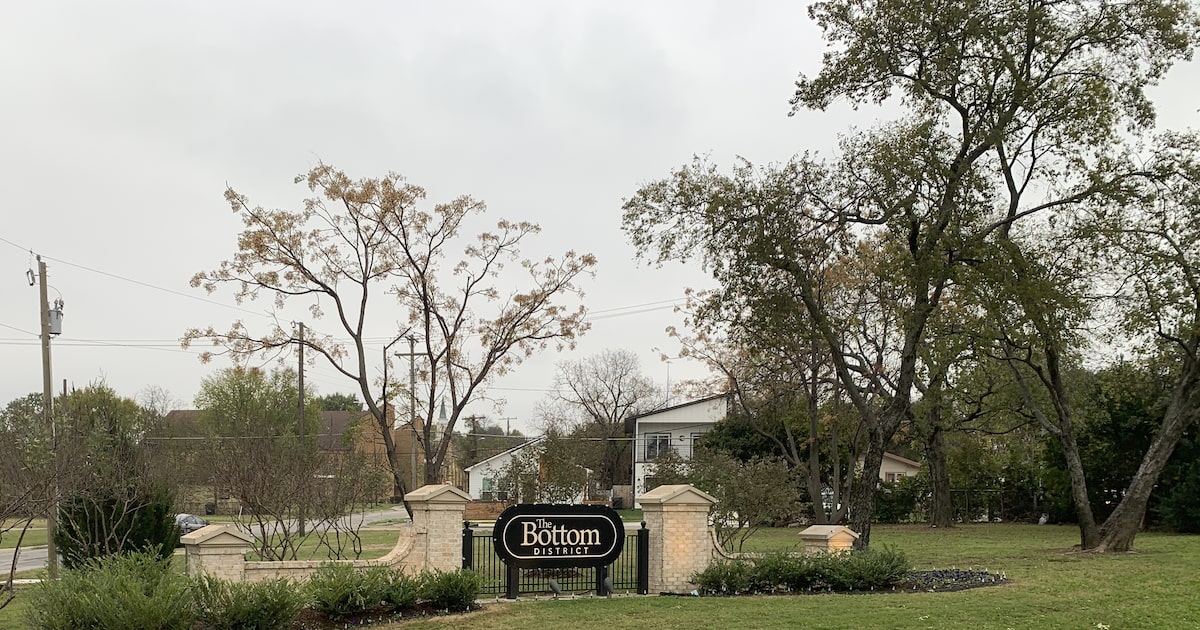

A few right, left and wrong turns last week landed me in a part of town I hadn’t visited in far too long: The Bottom, so named for its location and, also for far too long, its ranking on the city’s to-do list.
There was a time when I knew every dumped tire in every vacant lot down here, but thank goodness for the street sign toppers that read “The Bottom District.” Because for a few minutes, coming out of the adjacent Tenth Street Historic District — or what remains of it — I wasn’t sure where I was.
Maybe it was the new pickleball court in the park that threw me.
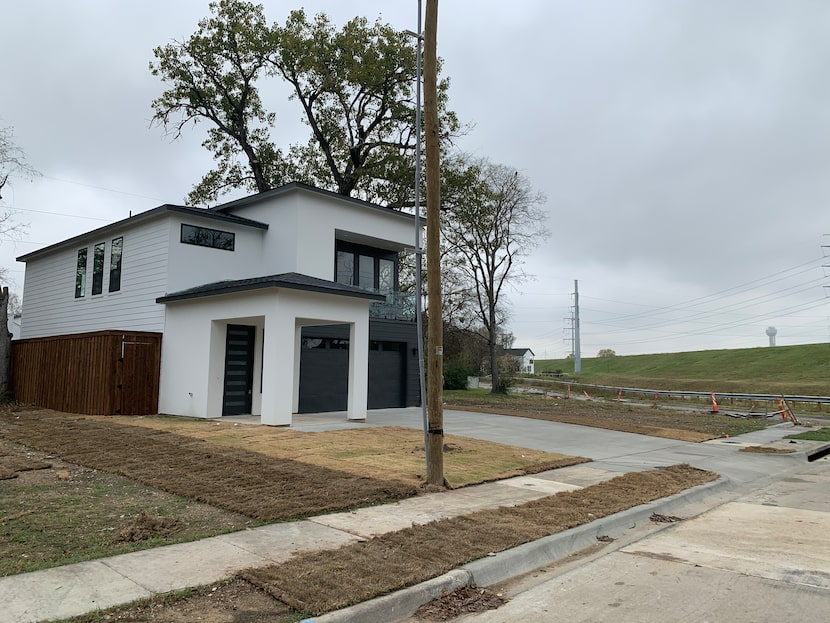
Well, that and the dozens of new homes sprouting out of formerly cheap land that long sat fallow in this formerly Black neighborhood bound by a bluff, Stemmons Freeway and a Trinity River levee.
Streets once shrouded by overgrown trees are now lined with freshly poured driveways and for-sale signs. Green waterproof sheathing adorns newly constructed frames. And the horse that used to roam the neighborhood has been replaced by a Bronco with Virginia license plates parked alongside a quaint new blue bungalow.
Just a few years ago, you’d stand in The Bottom and hear only your own heartbeat. But even on the cold, damp Monday that began this December, there was the faint bang and clang of construction workers building more in a neighborhood once defined by having less than just about everyone else in town.
Opinion
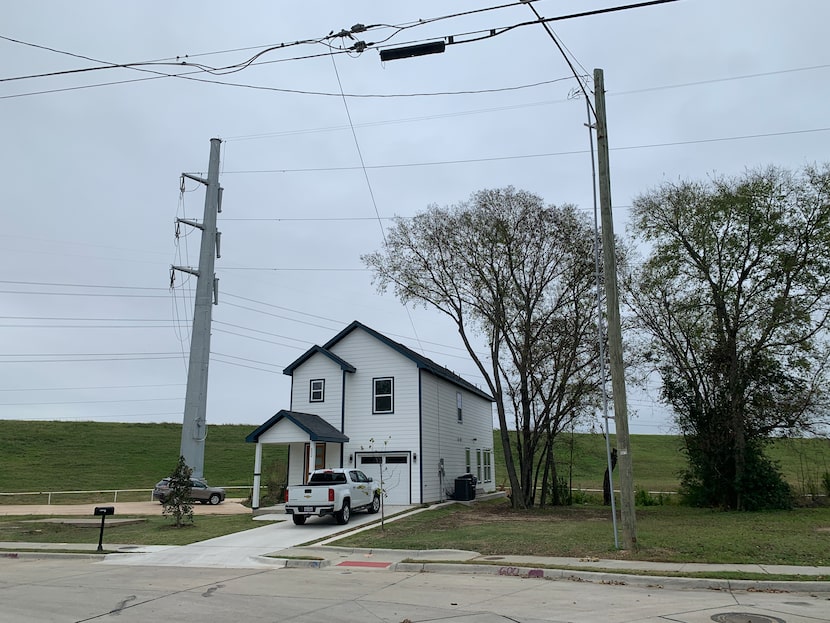
Alone along the levee, one of the new houses taking root in The Bottom just a moment’s drive south of downtown
Robert Wilonsky
For more than 30 years, City Hall has talked about rebuilding The Bottom, which first meant razing The Bottom — using court orders to seize and scrape old shacks. In 1994, back when there was first talk of redeveloping the part of town then called The Bottoms, this newspaper called it “a neighborhood forgotten.”
At the time, The News chronicled the disappearance of its bungalows and shotgun homes, about 150 in all, most renting for $200 a month in the shadow of the neon skyline peeking over the levee. Said Karo Hill, a Bottom lifer, “I went to make some coffee one day, and when I came back outside, all these houses were gone. Boom. They were just gone.”
Finally, too long later, the neighborhood forgotten has become the neighborhood reborn.
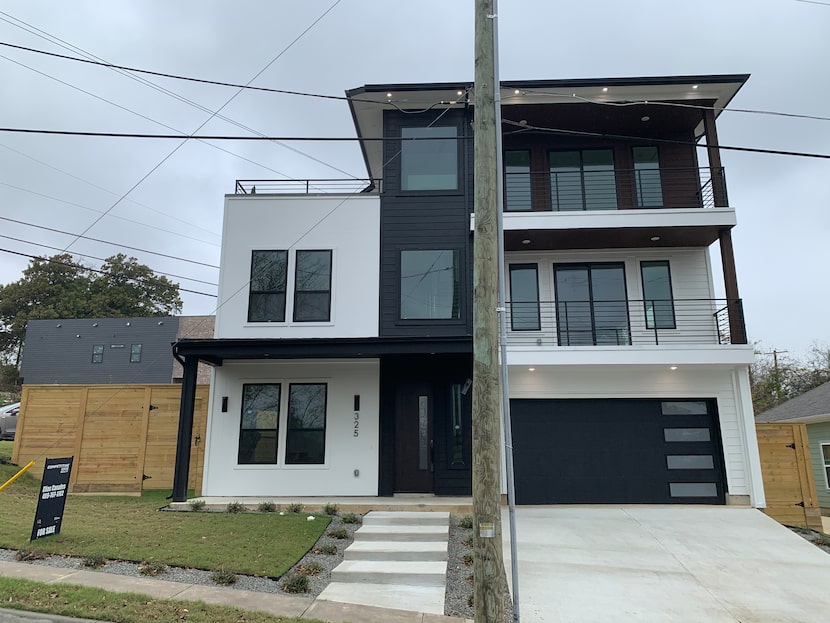
In January of last year, a rotting, boarded-up blue shack stood at 325 N. Moore Street, replaced now by this $625,000 new home touting “a rare blend of luxury and location.”
Robert Wilonsky
Look no further than 325 N. Moore Street, at the intersection with Hutchins Avenue not far from the freeway. In January 2024, a rotting, boarded-up shack barely stood on that land, its construction perhaps dating back to the days when Bonnie Parker and Clyde Barrow allegedly holed up in this tucked-away safe haven for the lawless. As recently as 2018, this land was worth $7,500, according to the Dallas Central Appraisal District.
Today, there’s a brand-new four-bedroom, five-bathroom 2,610-square foot home at that intersection, its Zillow listing promising “modern sophistication with everyday comfort nestled in a prime Dallas location just minutes from downtown” and “the perfect balance of convenience and affordability.” It can be yours for $625,000.
“The houses going up now are not what I ever intended,” said Libbie Terrell Lee, the executive director of Golden Gate Missionary Baptist’s nonprofit foundation Golden S.E.E.D.S. “But I think it’s going to work.”
Golden Gate’s pastor of 28 years, the Rev. Vincent Parker, long pushed for redevelopment and revitalization down here, beginning with The Bottom Urban Structure and Guidelines adopted a decade ago by the City Council. Sitting in his office Monday, Parker reminded me that when he first started passing around those guidelines — which divided those 126 acres into single-family, multi-family and mixed-use districts — one chamber of commerce told him it would never work and suggested instead trying to remake Uptown in the shadow of downtown.
At which point it became clear: “If we didn’t take control,” Parker said Monday, “someone else would.”
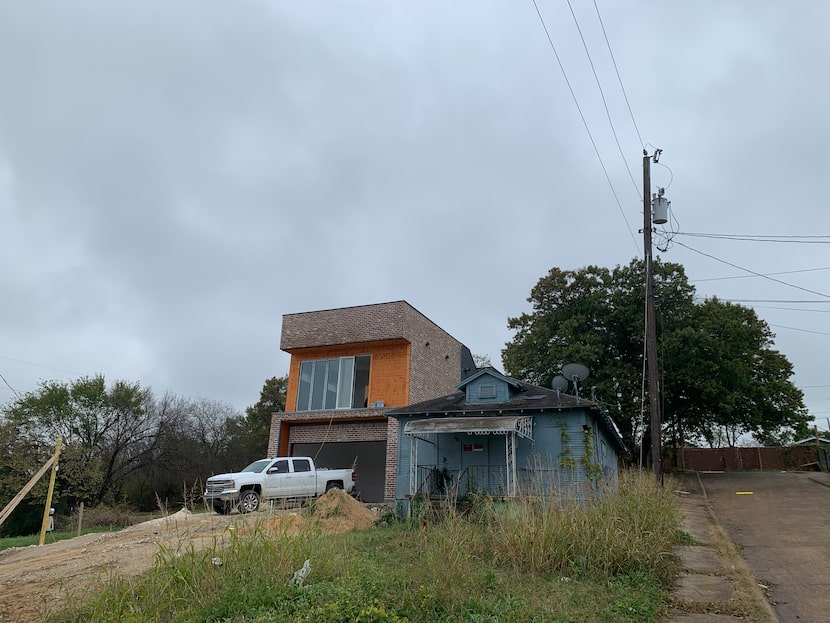
The under-construction alongside the boarded-up along Hutchins Avenue in The Bottom
Robert Wilonsky
Golden S.E.E.D.S. had hoped to build 23 homes in The Bottom, but because of numerous factors — including the constant turnover in the city’s housing department, COVID-19 and skyrocketing costs of materials — they finished seven, with the last one selling at the end of October. Lee said they went to a diverse group of owners, including a white man from California, a Spanish-speaker who teaches at nearby Yvonne A. Ewell Townview Center, and a Black attorney and her partner.
“This is what I always imagined,” Parker said, “a racially, economically diverse neighborhood.”
New sidewalks, streets and utility poles, long promised and finally delivered, have made it possible for developers to finally build along The Bottom.
Robert Wilonsky
Texas Heavenly Homes, fronted by Hanover Property Co. President Dick LeBlanc, has built 16 houses in The Bottom — half market-rate, half affordable. Most are along Denley Drive, where LeBlanc wanted to create a streetscape that provided a peek at the possible. He, too, is responsible for the vintage-looking street lamps now wrapped in Christmas garland and the gateway signs welcoming residents and visitors to The Bottom District.
LeBlanc has some 40 lots left to develop, all acquired from — and, thanks to a $500,000 zero-percent loan from the 2006 bond program, with the help of — City Hall. But the city remains the largest single landowner in The Bottom, alongside the seemingly endless list of speculators and out-of-towners who’ve swept in of late.
LeBlanc estimates there are six or seven other developers building in The Bottom, “which is surprising,” he said, “but also very encouraging.” So, too, he said, is the range of housing prices: There’s a $290,000 three-bedroom for sale on Sparks Street a few blocks from homes going for more than twice that.
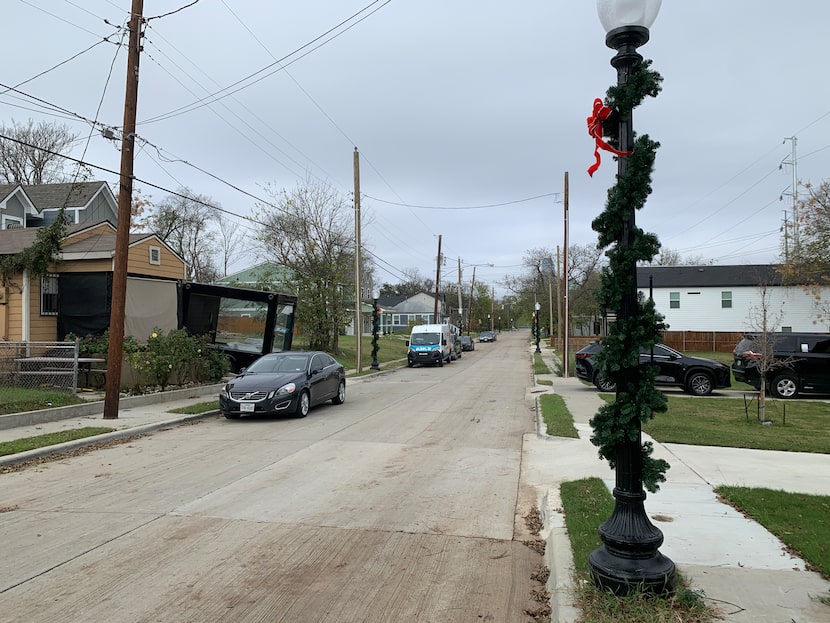
Dick LeBlanc planted the vintage-looking street lights along Denley Drive and Sparks Street to give The Bottom the look of an old neighborhood reborn, not just rebuilt.
Robert Wilonsky
Texas Heavenly Homes once had some 100 lots among the give-or-take 400 total in The Bottom. But many reverted to the land bank after City Hall took far too long to plant the infrastructure needed to rebuild the neighborhood. LeBlanc and Parker share the same complaint that City Hall has attached so many low-income restrictions to its lots that it’s nearly impossible to sell to, say, teachers and public safety workers.
“They’re making more money than is allowed for them to live in The Bottom, and that’s counterproductive,” LeBlanc said. “They can loosen that up if there was a will. You’re not dealing with rich people. You’re dealing with normal citizens.”
Golden S.E.E.D.S. is now out of the homebuilding business. Parker said the nonprofit will likely focus next on the inevitable: keeping The Bottom affordable for those few lifers who refuse to sell their land while watching their property tax bills increase exponentially. I knocked on a few doors Monday, but no one answered. Parker said residents are just tired of hearing one more white man ask how much they’d take for their homes.
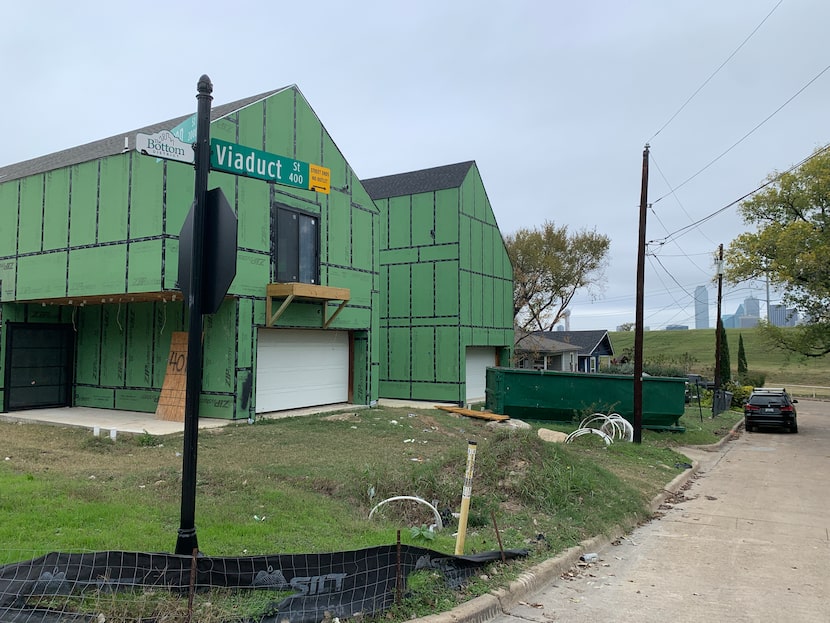
A seemingly stalled construction project off Canyon Street, beneath the bluffs, in The Bottom. Libbie Terrell Lee, the executive director of Golden S.E.E.D.S., said it’s not likely to remain stalled for long, as new developers quickly take over unfinished builds to capitalize on the housing boom taking place in The Bottom.
Robert Wilonsky
Speaking of, the first person I thought of last week, while driving through the reborn Bottom, was my former colleague Jim Schutze, who used to write a lot during our Dallas Observer days about how this part of town was likely to never recover from the bashing it had taken from City Hall. One piece in particular, from the summer of 2008, shortly after a big fire down there you could see for miles, always stuck with me.
Schutze wrote back then that a “landlord source — a guy who really knows his ground — says that the infill ain’t gonna work.” The Bottom, Jim wrote, “is a strange little island of land locked between the bluff and the levee, with a very tough history. You can build it, he says, but they won’t come.”
I called Schutze last Wednesday to tell him what I’d seen, to tell him they’d come after all. Three days later, we drove down there together for a closer look at what’s become of the land of broken promises. He was astonished by the investment in a neighborhood no longer forgotten.
Said Jim as we drove back over the river, “It’s the biggest story in town.” Neither of us can remember who said it first, but we agreed: If you can develop in The Bottom, you can develop anywhere in Dallas.