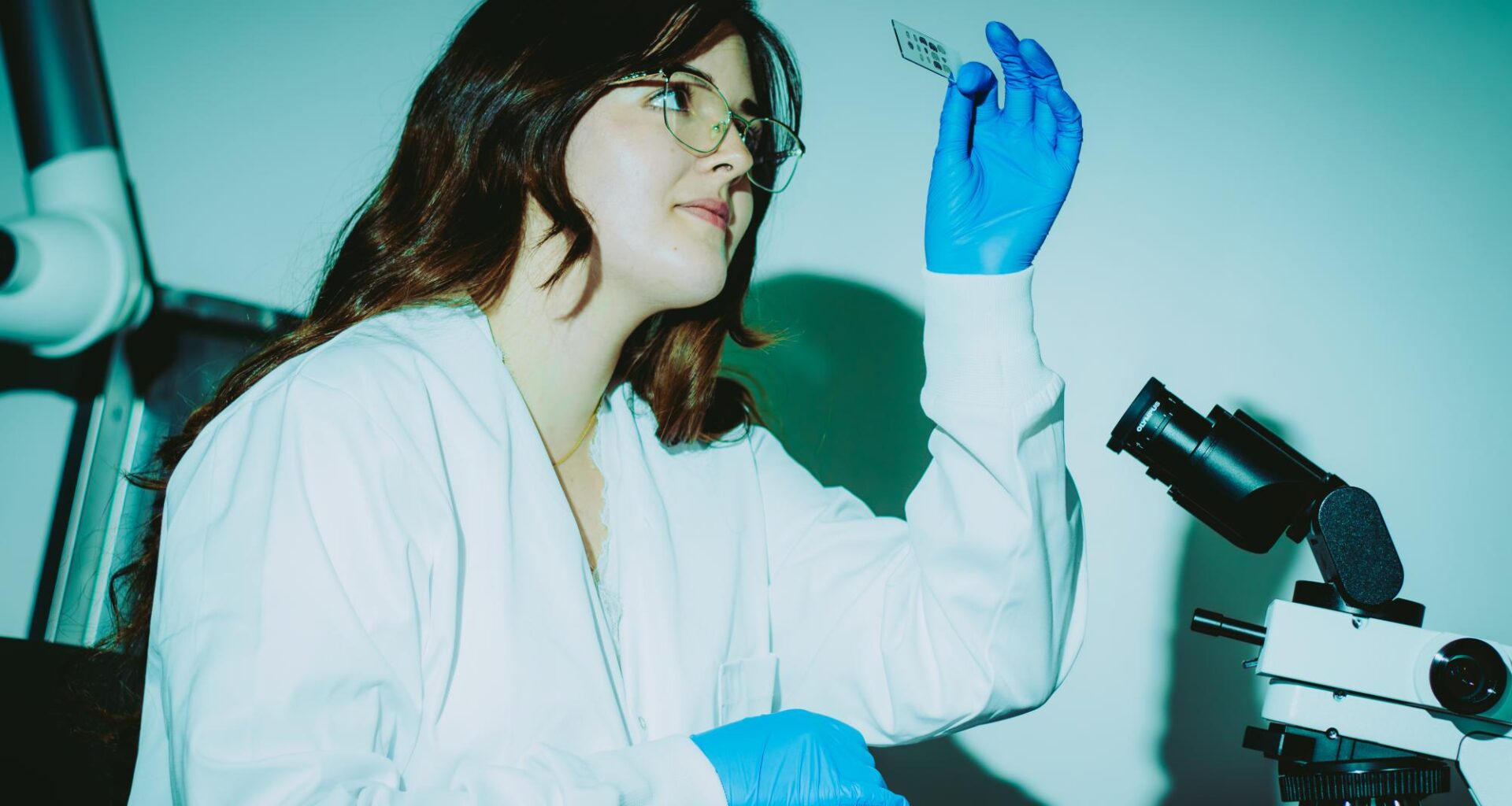
Angela Cole is a senior biomedical sciences student at The University of Texas at El Paso (UTEP), who will be graduating this fall semester. In her undergraduate career she worked as a laboratory research assistant at Cushing, Ph.D neuroscience laboratory, where she was able to step out of her comfort zone and gain valuable skills.
Cole presented her research at the Society for Neuroscience Convention in San Diego, California, which was held from Nov. 15 to Nov. 19. Cole has been participating in research since the summer of 2024, however, her curiosity for scientific inquiry came long before.
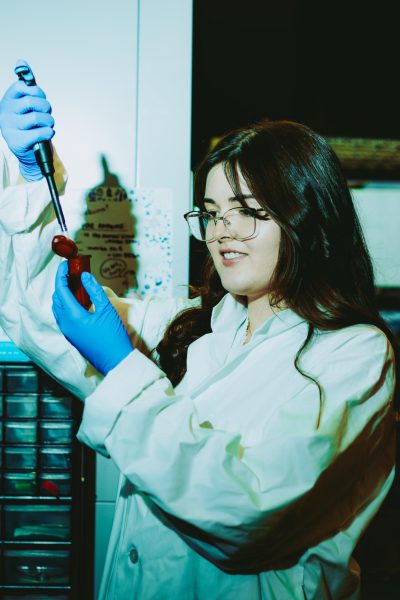 Having participated in research since 2024, Senior Angela Cole was able to present her findings at the 2025 Society for Neuroscience Convention in San Diego. (Nathaniel Flores)
“I had always loved asking questions ever since I was a kid, and then I was inspired to pursue medical school,” Cole said. “I applied to the program under COURI [Campus Office of Undergraduate Research Initiatives] which helps students get research. I applied to SMARTMIND, which is a neuroscience program, because I love neuroscience, and that’s where I got into the Cushing lab. And now I’m here, and I just love what I do, and I really hope to continue helping the science community.”
As a first-generation student, Cole knew of the challenges that come with carving one’s own path, and the struggles of finding opportunities. However, she has found mentorship at UTEP where she has learned how to grow academically and professionally.
“I think I really was very fortunate to have stumbled upon all the people that I’ve met. And faculty wise, my mentor is just amazing. Cushing really advocates for his students, and I noticed a lot of other professors, they really want the undergrads to succeed, as well as their graduate students. You know, my mentors have told me a lot about his experience and their experience, and finding a good mentor is really, important [for] going into [a] tougher field, like research,” Cole said.
At the laboratory, Cole’s research focuses on creating a map of the hypothalamus, which is the part of the brain that regulates functions like homeostasis, emotional responses and consolidating memories. She does this by using prairie vole models, which are used because of their similarities with human brains.
“My project is called Cytoarchitectural Atlas. It’s a big word, but cytoarchitecture is basically the architecture of the brain and creating a cyto architectural atlas for the hypothalamus,” Cole said. “The hypothalamus regulates a lot of the emotions that we feel and other animals feel, so it’s a hub of emotions. We want to look at prairie voles, because they’re translational to humans and currently there are no prairie voles atlas so that’s my work.”
Cole was able to present her findings this past November an experience that highly encouraged her to continue deepening her research as she continues in her pursuit of a career in medicine.
“SFN was really an eye-opening moment,” Cole said. “It was a really fulfilling experience. When I went there, there were a lot of people that came up to my poster and asked really good questions that made me really think about my research in a deeper level. Because I’m an undergrad, I don’t have as much experience with the experiments that I’m doing”.
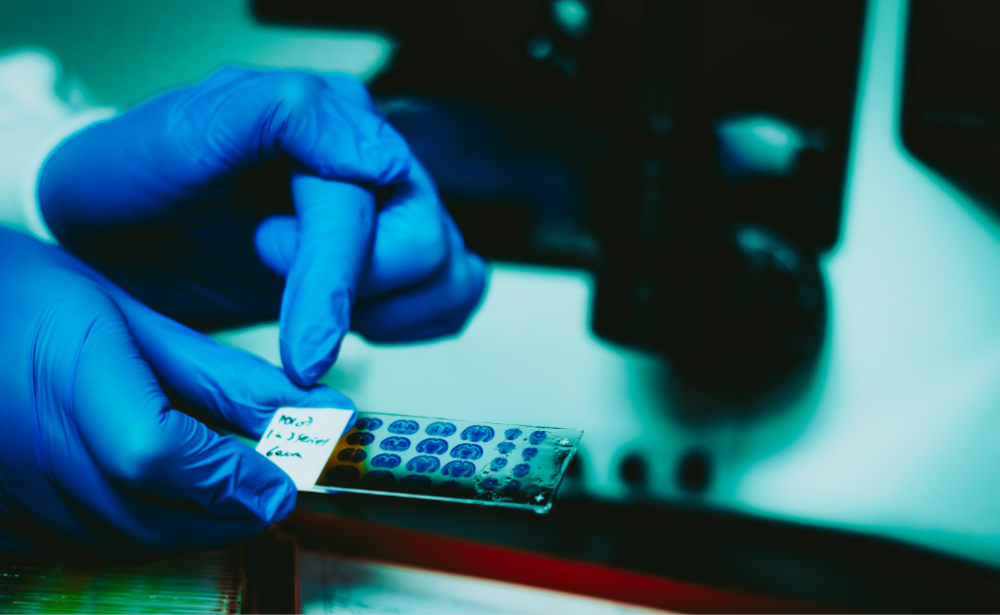
With her project focusing on the architecture of the brain, Senior Angela Cole uses prairie vole models to conduct her research.
After graduation, Cole hopes to pursue a dual MD-PHD degree. While she gets ready for medical school, she plans to continue building her career in science by preparing for the MCAT, expanding her research experience, and engaging in volunteer work. She is committed to helping her community, whether through scientific research or directly through hands-on service to others.
Cole’s advice to students who may be starting out on their college careers, is to explore and take advantage of the opportunities offered at UTEP, to not fear reaching out to professors, or to try something completely new.
“Take those opportunities if it comes up, take them, because if they fly by, they won’t come back. So just fight hard for what you want in your life.” Cole said.
Just like Cole did in her junior year, undergraduate students at UTEP may reach out to COURI to learn more about research opportunities in any field, which can help build their academic curriculum and find their way of turning passion and curiosity into real world impact.
Vivien G. Noe C is a staff reporter for The Prospector and can be reached at [email protected]