
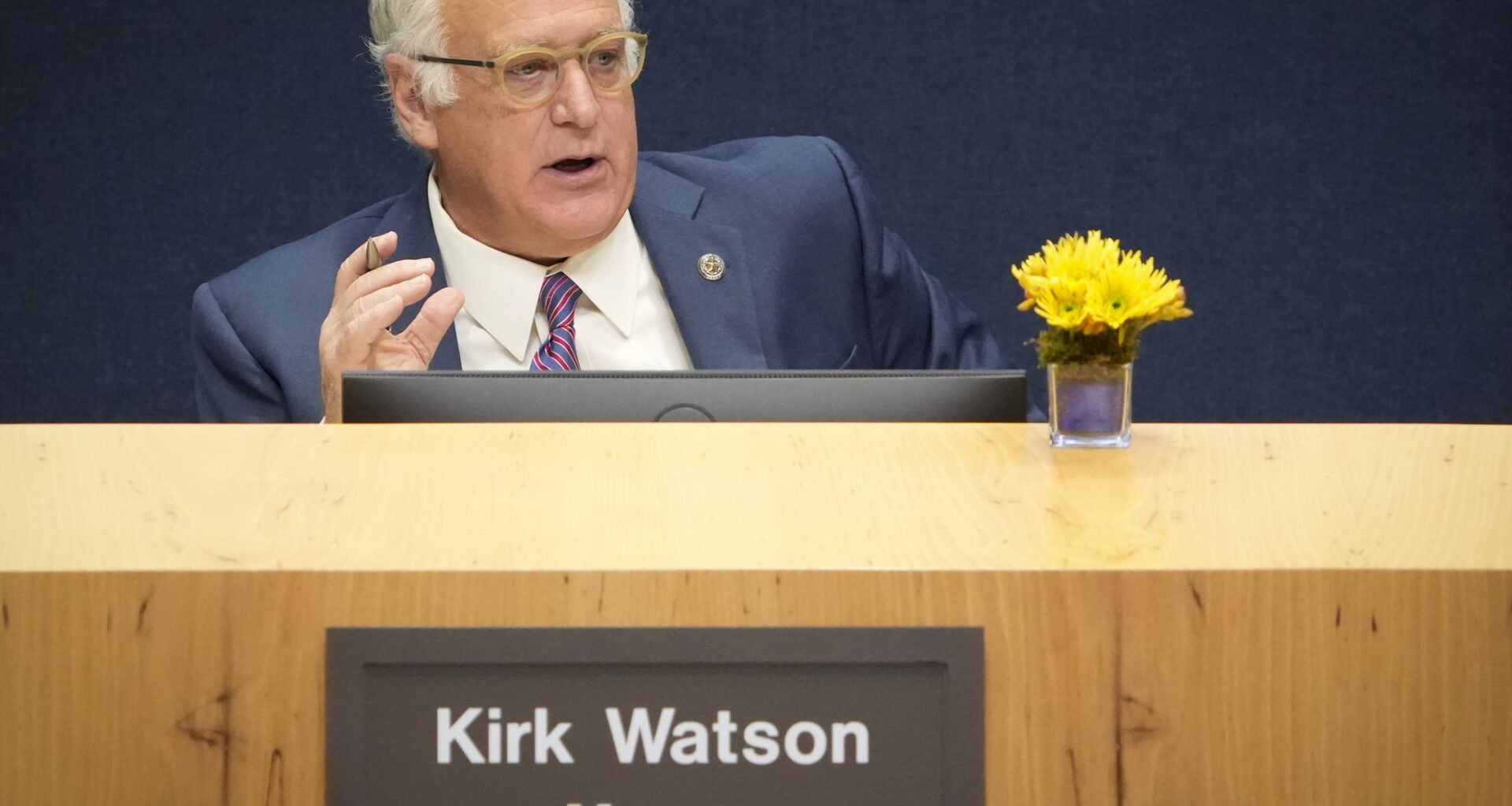
During a morning meeting, the Audit and Finance Committee reviewed the findings of a council-initiated assessment of Austin’s existing expense and reimbursement policies for elected officials. The review was ordered in November as part of a push to craft clearer, more uniform rules around how City Council members use their taxpayer-funded office budgets.
After receiving the assessment, committee members began sketching out what a future policy might include, drawing on examples from peer cities and the state.
Mayor Kirk Watson said the preliminary review underscored the need for greater clarity and transparency in council spending — and exposed how fragmented Austin’s current rules are.
Unlike some cities, Austin has no comprehensive spending policy and no unified set of guidelines specific to council offices. Instead, Watson noted, the standards council members must follow are scattered across several different documents, ranging from administrative bulletins to travel rules and procurement manuals.“Austin has it far more dispersed than what you see in some other cities,” Watson said. “There are about 10 policies or regulations governing city spending.”
Dallas, by contrast, operates under a single consolidated policy — a model Watson suggested Austin could follow to reduce confusion and better define what constitutes an allowable “public purpose,” for public dollars. Ethics experts previously told the Statesman that Austin’s existing language leaves significant room for interpretation.
The committee also discussed other potential changes. Austin is the only major Texas city that allows council offices to roll over unspent budget funds from year to year — a practice Watson said may be reconsidered. Fort Worth and San Antonio do not provide dedicated council office budgets at all, while Houston requires funds to be tied to specific projects.
Additional ideas floated Wednesday included designating a staff “financial liaison” to review and approve council spending and releasing council expenditure reports on a regular basis to increase transparency.
A draft of the new policy is still in the works, Watson said, but he expects the committee to have it by the end of December. The Audit and Finance Committee plans to vote on the proposal Jan. 14, with the full council scheduled to consider it Jan. 22.