
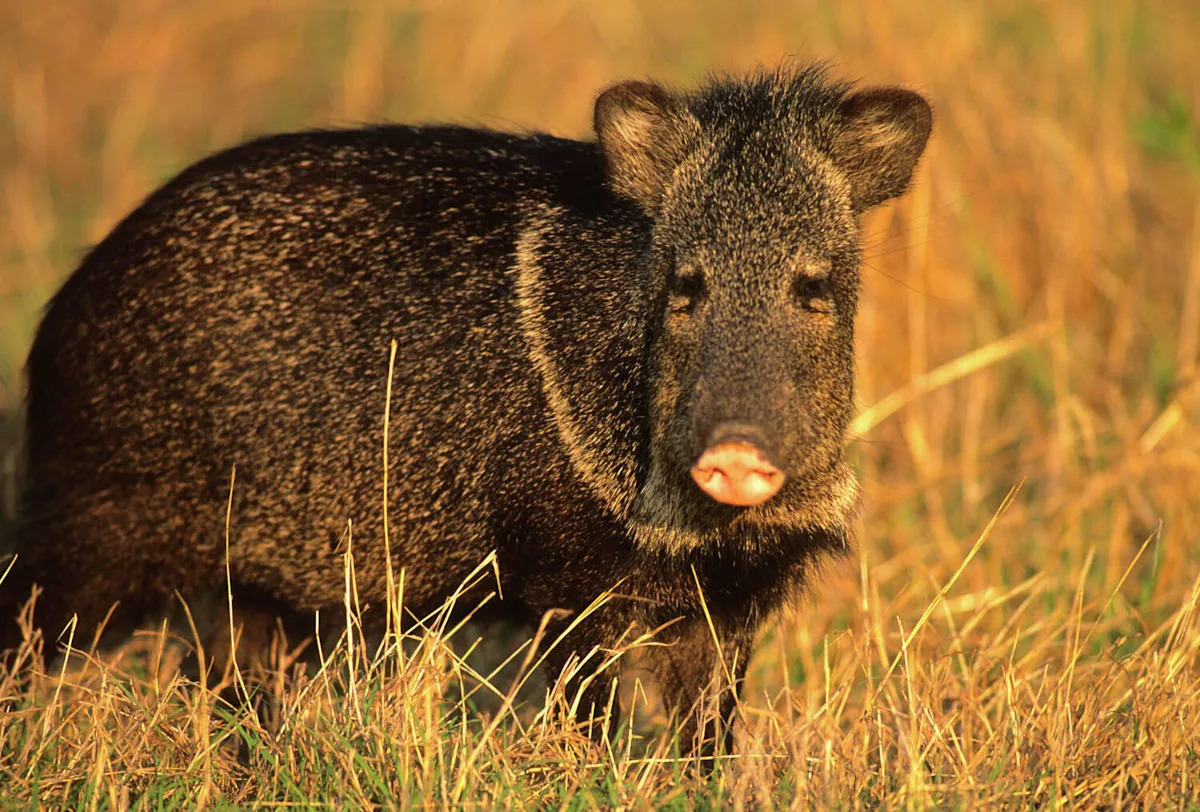
Invasive feral hogs are turning up more often across Texas as temperatures drop-but so are their native look-alikes. Javelinas have been spotted wandering residential areas and near businesses across South Texas, with residents sharing photos from cities like Corpus Christi and Harlingen.
On Nov. 24, Joey Shumaker of Corpus Christi encountered one downtown and initially mistook it for a pig. A recent transplant from Minnesota, he was showing his visiting son around when they saw the animal roaming the top of stairs. “[Minnesota] doesn’t have javelinas,” he told Chron.
Shumaker pulled over to watch. The javelina came down the stairs, disappeared briefly into the brush, then casually crossed the street. “He was in absolutely no hurry and acted like he owned the area,” Shumaker said. “It was an odd experience for sure, but definitely memorable-especially after the post went nuts.” His photo and video of the encounter quickly went viral, drawing thousands of views and comments from locals surprised to see the animal downtown.
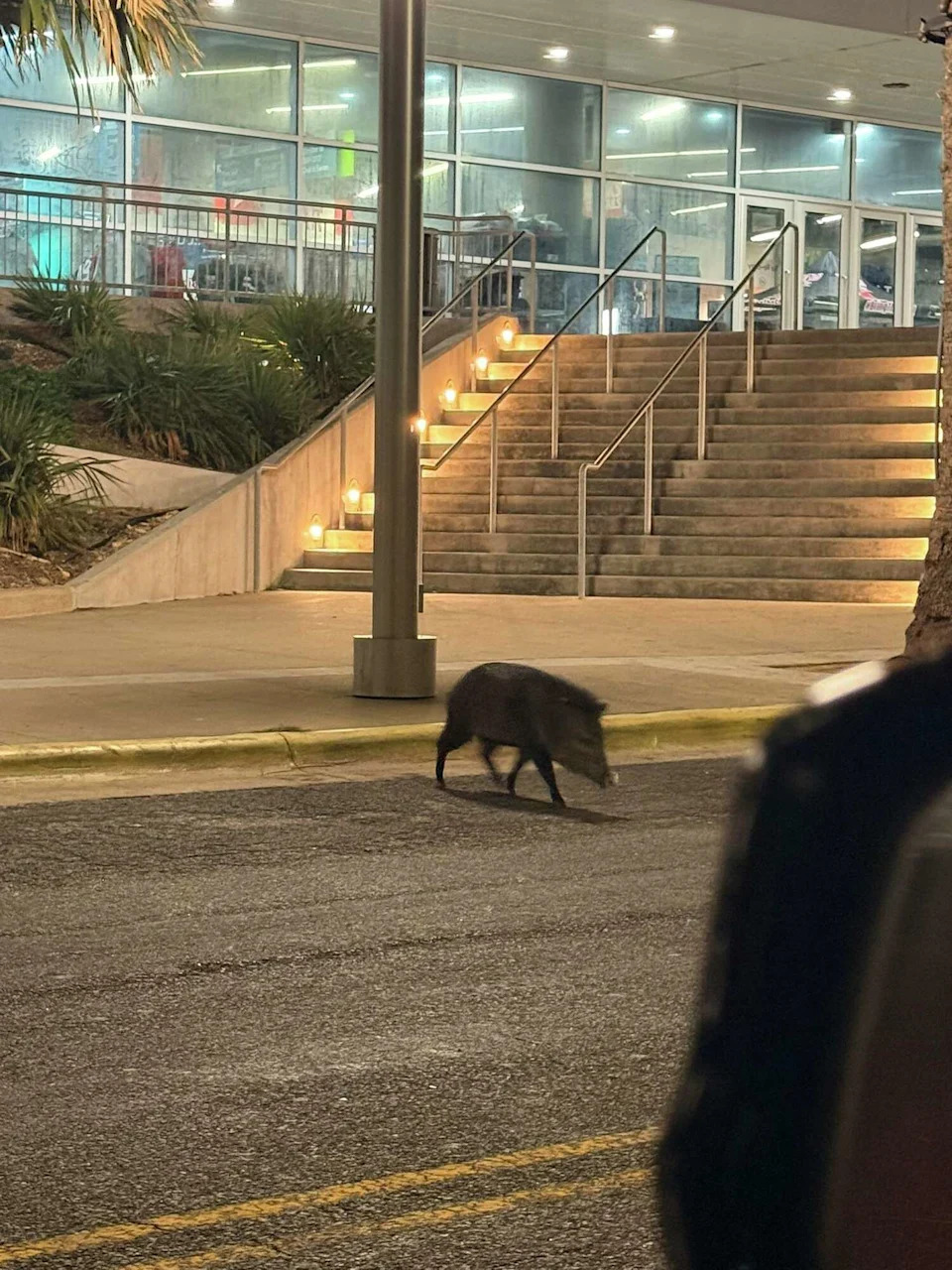
Joey Shumaker spotted a javelina roaming downtown Corpus Christi on Nov. 24. (Joey Shumaker)
Sightings like his have been increasingly common further south as well, with videos and photos circulating online of javelinas strolling the streets of Harlingen.
Despite their pig-like appearance, javelinas belong to the peccary family, not the swine family, and are more closely related to camels and hippos. They’re smaller than feral hogs-about 55 pounds compared to hogs that routinely top 190-and have a white collar at the neck, a nearly invisible tail, and shore, rounded “teddy bear” ears. Feral hogs, by contrast, have visible tails and longer, pointed ears.
Native to the Americas, javelinas inhabit brush country and desert terrain in tight-knit herds called squadrons, usually five to 30 animals. In most areas, prickly pear cactus makes up more than half their diet, spines included, according to the Texas Parks and Wildlife Department (TPWD).Texas is one of only three U.S. states where they naturally occur.
They’re common in Texas parks such as Big Bend Ranch, Seminole Canyon, and remote parts of the Hill Country. While they can breed year-round, South Texas sees peak breeding from late November to January, with births in May and early June. In winter, they’re most active in the early morning and late afternoon.
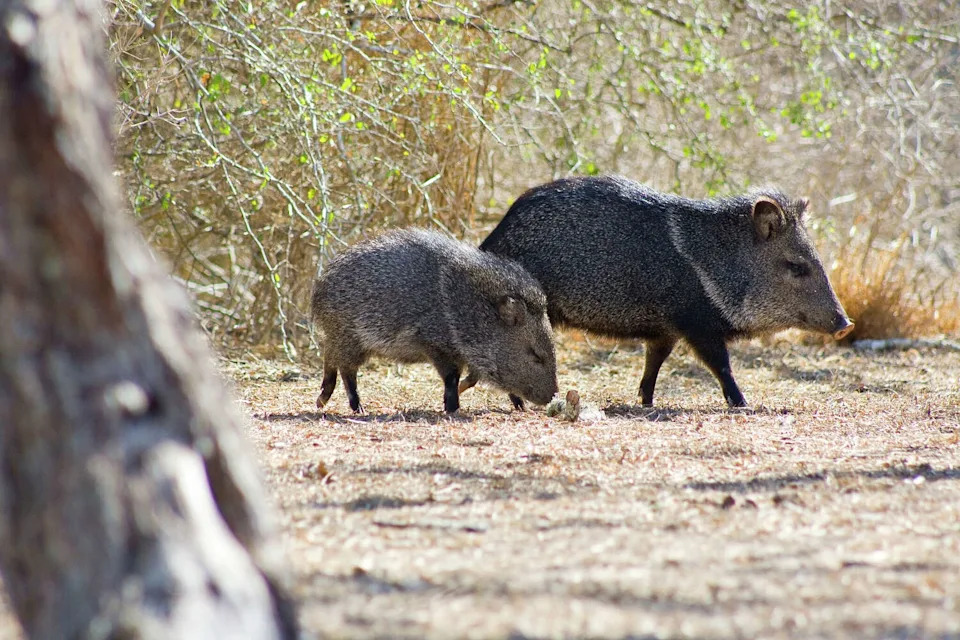
Javelina at Lake Corpus Christi State Park in Texas. (jerryhopman/Getty Images/iStockphoto)
TPWD wildlife biologist Ernesto Garcia-Ortega says the rise in sightings isn’t surprising. “It’s not surprising that we’re seeing an increase in the activity around this time of the year,” he told ValleyCentral.com. “Because if we start paying attention, you know a lot of our oak trees are dropping their acorns. So more than likely, javelinas are probably going after those acorns you can find on the ground.”
Though they can look intimidating, javelinas are rarely aggressive toward people. Their poor eyesight means they may linger around humans longer than other wildlife. When cornered, they can defend themselves with sharp canine teeth, and dogs attempting to attack them are often injured.
“Javelinas have such poor eyesight that it’s easy to sneak up on them,” said Stephen Webb, Ph.D., of the Texas A&M Natural Resources Institute. “When startled, they will bluff charge and clack their teeth together, which can be intimidating.”
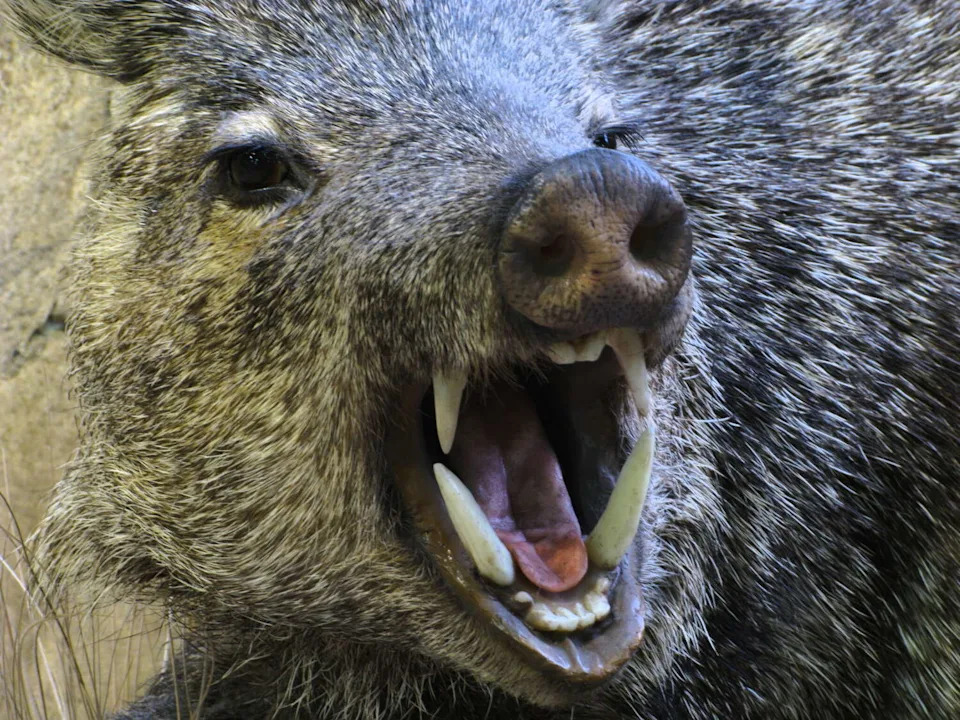
When cornered, javelinas can defend themselves with sharp canine teeth (sassy1902/Getty Images)
Habituation to neighborhoods can cause problems for landowners. Javelinas will root through yards, damage sprinkler systems and shelter under homes. Garcia-Ortega recommends picking up fallen acorns, securing trash, bringing in pet food at night, and trimming low shrubs to reduce cover.
If a javelina does wander onto your property, TPWD advises attempting to scare it off by making loud noises or throwing rocks. But once they begin frequenting an area, options are limited. They are not handled by animal control. Garcia-Ortega noted the restrictions: “We can not go out and shoot them at any time we want, especially here in the cities, and we can not relocate them,” he said. “That’s the official stance from Texas Parks and Wildlife.”
As native game animals, javelinas can only be harvested with the proper license and only in counties with an established season. Unlike feral hogs, they are not considered detrimental to the environment.
Despite their broad range, researchers still know surprisingly little about them. A Texas A&M AgriLife project is now studying javelina populations and habitat use in the South Texas Plains, aiming to fill major knowledge gaps so wildlife managers can make informed decisions about hunting regulations, conservation, and habitat management.
More Parks & Wildlife
Watch out | Texas parents on edge after venomous ‘asp’ attacks toddler
Safety | Texas hunter dies in accidental shooting as officials issue urgent warning
Conservation | How Bad Bunny accidentally became a ‘game-changer’ for Texas zoo
Dinos | Geology field trip turns into dinosaur discovery in West Texas
For the latest and best from Chron, sign up for our daily newsletter here.
This article originally published at Feral hog look-alikes are surging in South Texas. What are they?.