
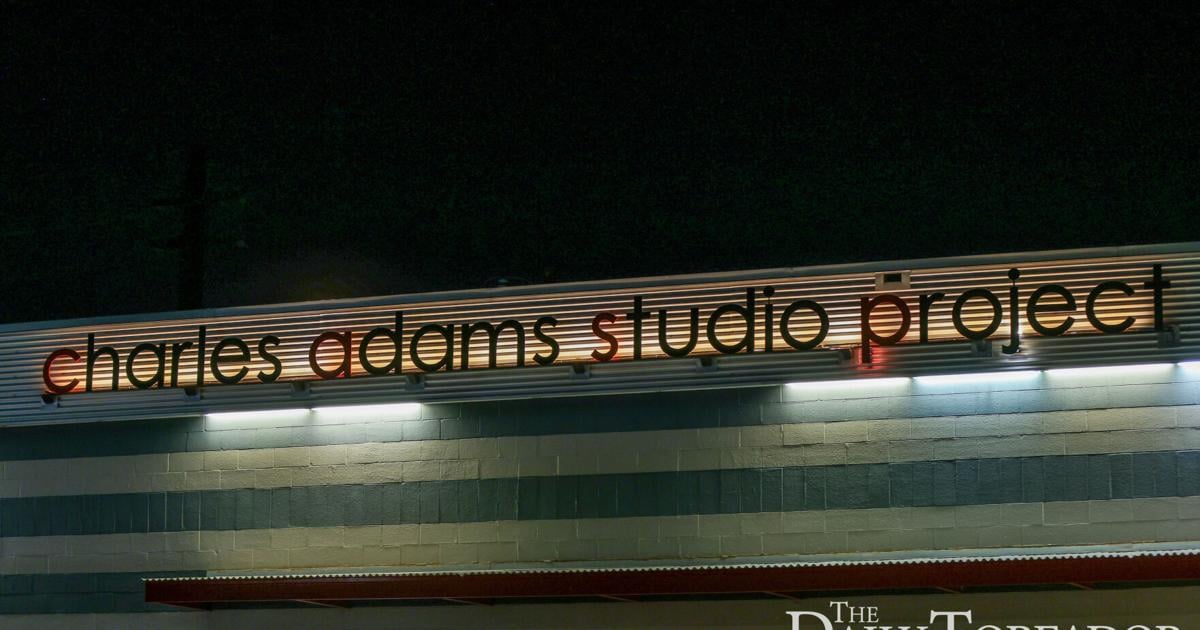
Chad Plunket, Peter Raab and Urs Flueckiger, staff within Texas Tech’s Huckabee College of Architecture, have played important roles in shaping the Charles Adams Studio Project and structures in Lubbock’s Arts District.
CASP, known for its galleries and live-work studios, is one of the main venues at monthly First Friday Art Trails for attendees to experience live music, admire artwork and shop with local vendors.
Founder of CASP Charles Adams said he originally had no intention of starting the organization, but was inspired by his own gallery and other artist housing in New York to begin something new in Lubbock.
“That kind of helped me design CASP, because that’s what CASP does,” Adams said. “Gives work spaces for both the public and artists … I think it’s worked pretty well.”
Adams approached Flueckiger, dean of the College of Architecture, in 2004 with the idea to repurpose two old buildings for a gallery and residency and also design new studios for artists.
“He ( Adams) felt like he wanted to be within that zone, what now is known as the Arts District,” Flueckiger said. “It basically was his idea to go there.”
Flueckiger said the current gallery and Adams’ old residency were once a storage unit for the Lubbock Avalanche-Journal and a paint and body car shop. Flueckiger said he is honored to have worked on those projects and see his work used daily by artists and locals, but emphasized that it was originally Adam’s vision for the area.

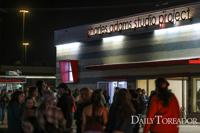
Attendees converse with each other in front of the Charles Adams Studio Project building during the First Friday Art Trail at the Louise Hopkins Underwood Center for the Arts Nov. 7, 2025.
Cali Coiner
Plunket, a professor in the College of Architecture, received a bachelor of fine arts from Tech in 2001 and a master’s in landscape architecture in 2010.
During his master’s, Plunket ended up working at CASP as a picture framer, and he said his relationship with Adams began to expand through the years as they talked about ways to develop the organization.
“So, over lunch, back in the frame shop room, Charles and I would sit and talk and kind of spitball ideas as to what CASP could be,” Plunket said. “Like, what do artists need? What do they want? What type of equipment? What type of sink? I mean, down to really boring details.”
As CASP began to grow, Plunket said they needed someone to oversee daily operations and found himself in that position as the program’s project manager. After serving in this position from 2009-13, Adams offered Plunket the position of director, and he has remained in the role for over 10 years.
Although not teaching this semester, Plunket is helping Raab, a professor in the College of Architecture, with a class building a shade structure near Two Docs Brewing Co.
“It’s kind of a gateway between CASP and Two Docs, and now on First Fridays, it’s become a real pedestrian pass through with all the things going on at First Friday,” Plunket said.
Raab, who has taught at Tech for more than 13 years, said this project started after he and another professor in the college wrote a grant to the American Institute of Steel Construction.
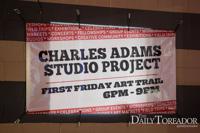
A sign hangs on the side of the Charles Adams Studio Project building during the First Friday Art Trail at Louise Hopkins Underwood Center for the Arts Nov. 7, 2025. The signs states what time FFAT is held every month.
Cali Coiner
Raab said the graduate class working on the project was awarded $20,000 to design and build the steel pavilion.
“We’re actually going to be building a 700-square-foot pavilion, which essentially creates a gateway and maybe a nicer entrance between, kind of the private area of Two Docs Brewing and the rest of downtown with the Cultural District, or the downtown Arts District,” Raab said.
Eleven Tech graduate students have been working out of a CASP Studio to build the steel pavilion titled the “Downtown Arts Gateway,” and Raab said the project will be completed by December.
Along with the new pavilion, Raab also is planning on building more live-work studios for artists in the community. He said his connection with CASP over the years helped him secure the opportunity to build more studios and is hopeful those designs will be presented in the spring.
“I was very eager to work with the community and design and build something here, which again is kind of a testament to the importance of architecture and how to kind of build a community,” Raab said. “I think the downtown arts community and CASP, what they’re doing here really enriches the area.”
Plunket encourages students to visit the Arts District and CASP, as many of the galleries are open throughout the week, to get a chance to step away from campus.
“I think that art is important because I think it’s just part of the basic human experience to be alive,” Plunket said.