
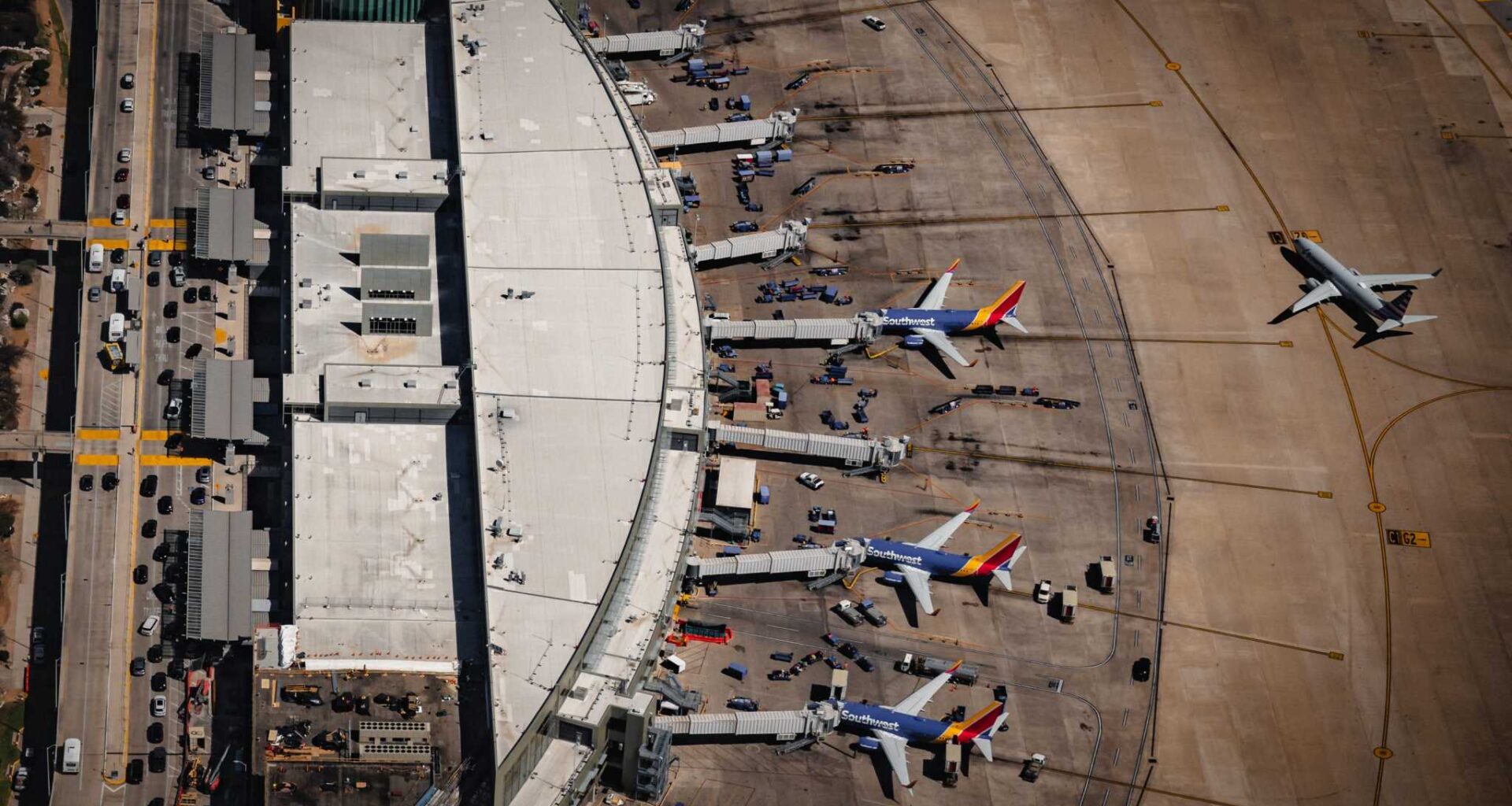
The federal government will invest millions to improve the airfield at Austin-Bergstrom International Airport amid the largest expansion project in the facility’s history.
The Federal Aviation Administration will reimburse $108 million for infrastructure upgrades, Austin airport officials announced Monday. The airfield project, which is part of the airport’s long-term “Journey with AUS” improvement plan, will add new parallel taxiways, high-speed exits and other enhancements to support a forthcoming second concourse scheduled to open in the early 2030s.
The federally supported improvements will “reduce congestion, enhance operational safety, and ensure AUS can accommodate future growth,” according to an airport news release.
U.S. Rep. Lloyd Doggett, D-Austin, led a bipartisan push for the funding last summer, sending a letter of support that was also signed by Austin-area Democratic Rep. Greg Casar and Republican Reps. Michael McCaul, Chip Roy and John Carter.
“This long-term federal commitment is essential to constructing an airport large enough to accommodate our rapid growth,” Doggett said in a statement Monday. “Together, we will continue working to assure our airport can safely serve the truly international city that Austin has become.”
The new taxiways are expected to be complete in 2027 ahead of construction on the midfield concourse. Concourse B, one of the keystone projects in the Journey with AUS plan, will include at least 20 new gates and connect to the existing Barbara Jordan Terminal through an underground tunnel. The airport has already secured $96 million from the FAA to put toward the $2 billion concourse.
Construction has already wrapped on several expansion projects, including improvements to the international arrivals hall. That project added two new baggage carousels to the international arrivals area, increased the number of U.S. Customs and Border Protection booths and doubled the size of the area where passengers wait to go through customs.
Austin-Bergstrom was initially designed to serve 11 million passengers per year, and while later expansions brought its annual capacity to 15 million, traffic through the facility routinely eclipses that total. Last year, it hosted more than 21 million fliers, according to the airport’s end-of-year report.