
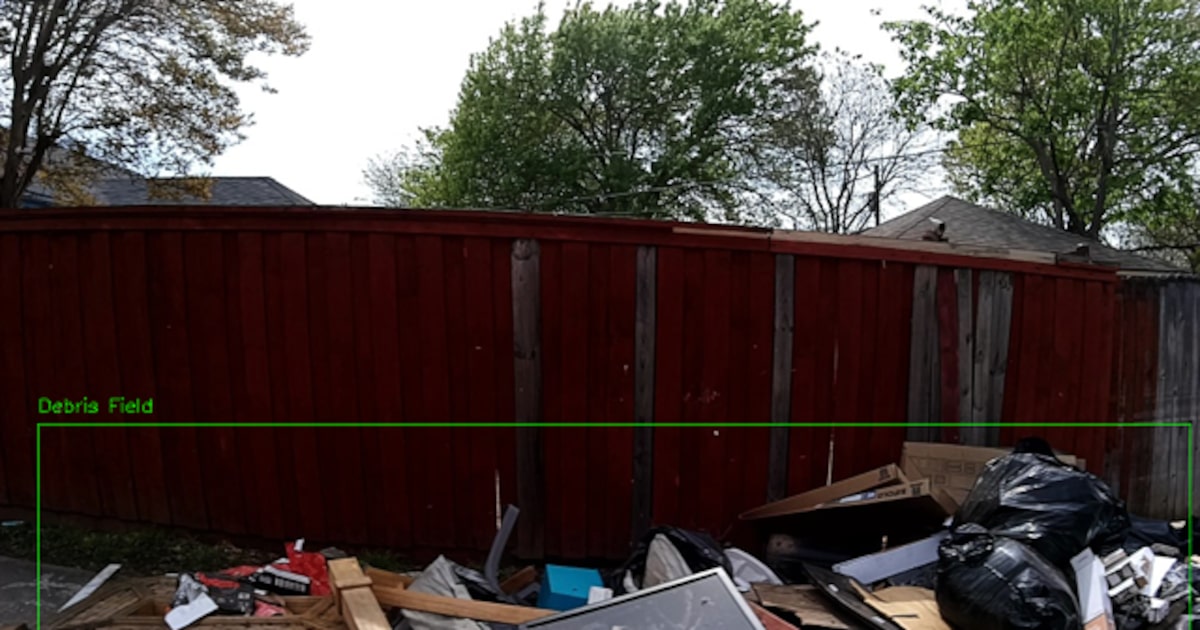
Next year, Dallas will deploy artificial intelligence-powered cameras on sanitation brush trucks to detect code violations.
The Dallas City Council voted unanimously to approve a three-year contract for nearly $2.6 million to install cameras on the trucks in partnership with the Code Compliance Department.
Related
The cameras will capture images and locations of code violations like illegal dumping, high weeds and graffiti. City staff said the tool is not a public safety surveillance system.
Breaking News
City Detect, an Alabama-based company, will provide all associated technology, installation, data services, maintenance, warranty and replacement support for 100 AI-powered cameras for a three-year service contract.
Cities across the country are increasingly utilizing AI for similar services, despite concerns about surveillance and data storage, leading to pushback.
Council member Chad West, who pulled the item from the consent agenda, asked if this program intends to better help with efficiencies in code enforcement, and not for this to be weaponized as a “neighbor versus neighbor, or ICE versus immigrants.”
Christopher Christian, Dallas’ code compliance director, said his department and Sanitation do not have a business need for capturing persons, faces or license plates, and this technology will be similar to Google Street View.
How do AI-powered cameras work?
Currently, most code violations are reported by residents. By automating the detection of violations, the cameras will free up code officers to focus on education, outreach and more complex cases rather than spending time driving around or responding to every 311 call, Christian said.
Two cameras each will be installed on 50 of the brush and bulk sanitation trucks.
All the photos will be taken in public spaces. The cameras won’t be able to take photos above fences and will be positioned at street level. They have a fixed focal length, which means they do not support any zoom capability, according to the city.
Once a violation is detected, the system will notify the code officer, who will visit the location to inspect the site and speak with residents.
City staff said a human will always be in the loop. This approach is expected to enhance efficiency, reduce costs and benefit residents by facilitating the more effective deployment of resources.
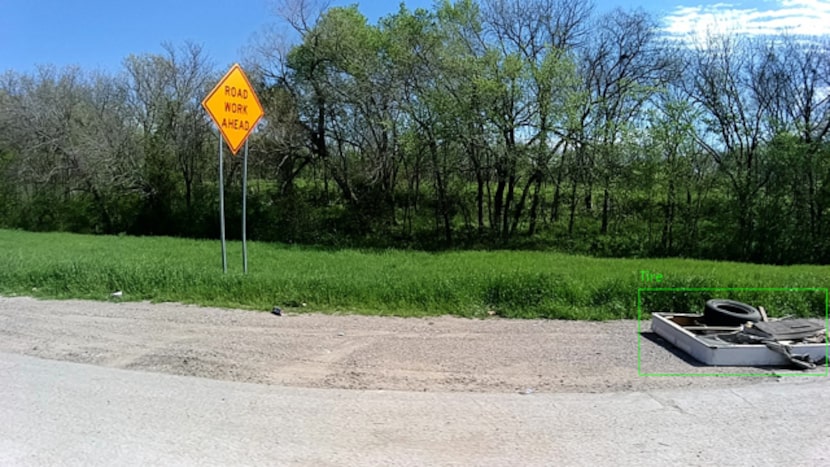
During the pilot in 2024, cameras were installed in Dallas Code Compliance vehicles by City Detect, an Alabama-based company, on code compliance vehicles that were driven around the city for a couple of days.
Courtesy
The vendor is responsible for costs related to any data breach and carries cyber risk insurance, said Christian.
Gavin Blake, CEO of City Detect, previously told The Dallas Morning News the system captures still images and focuses on community enhancement rather than surveillance.
Blake said the data is stored securely in the United States and owned by the municipalities.
Hardware installation is expected to take approximately 60 days, with full deployment anticipated in early to mid-2026.