
The Texas Legislature enacted Senate Bill 8, formally titled the Texas Women’s Privacy Act, during a special session in September. The law requires bathrooms and other multi-occupancy “private spaces” in public buildings to be designated and used according to a person’s biological sex assigned at birth.
Supporters of SB 8 argue it is necessary to protect women and children in public spaces while critics, including LGBTQ+ and civil rights advocates, say it discriminates against transgender, nonbinary and gender-expansive people, and could lead to harassment and confusion.
At Thursday’s meeting, Council Member Mike Siegel, who authored the resolution, described the law as likely unconstitutional and grounded in “discriminatory animus.”
“It puts cities like us in a terrible position because we’re asked to choose between the privacy, dignity and safety of our transgender, non-binary and gender-expansive community or else dispense scarce public resources to update our facilities,” Siegel said.
He added that he expects the courts to strike down the law. “But until that happens,” he said, “we want to send a message as a city that we are welcoming to our own residents, to visitors and to everyone.”
The resolution directs city staff to assess current city facilities and develop a plan for gender-inclusive restrooms. One option Siegel highlighted is redesigning restrooms so that each user has an individual stall with a door, effectively eliminating shared gendered spaces
Council Member Vanessa Fuentes also spoke in support of the resolution, calling the law a “political stunt” with real consequences for transgender Texans.
“Now, more than ever, we must stand to defend safe spaces and uphold nondiscrimination in our public facilities,” she said. “We will fight back against any policy that promotes fear, exclusion or hate.”
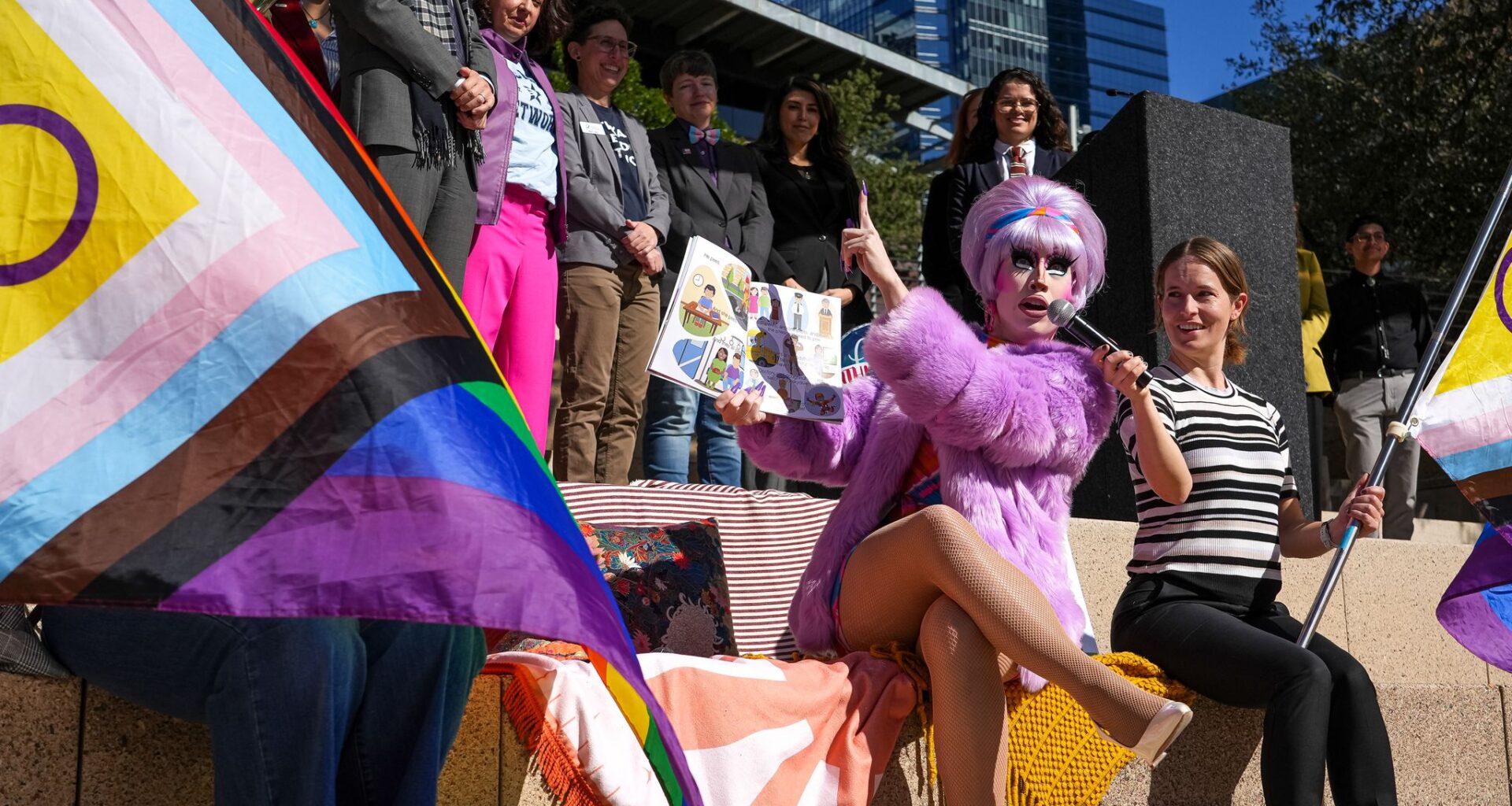
Outside City Hall Thursday, drag performer and activist Brigette Bandid read the children’s book “Everybody Pees” to supporters, underscoring the push for inclusive bathroom access.
Landon Richie, policy coordinator for the Transgender Education Network of Texas, said the impact of SB 8 is already being felt. He pointed to reports of colleges asking students to adjust housing arrangements and of people being questioned about their gender identity when using restrooms at the state Capitol.
“It’s exhausting to be trans in Texas right now,” he said. “It’s refreshing to see Austin remain committed to protecting its residents and recognizing SB 8 for what it is.”