
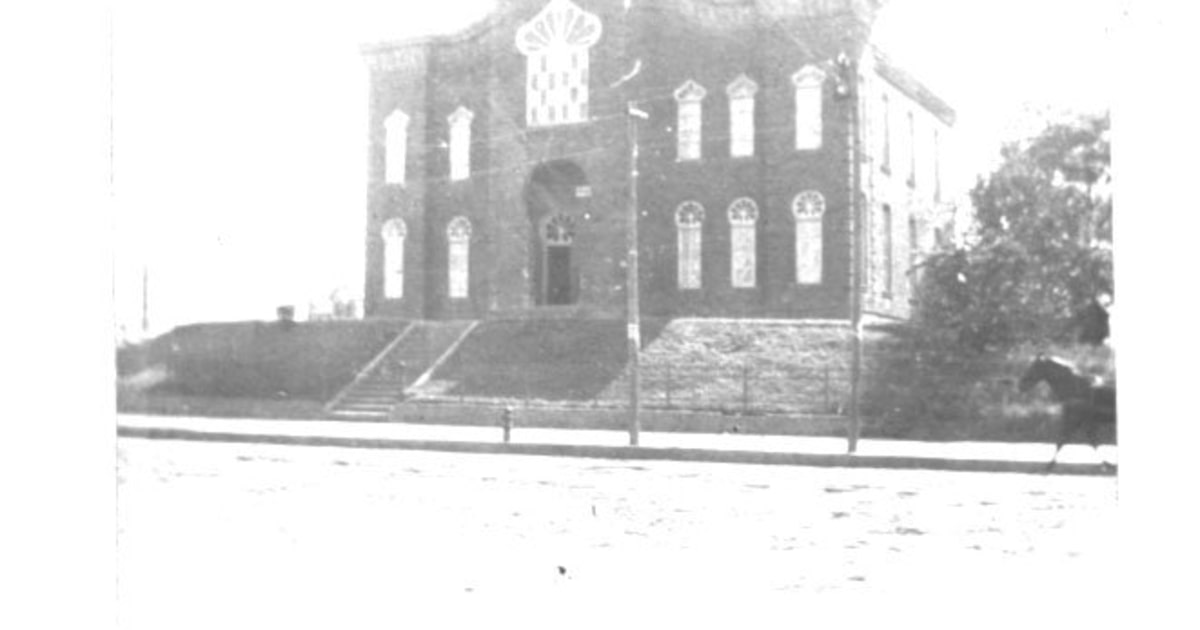
On a spring evening in 1876, a throng of people crowded into a brick building on Commerce Street. It was the Jewish holiday of Shavuot, and Congregation Emanu-El was dedicating its first synagogue.
The Dallas Daily Herald called it “the largest congregation ever assembled in our city.” Bishop Alexander C. Garrett of St. Matthew’s Cathedral, whose church stood next door, ordered the cathedral bells silenced so the Jewish service could be heard without interruption. Clergy of different Christian denominations were invited. Neighbors filled the pews.
For a city whose first Jewish families had arrived only a few years before, this was not a small, private event. It was a civic one.
That night revealed something about who Dallas wanted to be. And as Hanukkah approaches this year, with antisemitism and polarization again in the news, that memory is worth keeping in view.
Opinion
Dallas did not gather like this just once. On Thanksgiving Day in 1899, the city dedicated a new Temple Emanu-El. Contemporary accounts describe four Christian ministers taking part alongside the rabbi, with the mayor of Dallas among the dignitaries. The service was framed as a celebration of the city’s growth as much as the congregation’s — a synagogue dedication was a milestone for Dallas itself.
This pattern stretched across Texas. In 1875, when San Antonio’s Beth-El congregation dedicated its synagogue, Catholics, Protestants and Jews took part, and an interfaith choir provided the music. In 1884, when Austin’s first synagogue was built, non-Jewish residents donated generously — gifts that would equal tens of thousands of dollars today. In 1899, Christians in El Paso contributed more than a quarter of the cost of Congregation Mount Sinai’s building.
These weren’t mere gestures of tolerance. They were acts of friendship. Communities chose to show up at Jewish sacred moments and to treat the presence of a synagogue as something that enriched the whole community.
History, of course, is never simple. Texas has also seen religious bigotry and nativism, when neighbors were made to feel unsafe. Remembering the better stories does not cancel the harder ones, but it does give us another strand of our inheritance to work with.
Today, Jews in Texas and across the United States are again feeling vulnerable. The Anti-Defamation League has reported record numbers of antisemitic incidents, including threats aimed at synagogues. Many congregations now invest heavily in security just to hold services or religious school.
It would be easy, in such a climate, to imagine that genuine pluralism is a fragile, recent experiment — and that Jewish visibility in public life is new, or always contested. Yet Dallas’ own history suggests otherwise. Nearly 150 years ago, when the city’s first permanent synagogue opened its doors, Christian neighbors did not hang back. They turned up. They sang, listened and gave to the occasion.
Hanukkah, which begins Sunday, commemorates the rededication of the ancient Temple in Jerusalem. But it is not only about one building in one city long ago; it is also about what each generation chooses to affirm in public — which spaces we honor and which neighbors we recognize.
A century ago, Dallasites answered those questions in ways that may surprise us today. They silenced church bells so another community’s prayers could be heard. They packed a sanctuary that did not belong to them and called its joy their own.
Our predecessors did not just debate pluralism; they showed up for it. Dallas can do that again.
Austin Albanese is a historian and writer in Rochester, New York. His work on Jewish and interfaith history has appeared in The Washington Post, The Jerusalem Post, the Atlanta Journal-Constitution and other publications.