
For years, Tal Kocen traveled the world with various bands and musicians working as an audio engineer.
After stopping that life in 2010 — and a quick career in sales — he now co-owns an e-commerce company selling audio equipment.
Dekoni Audio, which started in 2016, is based in New Jersey. But because Kocen lives in Texas with his family, the Bedford native doesn’t qualify for the company-provided insurance, he said.
Currently, Kocen is paying $1,200 a month for medical family insurance he describes as “pretty horrendous.” Now that his provider is pulling out of the federal marketplace in 2026, he had to find a comparable plan.
With the current tax credits set to expire at the end of the year, Kocen said, similar health insurance plans will cost him upwards of $3,000, more than doubling his current monthly charge.
“The whole situation just sucks,” Kocen said. “I’m trying to run a small business. I’m trying to support my family, not working for some big corporation. Essentially, I’m being penalized.”
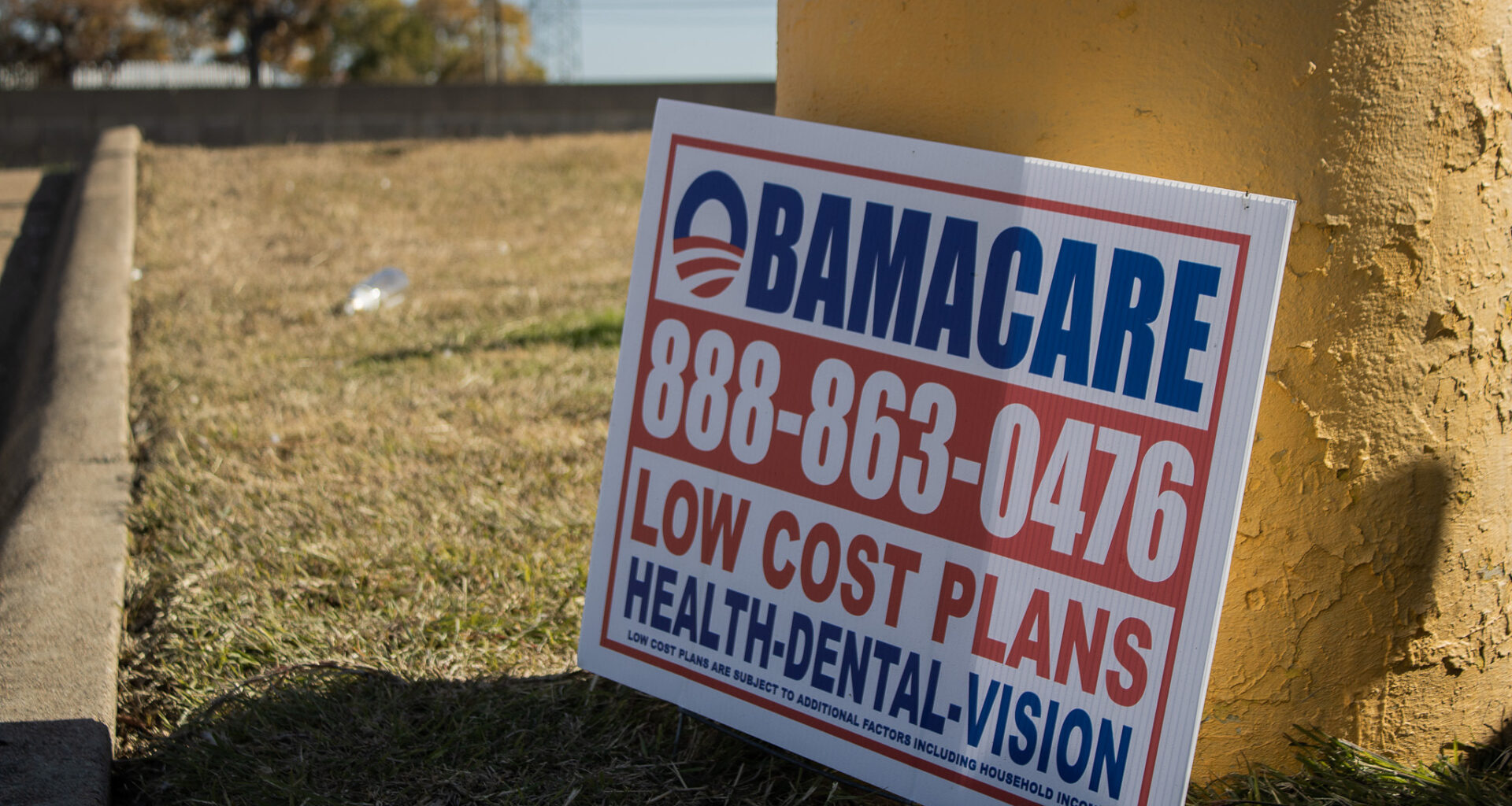
Affordable Care Act, colloquially known as Obamacare because of its passing during President Barack Obama’s administration, will see enhanced premium tax credits expire at the end of the year. Those subsidies introduced in 2021 led to enrollment more than doubling in the federal marketplace, going from 11 million individuals covered to 24 million in 2025, according to the health policy nonprofit KFF.
Without the tax credits, 7.3 million fewer people will receive subsidized insurance in the federal marketplace, according to a study from the Urban Institute. The nonprofit research group found that Texas will see subsidized marketplace enrollment fall by more than half.
More than 215,000 people, or over 10% Tarrant County residents, were insured through the federal marketplace in 2024, according to the Episcopal Health Foundation.
As of Dec. 12, federal senators remained in a partisan gridlock, unable to convince those on the opposite side of the aisle to agree on a solution to the expiring tax credits.
The Democratic contingent proposed a three-year extension of the premium tax credits. The Republican proposal looked to provide up to $1,500 a year to Americans earning less than 700% of the poverty level. That proposed health savings could be used for a person’s deductible but not for monthly premiums.
Both Texas senators, Ted Cruz and John Cornyn, voted for the Republican proposal. Congress is set to vote on a proposal on Dec. 15, according to Politico.
First introduced in 2021 and extended for three additional years, the tax credits allowed those earning up to 150% of the federal poverty level to pay nothing in insurance premiums for the standard health insurance plan on the federal market. An individual must earn less than $23,500 — or a family of four less than $48,200 — to qualify.
With the tax credits expiring, those same individuals would pay $940 — or about 4% — in insurance premiums. The family of four would pay $1,928.
The effect is more significant for those past 400% of the poverty level. The 2021 tax credits allowed people earning an annual salary above $62,200 to qualify for subsidies when they hadn’t previously.
“If you make more than 400% of the federal poverty level and the enhanced subsidies go away, you are going to lose eligibility for that subsidy, and your premiums can absolutely skyrocket,” said Charles Miller, director of health and economic mobility policy for Texas 2036. “You are now fully exposed to those market-rate premiums.”
Leslie Shields, owner and principal agent of the Fort Worth-based Shields Agency, said they are seeing $3,000 monthly insurance premiums for those past 400% of the poverty level.
“People are crying. I had a woman tell me this week, ‘I guess I just don’t get insurance,’” Shields said. “‘I guess if I get sick, I’m just going to die.’”
Kocen is one of those Tarrant County natives who will forgo medical insurance. He’s looking at a combination of health shares and direct primary care to offset the lack of insurance.
“It priced us out. You can’t get a decent plan for a number that we can afford,” Kocen said. “I can’t take on a second mortgage just in case we get sick.”
Use this KFF calculator to see how much you would pay in premiums with and without the enhanced premium tax credits.
Although lawmakers do not have a deadline, Americans must enroll before Dec. 15 to have health insurance starting on Jan. 1. Open enrollment continues until Jan. 15 for coverage starting Feb. 1.
The number of uninsured people will rise by 2.2 million next year due to the expired tax credits, according to the Congressional Budget Office.
Ismael M. Belkoura is the health reporter for the Fort Worth Report. Contact him at ismael.belkoura@fortworthreport.org.
At the Fort Worth Report, news decisions are made independently of our board members and financial supporters. Read more about our editorial independence policy here.
This <a target=”_blank” href=”https://fortworthreport.org/2025/12/14/how-will-expiring-obamacare-subsidies-affect-tarrant-county/”>article</a> first appeared on <a target=”_blank” href=”https://fortworthreport.org”>Fort Worth Report</a> and is republished here under a <a target=”_blank” href=”https://creativecommons.org/licenses/by-nd/4.0/”>Creative Commons Attribution-NoDerivatives 4.0 International License</a>.<img src=”https://i0.wp.com/fortworthreport.org/wp-content/uploads/2021/04/cropped-favicon.png?resize=150%2C150&quality=80&ssl=1″ style=”width:1em;height:1em;margin-left:10px;”>
<img id=”republication-tracker-tool-source” src=”https://fortworthreport.org/?republication-pixel=true&post=326270&ga4=2820184429″ style=”width:1px;height:1px;”><script> PARSELY = { autotrack: false, onload: function() { PARSELY.beacon.trackPageView({ url: “https://fortworthreport.org/2025/12/14/how-will-expiring-obamacare-subsidies-affect-tarrant-county/”, urlref: window.location.href }); } } </script> <script id=”parsely-cfg” src=”//cdn.parsely.com/keys/fortworthreport.org/p.js”></script>