
AUSTIN, Texas — The holiday season is a time to celebrate, but with fun comes responsibility, which includes coming up with a plan not to end up behind the wheel after having alcohol. A program in Austin is aimed at deterring people from drinking and driving, and one woman hopes other cities will follow its lead.
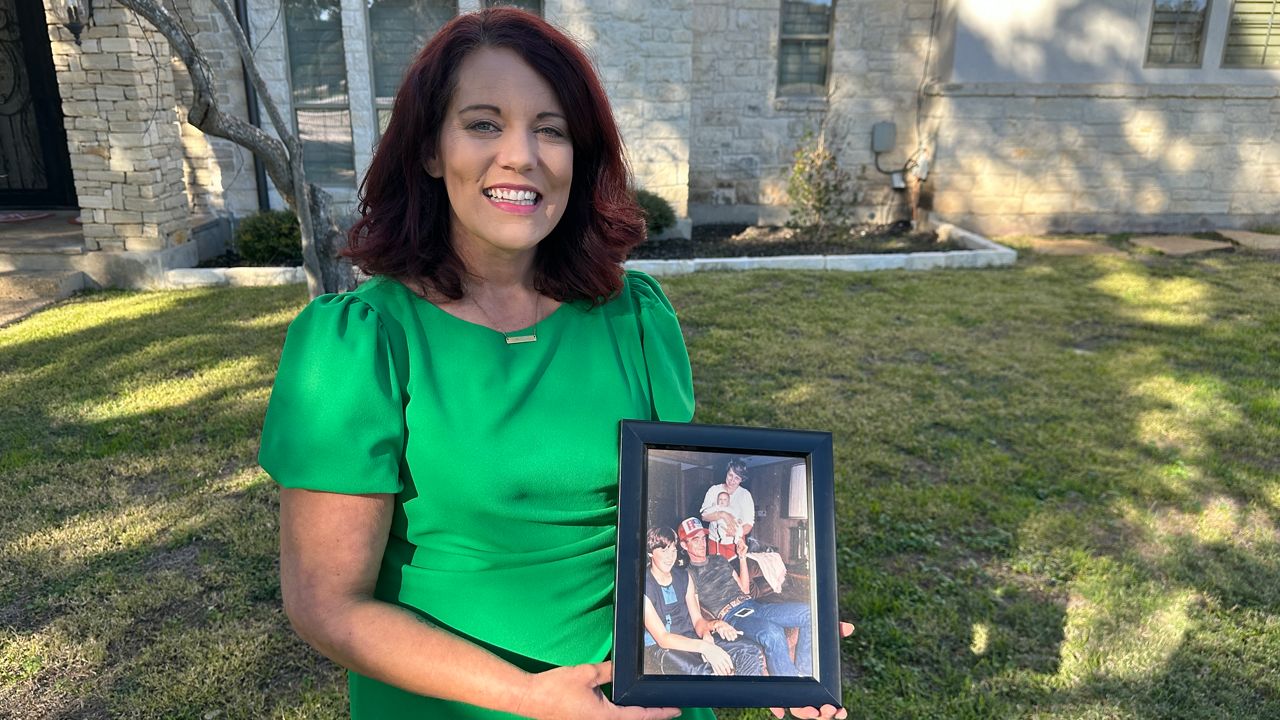
When Erin Crawford-Bowers was only six months old, she became a survivor of a head-on crash caused by a drunk driver. That crash changed the entire trajectory of her life.
“My dad died on impact,” Crawford-Bowers said. “My cousin, who was sitting behind him, broke almost every bone in her body, and then my mother, she had flung off her seat belt to kind of cover me and brace for that impact, but that then threw her into the windshield. They said she died about two minutes later.”
Not only did she and her brother, Guy Crawford, lose their parents that night, but Crawford-Bowers has also lived with chronic pain throughout her life.
“I have lifelong injuries,” Crawford-Bowers said. “I’m actually getting ready to finally get back surgery that I’ve needed basically for the last 40 years, so even though it was so long ago, I still live with a daily reminder of this.”
Losing their parents took a toll on Guy, who was 14 years old at the time of the crash.
“We were in and out of facilities across the state of Texas for about 18 months and then I lost him to suicide on June 4, 2021,” Crawford-Bowers said.
There were over 2,000 drunk driving-related crashes during the holiday season last year in Texas, according to the Texas Department of Transportation. That made Dec. 2024 the month with the highest number of crashes caused by drunk drivers last year.
Tragedies like these have ripple effects, which is why Crawford-Bowers has made it her life’s mission to advocate for and support initiatives that aim to deter drinking and driving, such as the program the City of Austin offers.
A person may drive to downtown Austin intending to drive back home but end up drinking alcohol knowing that it’s unsafe to drive, worrying about getting a ticket if they decide to leave their car behind. The city’s “Get Home Safe Ticket Waiver Program” helps with this.
“If they leave it in a pay-to-park area and they accidentally or just so happen to get a citation for doing so, or overstaying, they have the option of submitting some paperwork, and then that ticket will be waived through the court for their responsible ride home,” said Lyndon Meris, the manager of Austin’s Parking Enforcement Services.
The program applies only to street parking, not private property and parking garages. A receipt proving the driver got a ride home is required. The program is also not just seasonal, but available year-round. Crawford-Bowers says it’s a step in the right direction.
“Knowing that the city is even stepping up where you get a fine then they just go ahead and waive it right on for you, and it takes away that excuse because I think that’s really what it’s all about,” she said.
She hopes that other cities across Texas follow Austin’s lead on initiatives like this to prevent others from experiencing tragedies such as the one her family has endured.