
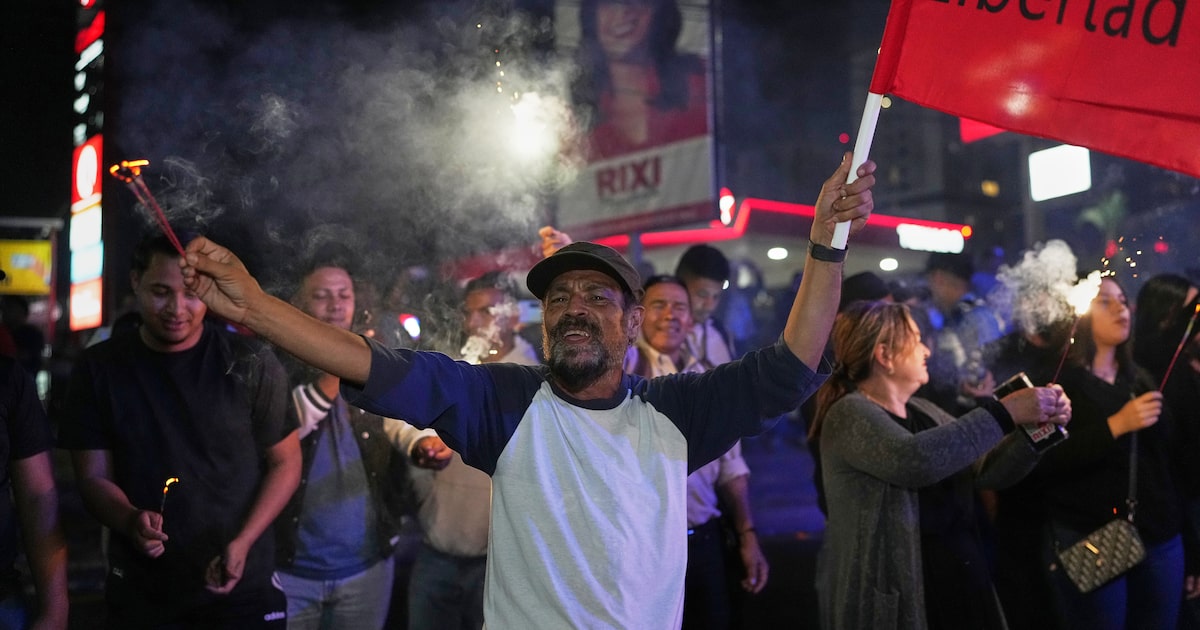
Honduras has once again turned an election into a stress test for democracy. With more than 99% of votes counted from the Nov. 30 presidential race, National Party candidate Nasry “Tito” Asfura holds a lead of roughly 40,000 votes over Liberal Party contender Salvador Nasralla. Yet the result is stuck in limbo. President Xiomara Castro has denounced an “electoral coup” and her LIBRE party has demanded that the entire vote be annulled, while protests block roads and airports.
The problem is not just that the race is close. It is that Honduras has a referee almost no one trusts. The National Electoral Council admits that about 14.5% of tally sheets show inconsistencies and are under special review. Earlier, the results website crashed, the rapid count stalled and unexplained maintenance on the transmission system deepened suspicions.
This is the new Central American dilemma. Elections still happen, parties still compete, and power can change hands. Yet the institutions that give those elections authority are fragile, underfunded and politically captured. Honduras is not an outright dictatorship, but it is drifting toward a system where every close race becomes a crisis.
Into that vacuum, President Donald Trump has exported his own election wars. Late in the campaign and during the messy count, the president openly backed Asfura, framed the contest as a fight against socialism and threatened to cut off U.S. aid if the “wrong” candidate won. When Nasralla briefly edged ahead, Trump went on Truth Social to warn that “it looks like Honduras is trying to change the results of their Presidential Election,” and promised “hell to pay” if officials did.
Opinion
This is not traditional U.S. democracy promotion. It is the export version of “stop the steal.” The logic is simple: Define the legitimate outcome as the one that favors your ally, treat any other result as evidence of fraud and attack supposedly neutral institutions when they do not deliver.
The message hits harder because of what came just days earlier. Trump pardoned former Honduran president Juan Orlando Hernández, who had been sentenced in a U.S. court for helping move tons of cocaine into the United States. That clemency was not a random act of mercy. Hernández’s circle mounted an intense lobbying effort, and Trump confidant Roger Stone has boasted about pressing the case.
Put together, the pardon and the interference tell Hondurans something corrosive: What matters in Washington is not your rule of law, but your loyalty. Anti-drug policy can be flexible for friends. Electoral rules can be questioned if they threaten the preferred candidate.
For Texas, the stakes are very concrete. Irregular crossings at the southern border have fallen sharply since 2022, especially from Central America, thanks to tougher asylum rules, more rapid removals and pressure on transit countries. Trump presents that drop as proof that his approach works.
Honduras is now a test of what comes next. Whoever is sworn in will sit across the table from a U.S. administration that wants fewer migrants at the Rio Grande and faster cooperation on deportations. Asfura, aligned with conservative elites and with Trump’s public blessing, is likely to lean into that role. A deal that trades enforcement for aid and political protection will tempt both sides.
Nasralla, if he somehow emerges as the certified winner after legal challenges, would face the same U.S. demands with fewer partisan incentives to comply. His brand is anti-corruption, built partly on denouncing the National Party’s links to drug trafficking in the Hernández years. That could push him to confront some criminal networks more directly, but it would not spare him from Washington’s pressure on migration.
In both scenarios, the danger is the same. If U.S. policy treats Honduras mainly as a subcontractor for border control, it locks in the very political economy that keeps producing migrants and cocaine routes. A government that delivers deportations while leaving impunity untouched is convenient in the short run and toxic over time.
There is also a geopolitical layer. President Castro cut ties with Taiwan in 2023 and recognized Beijing. Both Asfura and Nasralla have signaled they would like to restore relations with Taipei, a move that fits neatly with Washington’s desire to push back against China in the region. If that shift happens in the context of a contested result and visible U.S. pressure, many Hondurans will read it not as a principled choice, but as part of a bargain to rescue a damaged mandate.
The real question for the United States is not which candidate is more “pro U.S.” on paper. It is whether Washington is willing to prioritize credible rules over short-term wins on migration or China. In Honduras right now, that means pushing hard for transparency on the disputed tally sheets, backing independent observation and resisting the temptation to anoint a winner before the process ends.
For Texas, it means recognizing that what happens in Central American counting rooms eventually shows up at the border and in our own politics. If Hondurans conclude that elections at home change presidents but not the underlying deal between their elites and Washington, many will continue to vote with their feet. No amount of tough talk at the Rio Grande will fix that.
Orlando J. Pérez is a professor of political science at the University of North Texas at Dallas. Opinions reflect those of the author and not those of the university or its leadership.