
A 33-year-old Guatemalan man who had been illegally deported from El Paso to his home country last month days before his wife was due to give birth has been returned to the United States in compliance with a federal judge’s order.
The Guatemalan man – who El Paso Matters is identifying only by his initials, FPP, because a judge has said he’s proven a fear of potential torture in his home country – was returned from Guatemala City to El Paso on Thursday night, a day before the deadline set for his return by U.S. District Judge David Guaderrama, federal court records show. FPP was in custody of Immigration and Customs Enforcement at an El Paso detention facility Monday, according to ICE records.
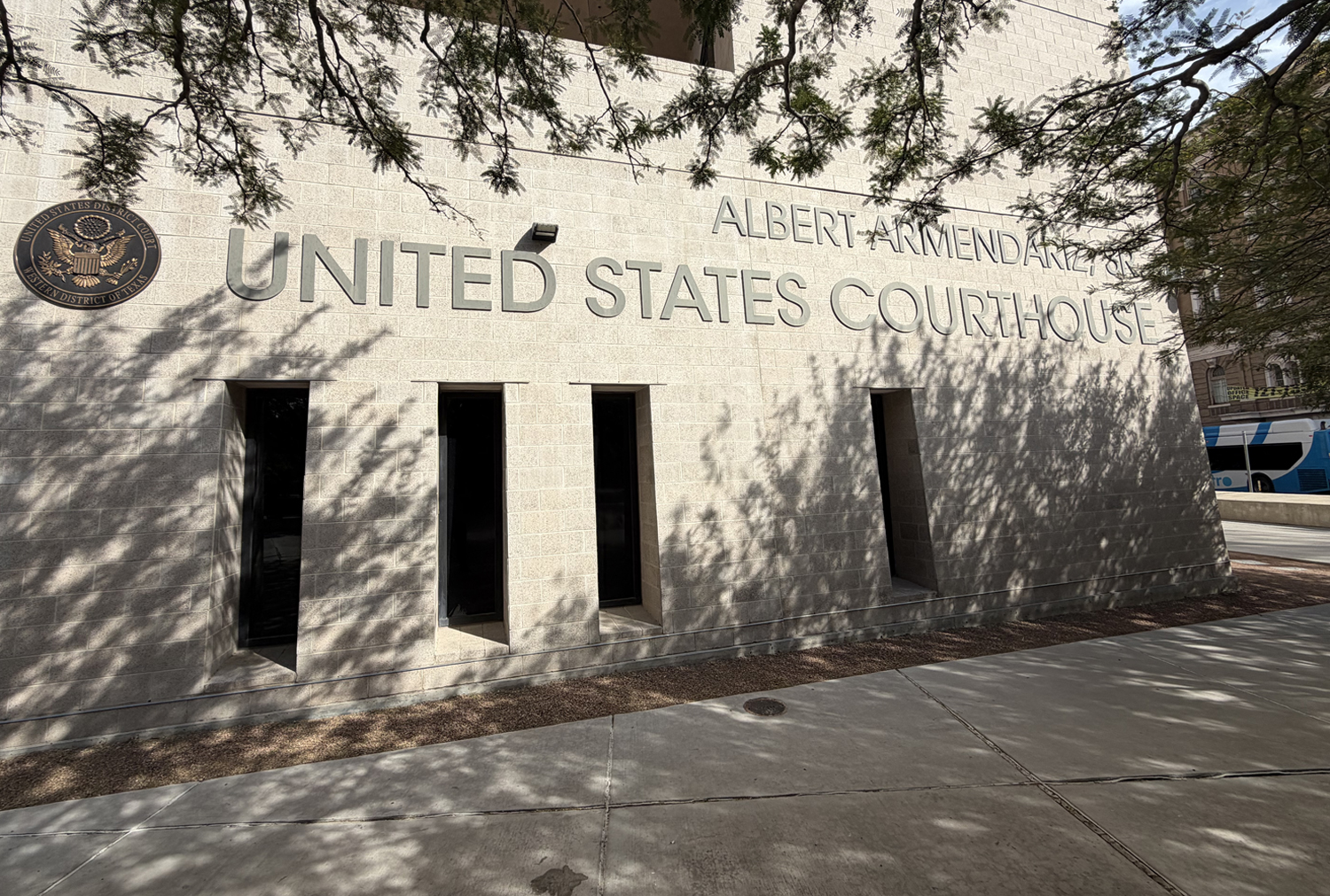
U.S. District Judge David Guaderrama issued an order Dec. 5 that the Trump administration return FPP to the United States by Friday, Dec. 12. Guaderrama said immigration officials acted with “blatant lawlessness” when they placed the man on a flight to Guatemala on Nov. 20, even though an immigration judge had barred his removal to his home country.
Court records show FPP fled Guatemala in 2012 and was granted protection under the Convention Against Torture after a U.S. immigration judge found in November 2013 that he was likely to face torture if returned there. The government appealed the decision to the Bureau of Immigration Appeals, which dismissed the appeal in 2015.
Although FPP remained removable to a third country, the ruling explicitly barred his deportation to Guatemala. Court records show that ICE was told multiple times after detaining FPP on Nov. 5 that he could not be deported to Guatemala. Attorneys for the Trump administration acknowledged in court filings that the government had no lawful basis to send FPP to Guatemala, saying he was “mistakenly removed.”
The Department of Homeland Security, which oversees ICE, did not respond to questions from El Paso Matters about why the U.S. government deported FPP in defiance of the court order. Instead, DHS provided a statement from Assistant Secretary Tricia McLaughlin.
“One thing is certain: he is not going to be able to remain in the U.S. We will deport him to another country,” McLaughlin said in the statement.
SEE ALSO: ACLU: ICE detainees at Camp East Montana beaten, threatened with illegal removal to Mexico
FPP has lived in California for more than a decade after being released from ICE custody under an order or supervision that required regular check-ins with immigration officials. ICE acknowledged in court records that FPP met the conditions of his release.
He was detained without notice during a routine check-in Nov. 5, triggering a legal scramble to stop his removal. His attorney, Jennifer Scarborough of Minnesota, said in a Nov. 18 court filing that FPP’s order of supervised release was withdrawn by ICE without due process. The habeas corpus petition said FPP had protection against deportation to Guatemala.
The day after the habeas corpus petition was filed, FPP notified his family that ICE had told him he would be sent to Louisiana on Nov. 20 for removal to an unspecified third country.
FPP’s wife in California was pregnant, with delivery due Nov. 28, Scarborough said in a court filing.
Scarborough asked the court in the early morning of Nov. 20 to issue a temporary restraining order blocking his removal from the country.
“ICE then acted to remove (FPP) as quickly as possible,” Scarborough wrote in a second request for a temporary restraining order later on Nov. 20. “At around 5 a.m., respondents took (FPP) to the airport. When (FPP) told ICE that he could not be deported to Guatemala, respondents said that he had no choice. Respondents then deported him to Guatemala City.”
Scarborough’s motion said the government “deported him to Guatemala in direct violation of the immigration court order granting withholding of removal. His life is at risk of persecution and torture.”
The U.S. Attorney’s Office for the Western District of Texas admitted in a court filing Nov. 22 that FPP’s deportation to Guatemala was unlawful but argued that Guaderrama lacked authority to order his return because he was no longer in U.S. custody.
But on Nov. 25, the government said in court filings that it had begun the process to return FPP to the United States, with his return tentatively scheduled for Dec. 4.
Court records show the return was delayed as ICE prepared documents to parole FPP into the United States, and Guatemalan officials said FPP would need a Guatemalan passport to leave the country. Scarborough raised concerns about having FPP meet with officials of a government he feared would torture him, but he eventually met with them and received a passport Dec. 10, court records show.
The records show that FPP left Guatemala City on an airplane at 2:15 p.m. MST on Thursday, Dec. 11, and arrived in El Paso at 6:35 p.m. MST. He was placed in ICE custody.
The government hasn’t said why ICE detained FPP on Nov. 5. However, his attorney and the government both said in court filings that he was convicted of driving under the influence in California in 2024. Scarborough said in filings that he was complying with a nine-month program for first-time DUI offenders.
DHS officials previously told El Paso Matters that it intends to deport FPP to a third country willing to accept him. Third-country deportations have historically been rare in the United States, but the second Trump administration has used them more aggressively.
In the most notable case of an illegal deportation, Kilmar Abrego Garcia of Maryland was sent by the Trump administration in March to El Salvador, where he was held in a notorious prison and said he was tortured. Abrego had an immigration court order prohibiting his deportation to El Salvador because he had proven a well-founded fear of persecution there.
As with FPP, the Trump administration initially said U.S. courts had no legal basis to order his return, but he was returned in June. Abrego was indicted on human smuggling charges, which he has denied, and the Trump administration has repeatedly said it would deport him to Africa, even though the Central American country of Costa Rica has said it would accept him.
Last week, a federal judge in Maryland blocked his removal and ordered his release, saying no immigration court had ever authorized the government to deport him.
Related
LISTEN: EL PASO MATTERS PODCAST