
Despite
RevPAR challenges across all four major markets (and convention center closures
in Austin and Dallas), here’s why Texas remains the top pick for investors.
NATIONAL
REPORT — A challenging RevPAR environment for the top four cities in Texas
hasn’t kept hotel investors away from the Lone Star State. In fact, the
opposite is true.
“Institutional
full-service will continue to be extremely attractive for investors in Texas,
really, across the four major cities,” said Brian Nordahl, executive vice
president for CBRE Hotels, who is based in Dallas and specializes in
institutional investment in Texas and the South Central U.S. “It’s really these
national level uncertainties that are impacting the markets, and once we get
some clarity on that, I absolutely anticipate that Texas will continue to be
the number one place that people are going to look for a hotel investment.”

According to
data from CoStar, the top five markets in Texas (which includes Austin, Houston,
San Antonio and Dallas as well as Fort Worth-Arlington in DFW market) are
seeing negative RevPAR performance through the first three quarters of 2025:
Austin is down 6.3% year-over-year, Dallas is down 1.5%, Fort Worth/Arlington
is down 0.8%, Houston is down 9.6% and San Antonio is down 3.6%.
Add to that a
challenging environment where both the Austin and Dallas markets have closed
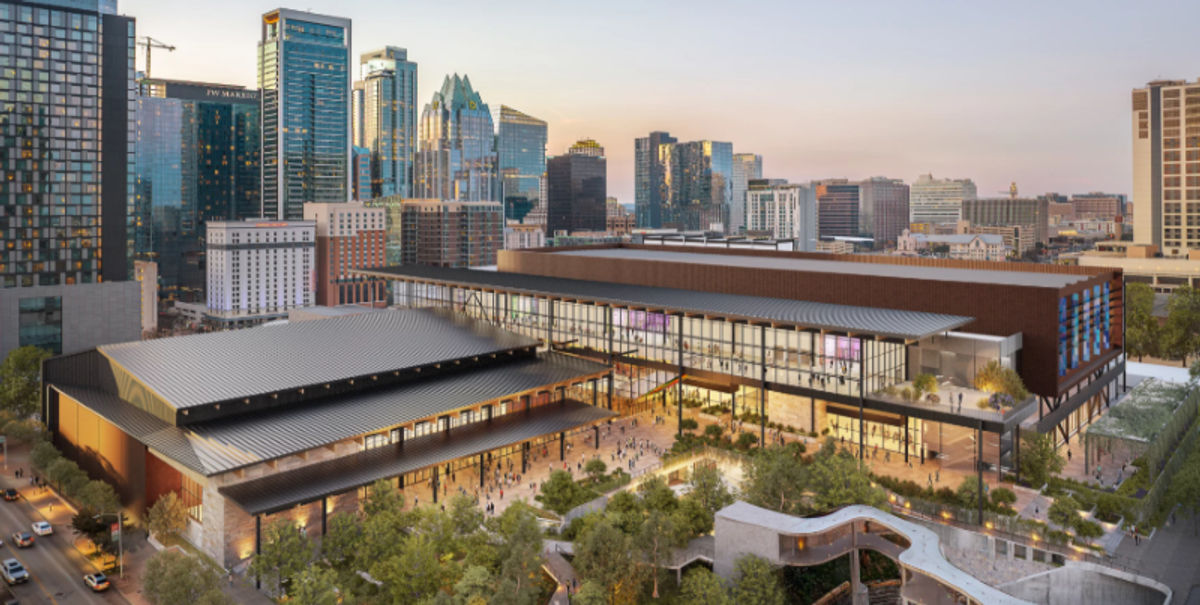
their convention centers for renovations for the next few years (Austin’s convention
center closed in April for a $1.6 billion development with demolition complete
and construction underway for a new larger facility while Dallas’ Kay Bailey
Hutchinson Convention Center isn’t fully closed but is undergoing a major $3.7
billion renovation/redevelopment that has limited its ability to host events).
Both convention centers are scheduled to reopen in 2029.
So why are
investors still showing a belief in Texas? Colin Sherman, director of
hospitality market analytics, Texas & U.S. South for CoStar, said history
is driving their decisions.
“From what I
can gather, particularly in the Texas landscape, they’re looking at the
historical fundamentals of hotel investment,” Sherman said. “Yes, this year is
down… But in the long run, they see that there’s an opportunity and they
continue to maintain that optimism.”
Those strong
fundamentals are also showing up in Texas hotel sales data for 2025, Sherman
said.
“If we’re
not even looking at development, but just sales in general, we’ve seen an
uptick in sales this year across the five major metros that STR follows,” he
said. “We’re starting to see investments come back.”
Through
November across those five markets, Sherman said STR data shows that 18,570
rooms have changed hands, up a whopping 45% from 12,794 rooms through the same
period last year.

DFW continues to be the number one location for investors nationwide. It’s the number one market where people want to be, no matter what’s happening with the convention center.
Brian Nordahl
“It’s gone
up quite a bit and that’s a good indicator that investors are still willing to
buy and buyers are looking for deals,” he said. “They’re hedging their bets,
basically, that everything is going to be back and it’s still a good
investment, considering the growth and the population that’s coming to all
major metros around Texas.”
The
strongest hotel investment market in Texas also has the nation’s strongest
hotel pipeline for the past two years, Nordahl said — Dallas-Fort Worth.
“DFW
continues to be the number one location for investors nationwide,” Nordahl said.
“It’s the number one market where people want to be, no matter what’s happening
with the convention center.”
If anything,
Nordahl said, investors look at the buildup to a new convention center in 2029
as a positive.
“Because
when you [acquire] them, a lot of these hotels need to be renovated. So you do
your renovation over 24 months, and then you’re ready to rock and roll when
those convention centers come back online, there’s significant citywide demand and
the hotels will benefit greatly,” he said. “Most of these investors are
underwriting five to 10-year return horizons, so it falls well within those
horizons to have new convention centers.”
Challenges
for Texas markets
Each of the
top four cities is facing unique challenges.
In Austin,
the city is facing RevPAR headwinds, especially in the last two quarters (Q2
RevPAR was down 14.3% YOY, and Q3 was off 6.3%), and is focusing on what it
calls a “mini-wide” concept to host events (namely, SXSW) while its convention
center is closed.
.jpg?tr=w-768%2Cfo-auto "Colin Sherman")
“They’re
turning their downtown into a campus-style, convention center, where they’re
using all the available meeting spaces around different hotels to fill that
gap,” Sherman said.
While the
city has long been known as a luxury market, developers have recently been
working to fill the middle-tier hotel gap, according to Sherman.
“That
middle-tier traveler is what they’re trying to appeal to now, and developers
are trying to fill that gap throughout the Austin area, not just in downtown,
but also in some of the peripheral submarkets,” he said.
The RevPAR
challenges are less apparent in Dallas-Fort Worth, which has the two
best-performing major markets in Texas. The Dallas market, in particular, has a
lot of new supply coming in, particularly on the luxury side. Those luxury
hotels are unique, Sherman said, because they are often anchoring mixed-use
developments around the city (while it’s more typical for the hotels to come in
later in the development process).
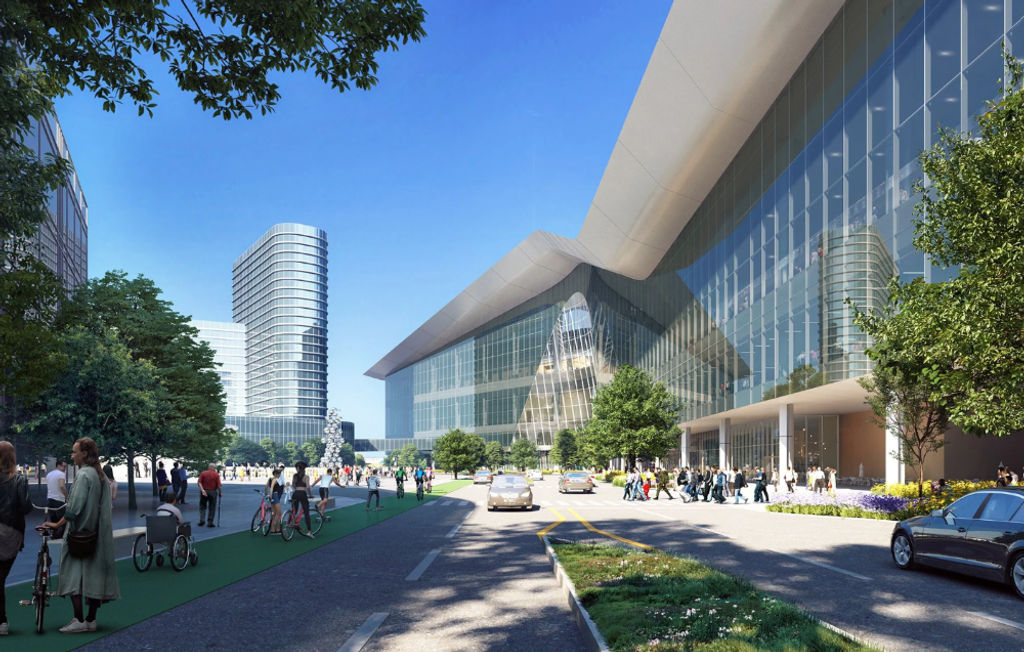
Dallas’ redeveloped and expanded convention center is scheduled to open in 2029. (Credit: Dallas Convention Center)
The
Arlington-Fort Worth market has benefited from steady demand and new supply and
is especially buoyed by all the sports demand created in Arlington with the
NFL, baseball and special events, notably next year’s World Cup, when Arlington
will host nine matches at AT&T Stadium, the most of any host city.
Nordahl said
several submarkets in DFW aside from Arlington will benefit from the event,
including Frisco, as well as hotels around DFW Airport.
“We’ve heard
advanced bookings that are extremely strong at individual hotels,” he said.
“[Next year] should be a great year in particular and a great summer for DFW as
a whole,” he said.
Houston’s
RevPAR headwinds are more notable, but mainly because of challenging comps due
to 2024 hurricane (RevPAR was down 25.1% YOY in Q3). Sherman said that, with
little new supply entering the market, the investment focus has shifted away
from the city’s urban core.
We’ve heard advanced bookings that are extremely strong at individual hotels. [Next year] should be a great year in particular and a great summer for DFW as a whole.
Brian Nordahl
“From an
investor standpoint, we’re seeing those peripheral submarkets being filled more
on the entertainment side and a little bit further outside of downtown,” he
said.
San Antonio
has also seen RevPAR headwinds this year (Q1 was down 3.7% — the only major market
to be down in the first quarter; Q2 was down 3.3%; and Q3 was down 3.4%) due to
steady supply growth offset by lower demand. But Sherman said there’s a lot to
look forward to in the market with several upper-tier hotels opening in the
downtown area over the past year.
“A lot of
supply has entered the market, particularly on that luxury scale,” he said. “A
lot is going on down there, and it’s being driven by new projects that the city
and independent developers are bringing to the city,” he said, noting the
significance of Project Marvel, an ambitious, multi-billion downtown revitalization
plan.
Speaking to
investor interest is all of the potential future demand for business in these
markets, especially when the Austin and Dallas convention centers fully come
back online. Those citywide events create compression, Nordahl said, which can
spread the benefits to hotels around the city.
“The big
word that matters is compression… even if your hotel is not benefiting directly
from convention center demand, the fact that there’s a major event citywide or
even a large group creates that compression in the market that allows various
hotels that might benefit from getting better occupancy and better average
daily rate,” he said.