
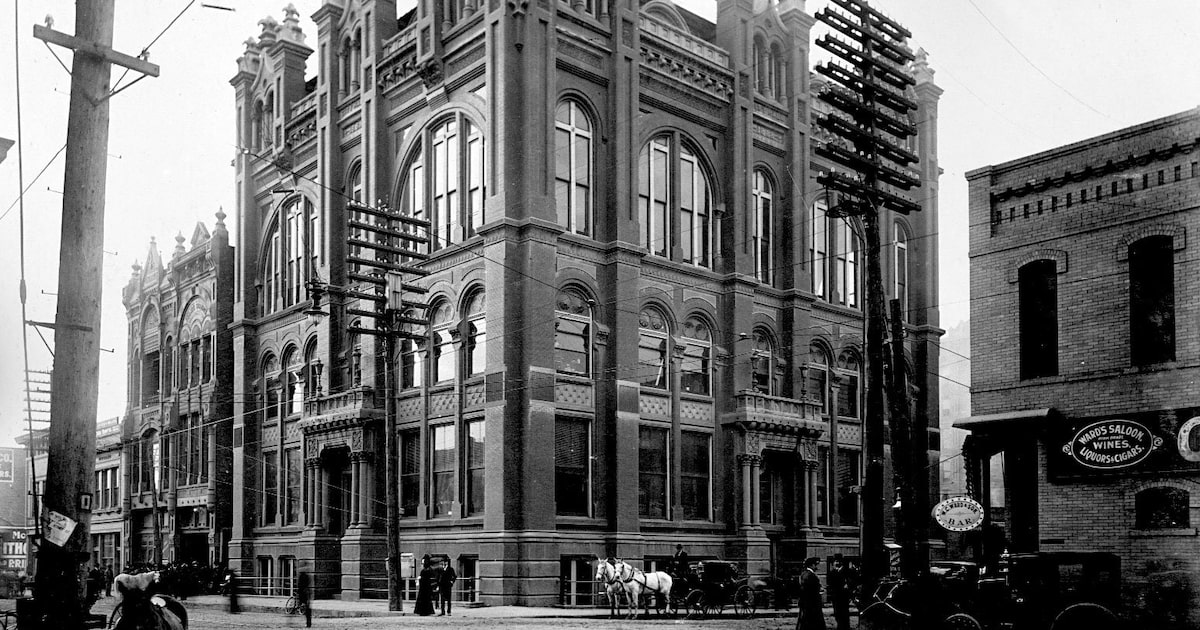

Come February, when reports are reported and assessments assessed, we’ll finally get to stop pretending that city staff and City Council members want to scrape and sell Dallas City Hall because it’s too expensive to save. At which point, I’d be willing to wager, were I a gambling man, Dallas Mavericks owner Miriam Adelson and son-in-law Patrick Dumont will pull the keys from Mayor Eric Johnson’s magic hat.
Not that the Mavs are saying anything; I asked. Or City Hall; I asked. All we know is that the Mavericks are looking for land all over the city, including at 1500 Marilla St., where they call this Project X and not just because it could very well mark the spot of the new arena.
I emailed the city manager Monday morning some simple questions about whether anyone has approached staff about acquiring or developing the City Hall site. I said I wasn’t asking for names or whether a deal was done, just if anyone had said they were interested. A city spokesman responded only that “it’s premature to discuss the reports or findings that will be prepared for and presented to the City Council in February.”
That wasn’t the question. But we all know how this is likely to go down. Because in Dallas, history often doesn’t rhyme. It repeats.
For proof, look no further than the archives of this newspaper and the Dallas Times Herald, where a familiar tale played out 115 years ago. One need only replace the word “hotel” with “arena” and the King of Beers with the Queen of Sands.
Opinion
The story begins in the pages of the Herald, which broke the news on May 4, 1910, that beer maker Adolphus Busch was keen on building a second downtown hotel.
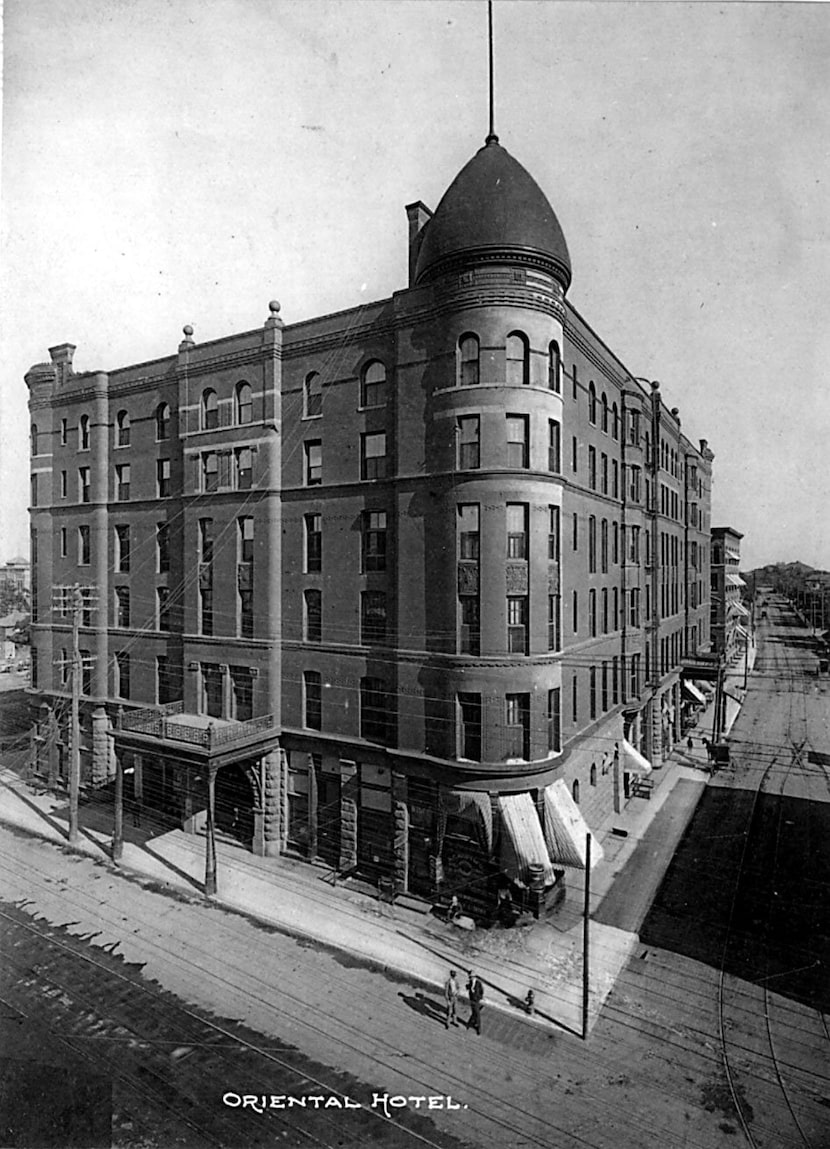
The Oriental Hotel sat directly across Commerce Street from Dallas City Hall in 1889.
Dallas Morning News Archives
Busch already owned the Oriental Hotel on Commerce and Akard streets, directly across from Dallas’ third City Hall, which had been designed by architect A.B. Bristol. That building, a decorous fortress, towered over downtown. This newspaper hailed the stone structure for being “very modern, mainly, with a slight leaning toward the Gothic … unlike anything ever built here before.”
Busch already owned a nice chunk of property at Akard and Main street, but the Herald reported that the Oriental Hotel’s stockholders wanted another site, one that “might prove more advantageous to the present owners of the Oriental property.” As it turned out, that other site was in plain sight all along: right across the street from the Oriental.
The Herald broke the story on its May 13 front page: “Busch Interests Offers Big Sum For City Hall Site” – $225,000, around $8 million today. That was more than the land’s appraised value ($175,000) but less than city officials wanted. Officials wouldn’t comment on the paper’s reporting.
A week later, the Herald learned that city leaders, including Mayor Stephen Hay and Charles Bolanz of the real estate development firm Murphy & Bolanz, had taken a secret trip to St. Louis to cut a deal with Busch. But the city’s $250,000 demand appeared too high a price, and the brewer-hotelier threatened to walk. That didn’t sit well with surrounding property owners for whom a new hotel would increase land value, so they offered to guarantee the extra $25,000 if Busch wouldn’t.
On May 22, The Morning News buried a short follow-up containing significant news: Busch confirmed that the story was true, and that “he is seriously considering the proposition from the Dallas business men.”
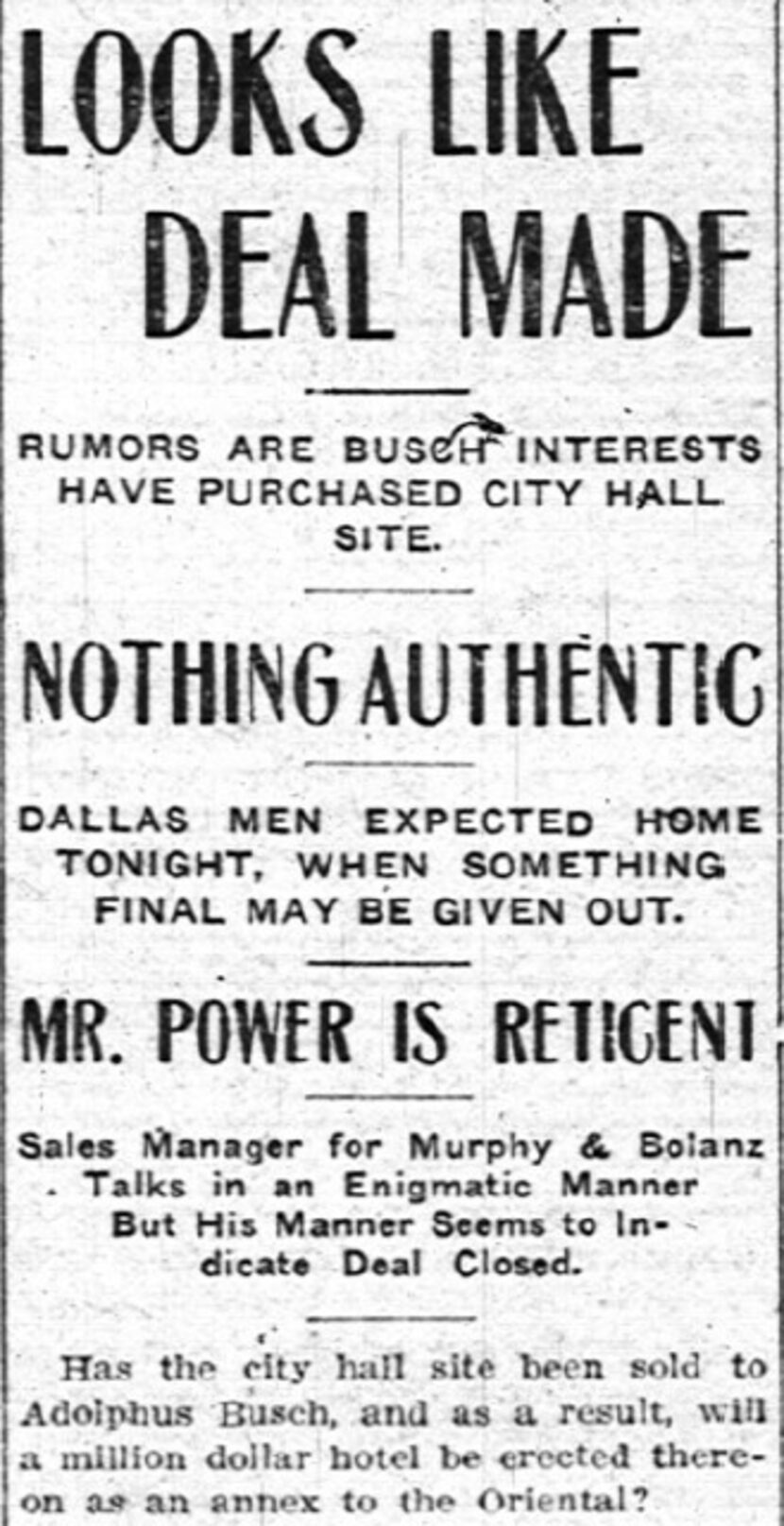
From the front page of the Dallas Daily Times Herald on May 23, 1910
Dallas Times Herald archives
Two days later, both papers carried front-page stories about the inevitable sale of City Hall.
The News led with Busch’s promise to build a 20-story, million-dollar hotel, and noted that Mayor Hay would agree to the sale of City Hall only once a new site had been selected. Hay said his group traveled to St. Louis to persuade Busch he needed to build a new hotel downtown — and not in some other Southwestern city, as he’d threatened — as “the hotels of Dallas are now inadequate to the needs of the city and the traveling public.”
The Herald announced, “Looks Like Deal Made.” Except city officials needed to make it look kosher, like the taxpayers were getting the best deal rather than just the Busch deal. So city commissioners — this was before Dallas was run by a city council — said they were going to put City Hall out for bids and that the highest price would take the prize. The mayor insisted Busch’s offer would “cut no figure in consideration of bids.”
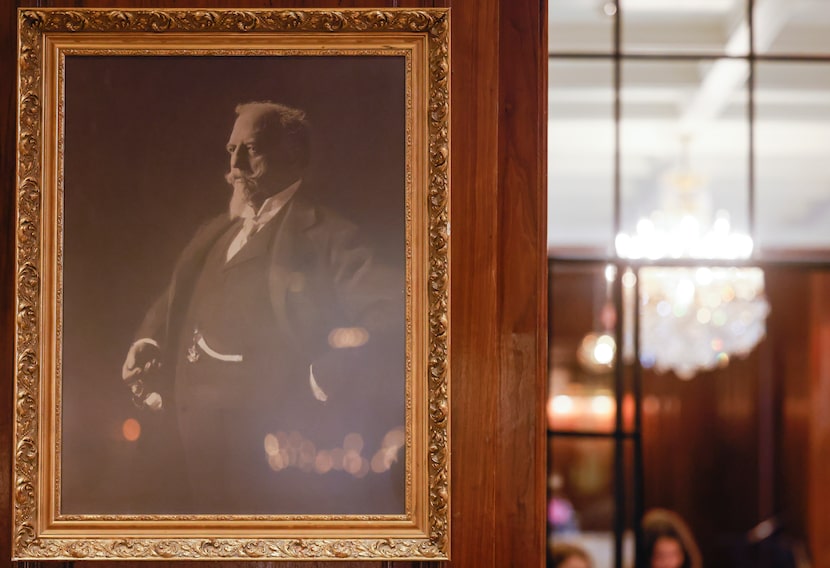
A portrait of namesake Adolphus Busch hangs in the City Hall Bar room of the Adolphus Hotel in downtown Dallas.
Shafkat Anowar / Staff Photographer
Once the deal went through Dallas, whose population had just jumped past 92,000, would also need a spot for a new City Hall. Hay said the city would issue a request for proposals, with an eye toward a few specific spots, including along Harwood Street downtown or “somewhere in the residence section of South Dallas.” There was even discussion of building a 3,000- to 5,000-seat auditorium in Fair Park, as an extension of City Hall.
On May 28, city commissioners insisted they needed to sell the site regardless of Busch’s interest, as City Hall had become “inadequate to meet the present needs of the city, to say nothing of its future necessities.” With that, commissioners opened the bidding process.
On June 10, commissioners unsealed those bids for the City Hall site — well, bid, as there was just one, from August A. Busch for $250,000. He sent the city a $25,000 check and a rendering of the new hotel, which appeared on the Herald’s front page alongside the headline, “Hotel Plans Shown Prominent Citizens.”
By mid-June, only weeks after word first leaked about the City Hall sale, the commission voted to accept the bid. Commissioner C.B. Gillespie had been the lone nay, insisting he would reject the offer until they decided where the next City Hall would be built. Within days, he came around.
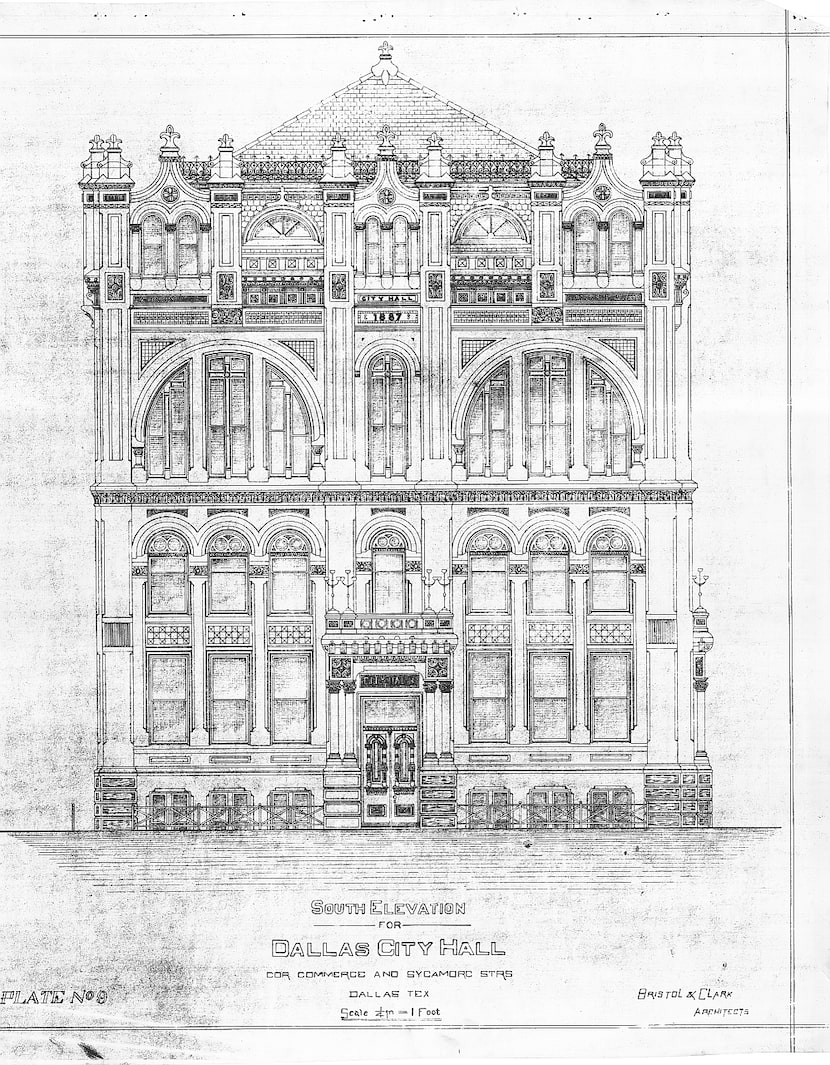
Plans for the 1889 Dallas City Hall were discovered during an inventory in the Survey Section vault of the Public Works and Transportation Department in the Oak Cliff Municipal Center on Jefferson.
credit:
Dallas Municipal Archives, City Secretary’s Office / Digital File_EMAIL
The News reported it on Page 3 of the June 18, 1910, edition: “City Hall Sold for Twenty-Story Hotel.”
That hotel, originally called the New Oriental, became the Adolphus, which still stands proudly across the street from another business now threatening to pack up and leave town, and whose design and construction were left to Busch’s son-in-law, Edward Faust.
Thirty-five citizens attended the meeting during which the bid was accepted, according to The News, and “those present burst into applause.” Bolanz, the real estate man, passed out cigars to everyone in City Hall chambers. They still didn’t know where the next City Hall would be built. But it didn’t matter, reported this newspaper: “All appeared so elated over the twenty-story hotel prospect that, for the time at least, the new location seemed crowded from their minds.”
Shortly thereafter, a half-page ad ran in The News: “Drink Budweiser and Help the Firm Who Are Building a Million Dollar Hotel for Your City.”
Busch sent a telegram to Mayor Hay thanking the city and the commissioners and promising the new hotel that would “withstand the criticism of all.” He said he would be heading abroad, leaving the details to others now, “having deputized my son-in-law, Mr. Faust.”
Then, as now, what a bargain.