
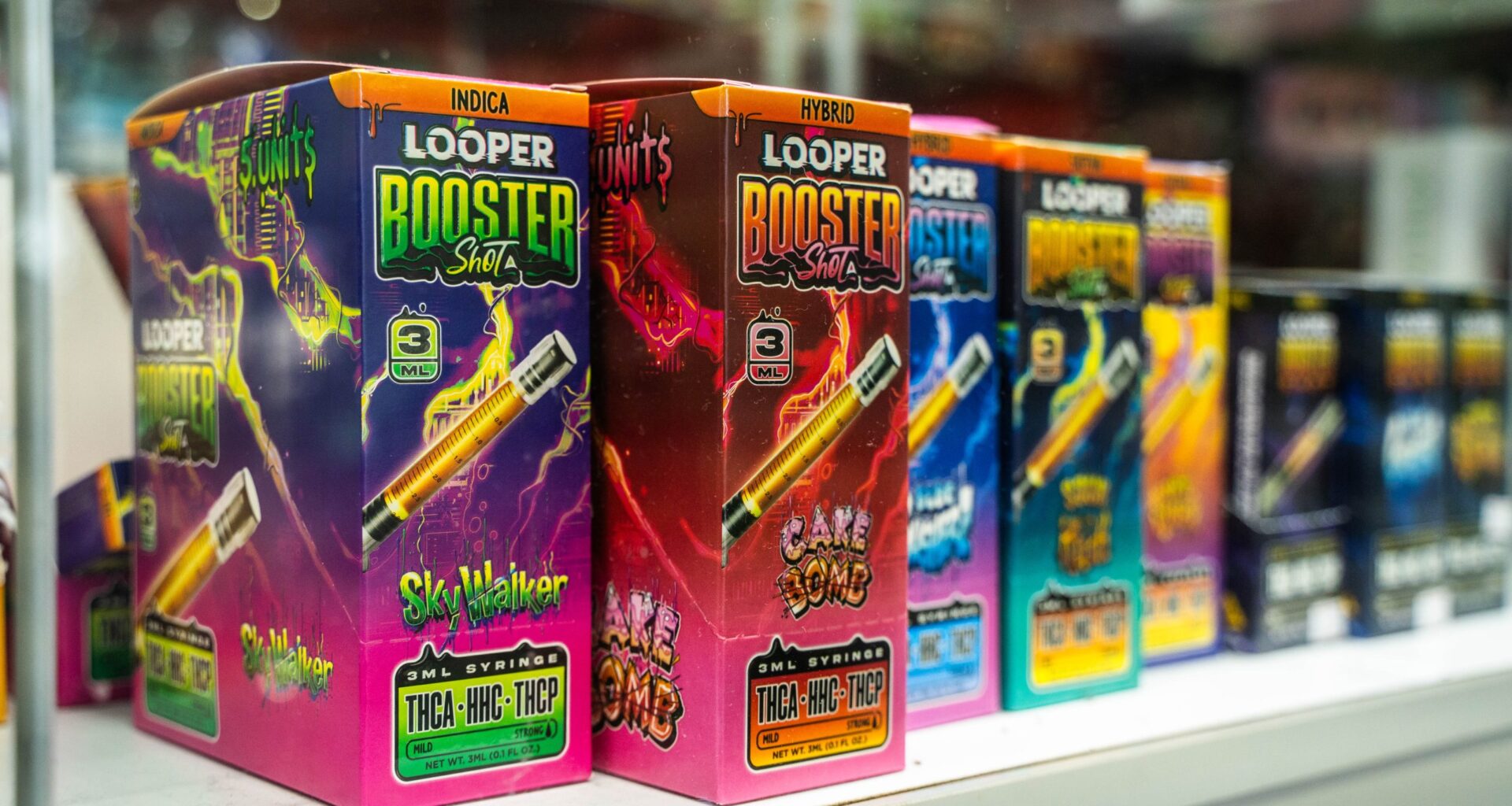
When Senate Bill 2024 took effect on Sept. 1, smoke shops across Texas hurried to clear their shelves of highly desired products: vaporizers. The law reclassified the sale of pre-filled THCA vapes – long a staple of Texas’s hemp economy – as a class A misdemeanor, punishable by up to one year in jail, a $4,000 fine, or both. SB 2024 specifically bans the sale of pre-filled vape products containing cannabinoids like THC, CBD, Delta-8, or THCA, or those made in “foreign adversary” countries such as China.
Smoke shop inventories disappeared overnight. Still, customers came in expecting products that were no longer legally available. “For more than a month, we had nothing to give them,” said Ryan Grant, manager of Happy Clouds locations in Austin and Round Rock. “It was really a difficult situation.” He estimates that roughly 40% of his inventory became unsellable the moment SB 2024 took effect. Grant had little ability to restock his empty shelves. Not one of his distributors carried a vape product that complied with SB 2024’s strict rules, leaving Happy Clouds – and every other hemp shop in the state – with nothing compliant to sell.
As the ban took hold, the disruption moved beyond storefronts and into the wholesale network that every Texas hemp shop relies on. “SB 2024 cut the shit out of the distribution pipeline,” said Anthony Vazquez, owner of Dooby’s Smoking Depot on South Lamar. Before the ban, he sourced 70-80% of his products from Texas-based distributors. Since the ban went into effect, the local supply has dried up, leaving retailers unable to find products that are both local and legally greenlit.
“Now, I send my money to California,” he lamented, mourning the revenue lost for the Texas hemp industry. On the day the law took effect, Vazquez had to apply to eight out-of-state wholesalers to keep his shelves somewhat stocked, with no state help to offset the losses. He estimated total drops of 20% in September, 16.5% in October, and 7.6% in November. December is the first month that looks “almost normal.”
This stabilization has conveniently coincided with the discovery of a legal loophole that allows disposable THCA devices to return to Texas smoke shops. SB 2024’s language explicitly bans the sale of pre-filled devices, but does not mention any prohibitions regarding customers filling their own cartridges after purchasing all device components. Manufacturers descended on this technicality, launching a product line built from an empty cartridge, a battery, and a syringe filled with THCA liquid – effectively a build-your-own banned disposable. These syringe-based products follow the letter of the law while leaving its spirit all but meaningless.
Brands have aggressively leaned into the workaround. Pixie Dust, a Florida-based vape brand, markets its 3mL empty battery kits as “Fully SB2024 Compliant,” while Looper, a California-based brand widely stocked in Texas hemp shops, pitches its 1mL refillable device as an alternative method that “keeps you in the game.” Shops across Austin prominently sell both products, often beside THCA syringes labeled “for topping flower” or “intended for concentrates,” even though they were designed to refill empty cartridges. Syringe products hit the market in early November and gave cart loyalists their first decent hit in months, flying off shelves at Dooby’s, Happy Clouds, Drip n Rip, Delta 8 THC Austin, MaryJae, and Restart CBD + THC. Statewide, shops from Dallas to San Antonio report the same surge.
Vazquez described the mad rush to order the new compliant products as similar to the significant toilet paper hoarding stint in 2020: “Supply was short, and the demand skyrocketed … I was only able to buy two units at a time.” Whatever he managed to stock vanished just as quickly. “I used to be able to get next-day delivery. Now, these syringes sold out in less than two days, and I can’t get them until next week.”
Some product lines come with strict guidelines. Ryan Grant stocks 1mL and 3mL Looper Refillable Devices and corresponding “booster shots” at Happy Clouds locations from San Marcos to Round Rock. None of the stores place the products next to each other. “They’ve asked us not to put them together,” Grant said, explaining that Looper does not want the items featured side by side in displays, marketing materials, or photographs.
Employees are also no longer allowed to assemble devices or demonstrate how they operate. “Anything that can be modded or refilled, I can’t demonstrate anymore,” said Jenna Angus, a Drip n Rip employee, who used to walk customers through every step. She calls the months after SB 2024’s passage “turbulent times,” as staff tried to calm customers who couldn’t get their usual stock. Now, Angus and others are navigating legal confusion about what is and isn’t permitted.
Early confusion remains as the workaround continues to evolve. As customers adjust to the new syringe systems, shops have had to update their supply and how they explain it. Those that cannot stock the syringe systems have shifted their shelves to include wax, liquidizers, and other SB 2024-compliant products to replace disposables. Trippiez Smoke Shop now displays wax under signs that read “Due to SB 2024, all hemp vapes and carts are banned in Texas.”
Trippiez owner Ahmad Alnajjar expressed concern about what’s next: “There are people who depend on hemp-derived products as viable alternatives to opioids for pain, anxiety, and more … We want regulation. We just want it to be comprehensive, reasonable, and fair.”
The Texas Department of State Health Services hasn’t clarified whether selling empty devices along with syringes violates the intent of SB 2024, and several owners fear a second crackdown is on the horizon. A greater threat looms in Washington: Proposed changes to the 2018 Farm Bill would categorize THC by total weight instead of potency.
“The entire product line would be wiped out. Consumables, smokables, and edibles,” said Angus. Shop owners are preparing for a tumultuous year, uncertain if the syringe workaround is just a temporary fix or the beginning of an entirely new market. The loophole keeps the shelves alive for now – but it won’t protect Texas from what comes next.
This article appears in December 19 • 2025.
A note to readers: Bold and uncensored, The Austin Chronicle has been Austin’s independent news source for over 40 years, expressing the community’s political and environmental concerns and supporting its active cultural scene. Now more than ever, we need your support to continue supplying Austin with independent, free press. If real news is important to you, please consider making a donation of $5, $10 or whatever you can afford, to help keep our journalism on stands.