
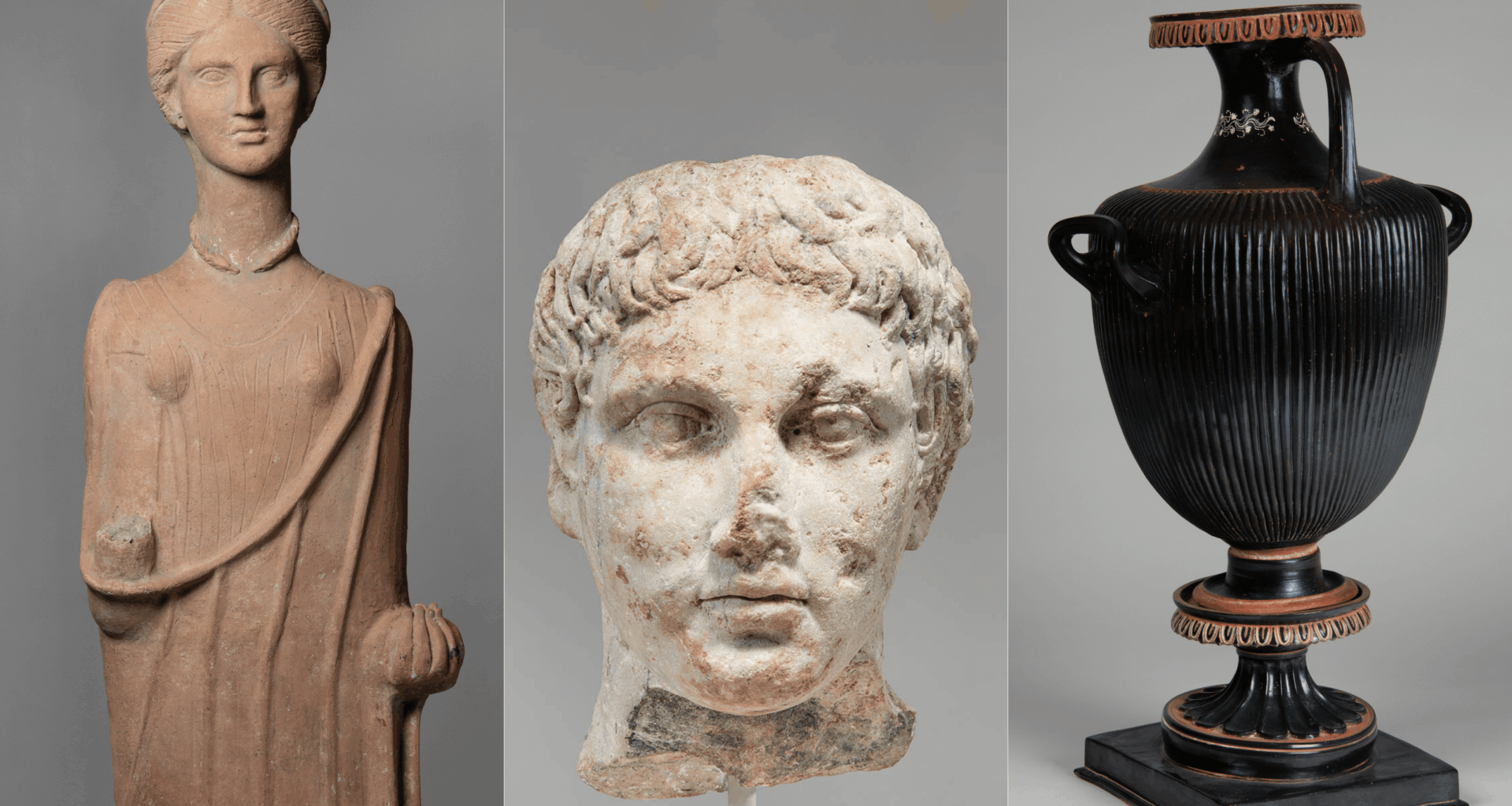
In 1986, the San Antonio Museum of Art welcomed the Head of Hermes, donated by San Antonio philanthropist Gilbert M. Denman Jr.
Thirty years later, German scholar Jörg Deterling informed SAMA that the head originated from Rome.
After SAMA spent a few months conducting research to confirm Deterling’s claim, they contacted the Ministry of Culture of Italy to notify them of their possession of the head in May 2016.
“I made the identification on the basis of old photos showing the head still in Rome,” Deterling said.
It had come up while he was conducting provenance research, or investigating the origins of art pieces, for fine art company and auction house Sotheby’s.
The Head of Hermes was removed from the museum in 2022 for repatriation, or the process of returning the pieces back to their country of origin, and is now back in the possession of the Italian government. Eight other pieces of Italian art were repatriated, most as recent as September of this year.
These pieces of art, including a piece called “Statue of a Woman,” remain on loan to SAMA until 2030. The Ministry of Culture will then replace them with other pieces of equal value.
“Resolving the status of these objects represents the latest phase of their very long history,” said Jessica Powers, chief curator at SAMA. “We are delighted to be able to keep them on loan at the Museum in order to share these remarkable objects with our visitors.”
Deterling said that the number of repatriations from museums around the U.S. has “increased exponentially over the last years.”
The Head of Hermes was found in Rome in 1894 under the Church of SS. Giovanni e Paolo on Caelian Hill. It was then sold to Denman in 1971 with no documentation of its history.
Denman gifted it to SAMA after it sat in his personal collection for 15 years.
The repatriations are a result of a collaboration between SAMA and the Ministry of Culture of Italy signed in 2023. The collaboration seeks to facilitate loans of important works between SAMA and the Ministry of Culture, as well as promote cultural exchanges between the two entities.
In a press release, Head of Department for the Protection of Cultural Heritage, Dr. Luigi La Rocca expressed gratitude for the manner in which the pieces of art were returned “to the cultural context from which they were excavated and illegally exported” before being auctioned or sold to SAMA.
“This agreement strengthens cultural relations between Italy and the United States and stands as an international best practice in the field of combating illicit trafficking of cultural property,” Dr. La Rocca said.
Emily Ballew Neff, the Kelso director of SAMA, said she looks forward to working with the Ministry of Culture of Italy in the future. “We look forward to continued collaboration with the Ministry to share extraordinary works from Italy’s rich cultural heritage with our visitors from South Texas and around the world,” she said in a press release.
Eight of the repatriated pieces traveled through dealers and auction houses, such as Sotheby’s, in New York and London around the 1980s through the 1990s. They were identified from photos seized in the 2004 arrest of infamous antiquities smuggler and art dealer Giacomo Medici, whose family funded the Italian renaissance.
As part of the collaboration with the Ministry of Culture, pieces will be loaned from various museums around Italy for the fall 2026 exhibition “The Etruscans: From the Heart of Ancient Italy” organized by the Fine Arts Museums of San Francisco in collaboration with SAMA.