
Software developer is the most common occupation among Austin’s top earners and two-thirds of them are millennials, according to an American-Statesman analysis of census survey data.
Each year, the U.S. Census Bureau surveys Americans about their occupations and incomes. The Statesman analyzed that data to examine how top earners across generations make their living in the Austin area.
The analysis found the top 10% of earners in Austin made at least $173,000 in 2023, the most recent year with detailed occupational information available. That was notably higher than in every other Texas metro, the analysis found.
The result has been a less affordable city that has seen a slowdown in its famously rapid growth, said Texas State Demographer Lloyd Potter.
“Part of the reason that’s happening is because Austin’s been attracting high wage earners,” Potter said, citing industries including tech, finance and real estate.
After software developer, the most common job among Austin’s top earners was chief executive, manager and lawyer, ranking Nos. 2, 3 and 4, respectively. Software developers accounted for 9.8% of top earners, while chief executives and managers followed closely at 9.7% each.
Because of how the Census Bureau categorizes occupations, several broad catchall titles rose to the top of the list, including “managers, all other” and “engineers, all other,” which includes people who didn’t fall into a more specific industry-related title category.
Rounding out the top five was “sales representatives of services, except advertising, insurance, financial services, and travel,” another umbrella category covering a wide range of sales roles.
Top earners in the Austin area by generation
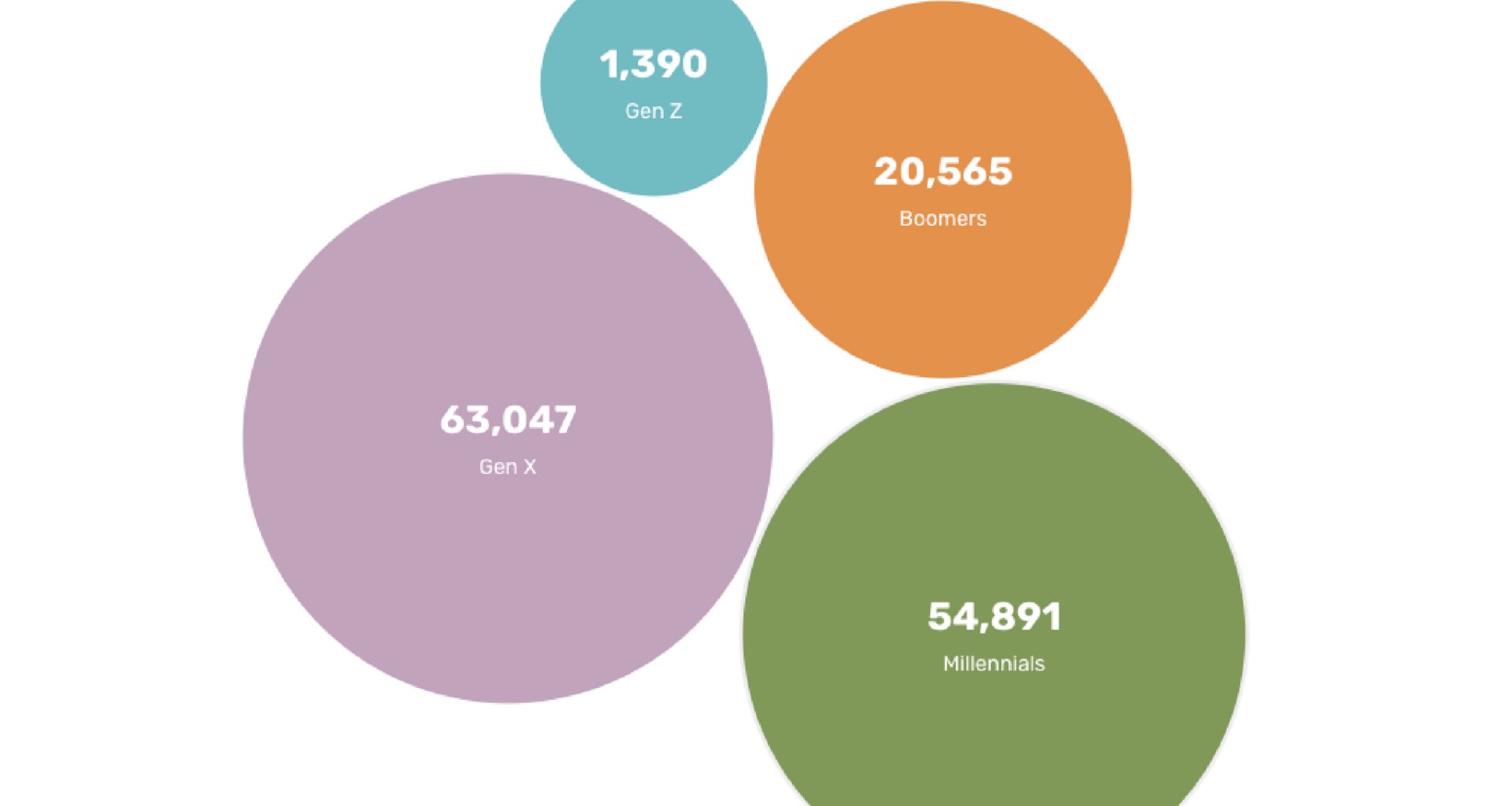
This chart shows the generational breakdown of top earners in the metro. Click on the groups to see how top careers vary between each generation.
BoomersGen XMillennialsGen ZAll Workers
Only shows the top 100 occupations for each generation.
Chart: Andrew Williams / Hearst DevHub • Source: IPUMS
Millennials — those born between 1981 and 1996 — dominate Austin’s highest-paid software developer roles, making up 66% of workers in that category. While top-paid software developers in other Texas metros skew older, Austin’s generational breakdown more closely resembles other tech hubs, where younger workers make up a larger share of the field.
Gen Z workers, born between 1997 and 2012, accounted for just 1% of Austin’s top earners. Their lower representation reflects both their smaller share of the overall workforce and their early-career status. The most common profession for top-earning Gen Z workers was “business operations specialists”, a category that accounted for nearly 40% of the generation’s top earners.
Conversely, Gen X – those born between 1965 and 1980 – made up the largest share of Austin’s top earners overall at 45%. Millennials were close behind at 39%. Baby boomers, born between 1946 and 1964, accounted for about 15%.
There’s a larger share of top-earning millennials in Austin than other Texas metros, the analysis found.
“Austin has always attracted people that are younger for lifestyle-related reasons,” Potter said. “A lot of the people who are in the tech industry who are doing the cutting edge stuff are generally people that are coming right out of school.”
Use the interactive below to explore the top five occupations by generation in select cities.
The most common occupations for top earners across Texas metro areas
This chart shows the top five most common jobs for top earners (top 10%) overall in the most populous metro areas and how they rank for each generation.
“Service sales reps” excludes people working in advertising, insurance, financial services, and travel. Generations without a rank for one of the top five occupations didn’t have any top earners working those types of jobs according to census data.
Chart: Andrew Williams / Hearst DevHub • Source: IPUMS
About this story
This census data was obtained using the IPUMS SDA tool and utilizes 2023 metro areas and incomes.
CreditsReporting by Karina Kumar/Austin American-Statesman. Editing by Kiah Collier/Austin American-Statesman and Alexandra Kanik/Houston Chronicle. Data and graphics by Leila Darwiche/San Antonio Express News and Andrew Williams/Hearst DevHub. Additional development by Hanna Zakharenko/SF Chronicle.