
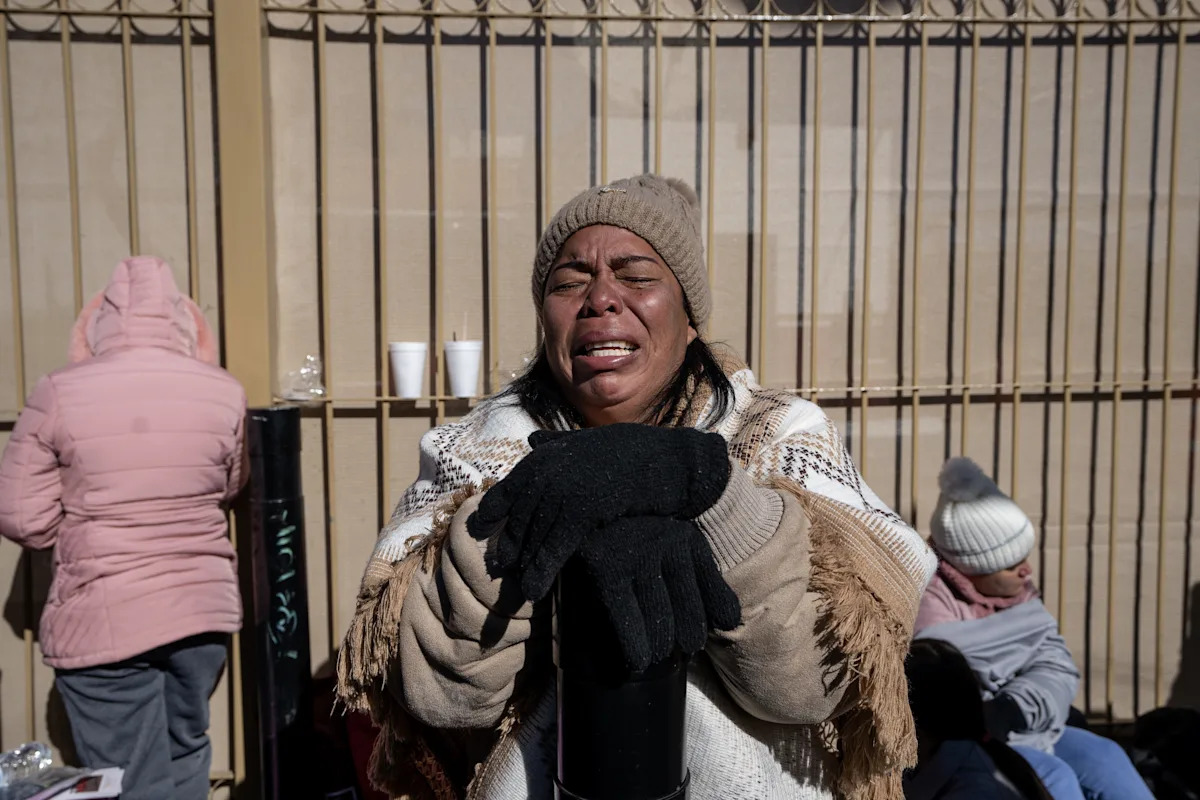
On Jan. 20, the Trump administration returned to power.
Journalists suspected that newly-elected President Donald Trump would suspend CBP One appointments as soon as he took the oath of office at noon in Washington, D.C.
A line had formed at the El Paso Del Norte International Bridge with migrants from Cuba, Colombia, Mexico, Venezuela, Haiti, and other nations who had CBP One appointments allowing them to make their case for asylum in the U.S.
I began documenting the migrants standing in line, waiting for Mexican bridge workers to allow them to walk up to the U.S. side. Suddenly, I heard a wail. I turned to my right, and a woman in front of me began weeping and yelling in disbelief that her appointment had been canceled after receiving an email.
This woman, whose image later went viral, was a Colombian named Margelis Tinoco. Tinoco became the face of the pain many migrants felt in the months that followed.
Guatemala sees its first deportees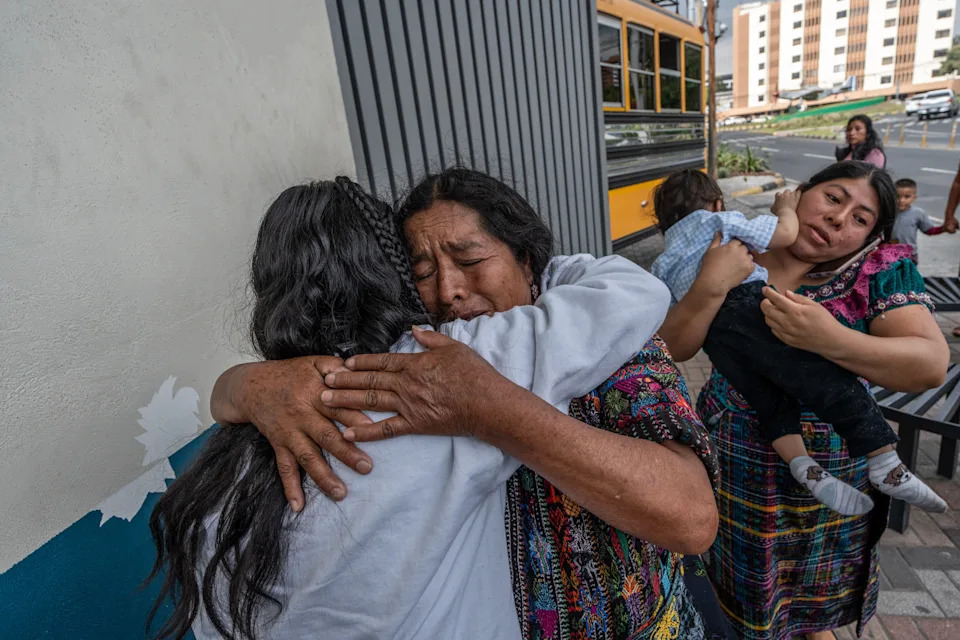
Heidi Yojana Chali Chiyal is hugged by her grandmother, Catarina Chiyal, after being deported to Guatemala on Feb. 19, 2025. Chiyal was apprehended in Laredo, Texas, after trying to enter the U.S. illegally.
In February, we traveled to Guatemala to witness the arrival of the first deportees to their home country under the Trump administration. We witnessed the immediate pain and joy of families reuniting after many years apart. This was during the first month of what we now know would be the beginning of controversial ICE raids in U.S. cities.
Walmart mass shooter hugged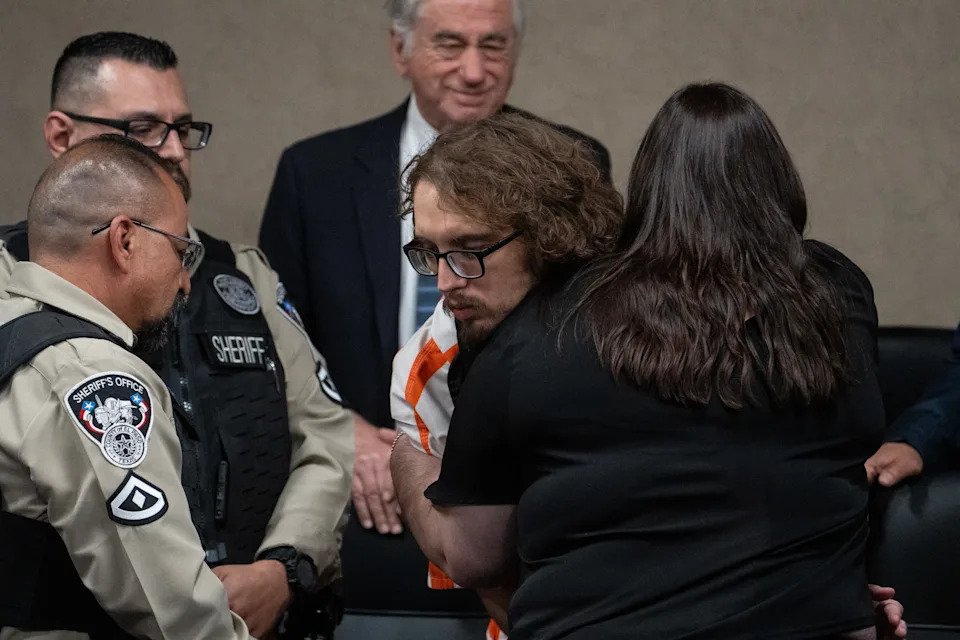
Adriana Zandri hugs the mass shooter at the end of victim statements at the Enrique Moreno Courthouse on April 22, 2025. Zandri asked permission from the court to hug the defendant to help her healing process. The mass shooter was then led out of the courtroom.
The time had finally come to sentence the racist Walmart shooter in an El Paso courtroom. Adriana Zandri asked the judge for permission to hug the defendant after another family member had hugged the defendant earlier. Local reporters were allowed to enter the courtroom in anticipation of this moment.
I found it to be powerful — the power of forgiveness spoke to the power of healing for some in El Paso.
Light in a dark Juárez
Juárez’s drug problem has been linked to a secondary market because of its major role as a drug passage to the largest drug consumer economy in the world — the U.S.
Because of this, drugs have often plagued certain sectors of society at a larger rate than in other parts of the country. Despite this, a determined group of health care workers from Programa Compañeros allowed me to accompany them and document their outreach program.
This photo, taken in October, showed the pain of the man suffering from substance abuse, but also the lack of access to clean needles that could save his life.
Migrants abandoned the American dream
After months of ICE crackdowns and the realization that the U.S. would no longer be a safe place for many asylum seekers, migrants began to return southward in a ‘reversal migration’ trend that has continued into this winter.
This photo captures migrants’ retreat aboard fishing boats speeding through the Caribbean Sea off Panama.
This article originally appeared on El Paso Times: El Paso Times photojournalist Omar Ornelas reveals top 2025 photos