
Elementary teacher Christina Roberson, Texas Tech assistant professor Kyle Roberson
and student Tarali Fincke share NASA astronaut’s message with local students at Stewart
Elementary.
CREATORS

As the clock creeps closer to 3:25 p.m., students at Stewart Elementary School in
Lubbock grow restless. One child jumps up and down, their backpack bouncing behind
them. Another, having practiced their inside voice all day, finally unleashes a pop
song at full volume.
For seven boys and girls, the final bell doesn’t mean the end of learning but marks
the most exciting part of their day. For Major, Emma, Jace, Ava, Noah, M’Kaelah and
Araceli, it signals it’s time for rocket club.
Today is the final meeting, and parents and grandparents have come to watch students
launch their masterpieces into the sky. It’s an abnormally warm day for December,
73 degrees and not a cloud in the sky. There is nothing to obstruct their view.
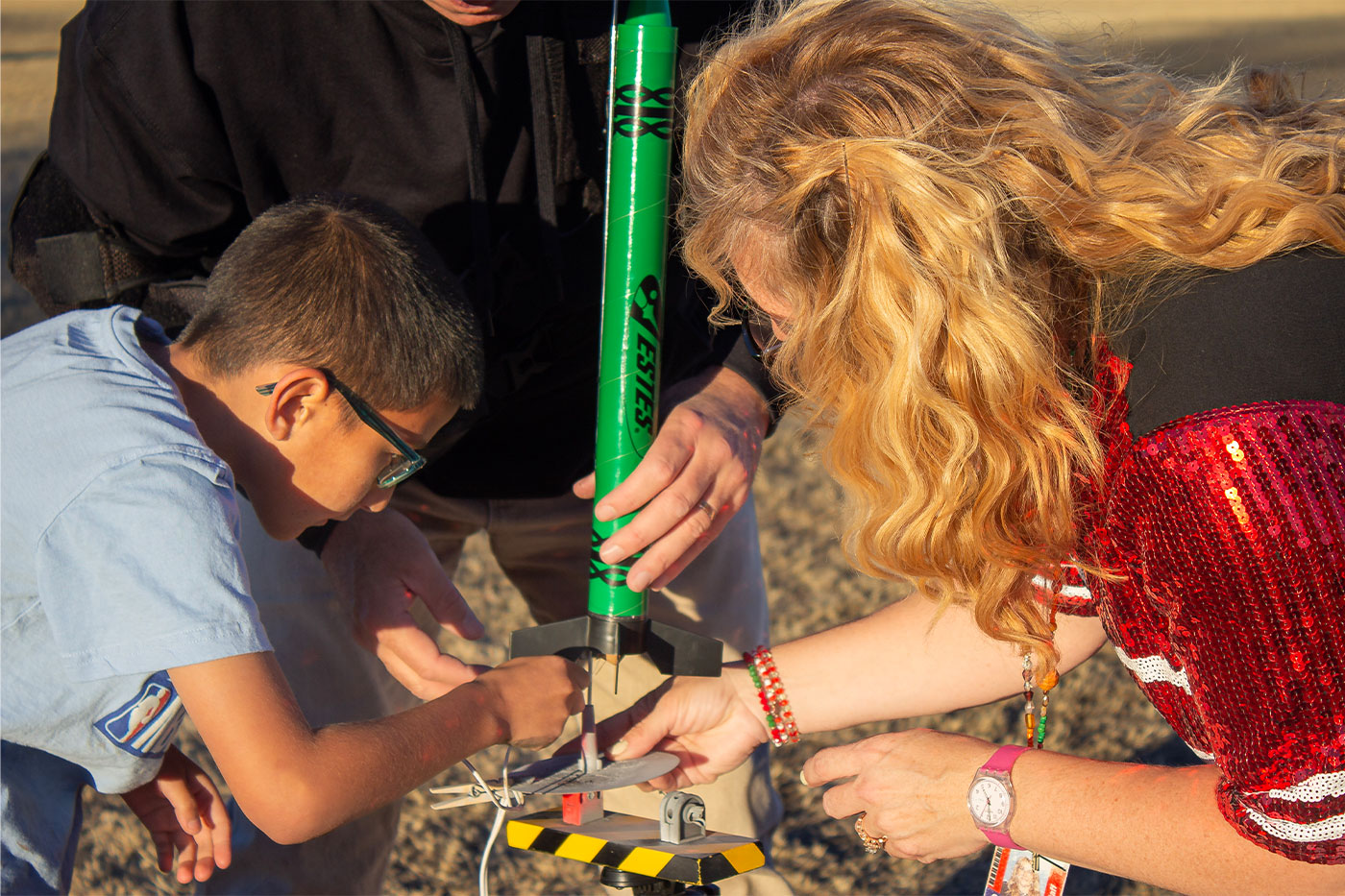 (Photo Courtesy: Sarah Tapia)
Five, four, three, two, one – liftoff, they yell together as students shoots their rocket at least 150 feet into the air.
“These kids have come out of their shells, and their behavior has gotten better in
school,” said Tarali Fincke, an undergraduate assistant from Texas Tech University who helps facilitate the club. “The kids are getting awards now and teachers talk
about a noticeable difference in their listening skills.”
Staying Power
Stewart Elementary’s rocket club isn’t any after-school club. It’s backed by College of Health & Human Sciences researcher Kyle Roberson and his undergraduate research team. With support from the university’s STEM Center for Outreach, Research & Education (STEM CORE), the club introduces exciting subjects to elementary students while bringing
families along for the ride.
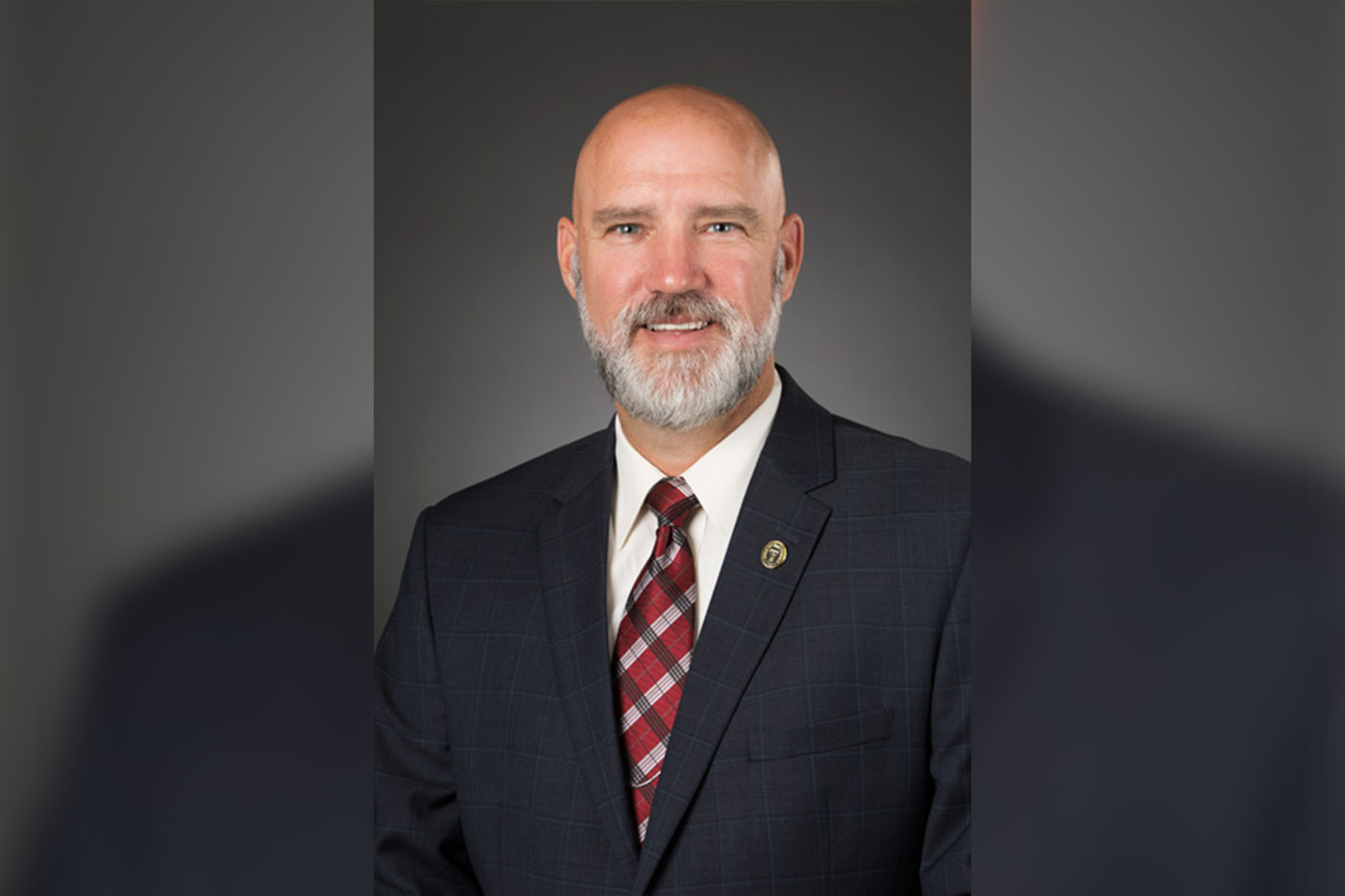 Kyle Roberson
“We invite the kids’ families in as part of rocket club,” he said. “That’s a crucial
part of why we do this.”
Kyle’s wife Christina is a Stewart Elementary third-grade teacher whose classroom
became the incubator for this idea in 2022.
“We’ve noticed parents don’t know each other, even if their kids are in class together,”
Christina said. “But as they started attending rocket club with their kids and doing
hands-on work together, we’ve seen them start exchanging phone numbers and their kids
now have play dates outside of school.”
The pair of educators discuss how difficult it can be to build community outside of
school, especially at the elementary level where there aren’t many chances to meet
other families.
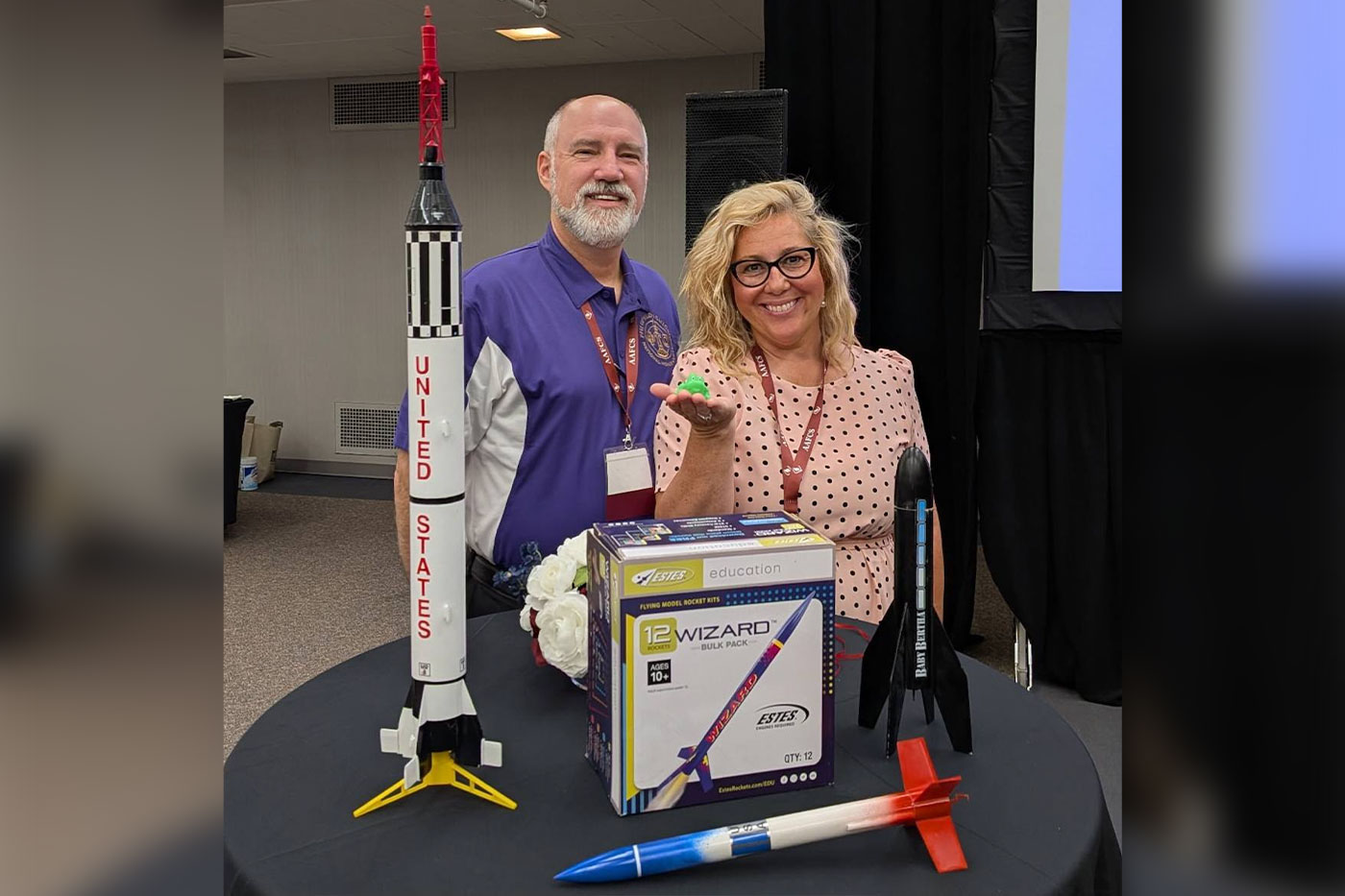 Kyle and his wife, Christina
“We’re not doing this only to build relationships, although that’s important,” Kyle
said.
Family engagement at school isn’t just a “nice-to-have” option.
According to a National Center for Education Statistics survey from 2023, this kind
of engagement drives stronger GPAs, more consistent attendance and higher graduation
rates.
At Stewart Elementary, where 89% of students come from economically disadvantaged
households, families often want to be involved but face practical obstacles. Working
multiple jobs, managing inconsistent schedules or lacking reliable transportation
can make school involvement challenging.
When Kyle first piloted this program in 2022, he struggled getting parents involved.
“There was a lack of parent buy-in at first,” he said.
Which he didn’t fault anyone for; it was a new club and a new idea. People wanted
to see if it had staying power. Last semester the club had a launch with 43 adults,
including parents, aunts, uncles, grandparents and siblings.
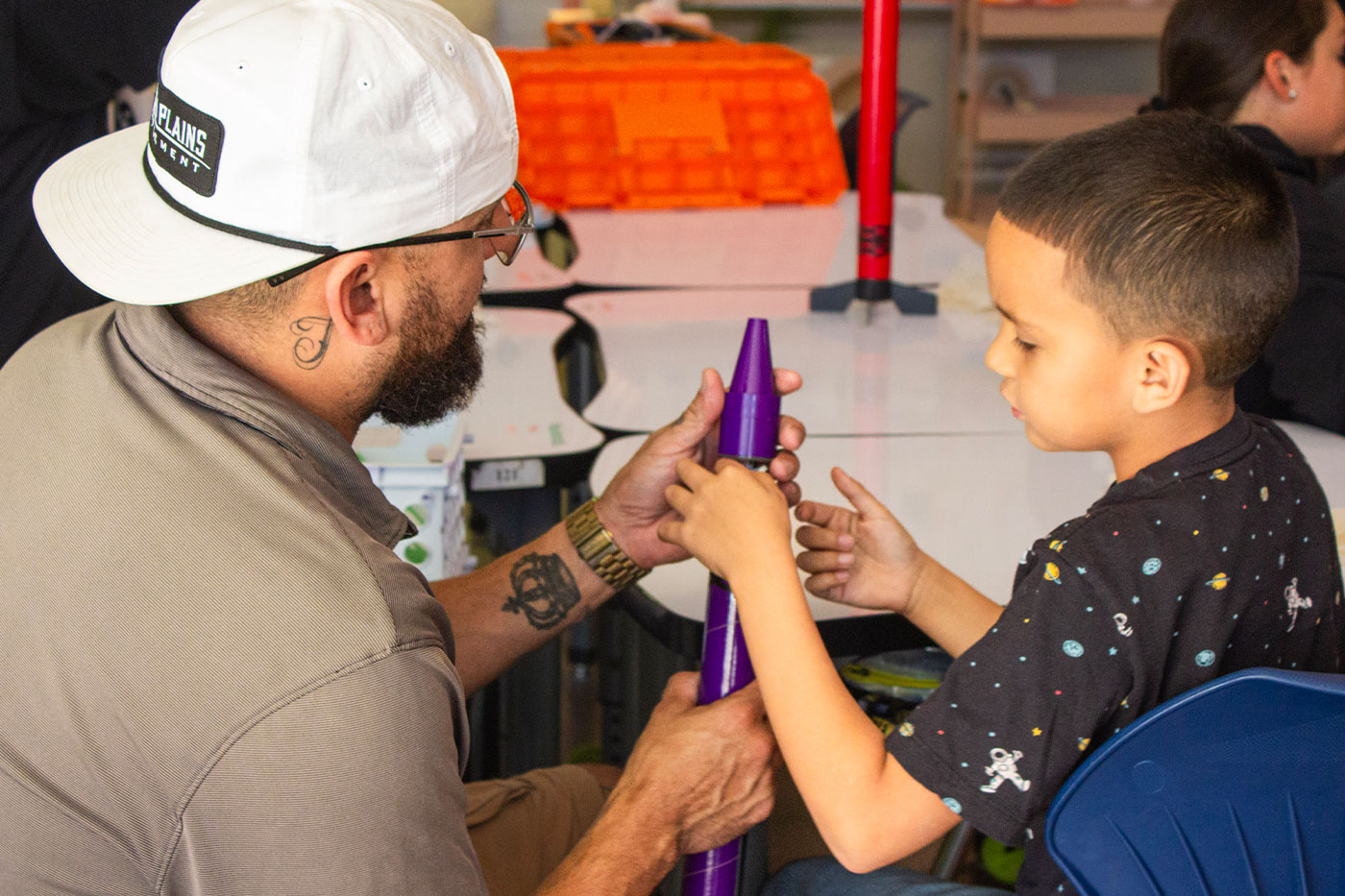 (Photo Courtesy: Sarah Tapia)
Kyle has designed the club so that parents can come to different events throughout
the semester before the launch.
“They help the kids assemble the rockets and we get them working together,” he said.
The NASA Effect
Part of this year’s success is thanks to Tarali, a nutritional sciences major and Air Force ROTC cadet. A Houston native, Tarali was drawn to Texas Tech
for its scholarships and hands-on research opportunities.
Her first research experience involved early childhood vocabulary, which culminated
in her presenting at the undergraduate research conference in spring 2025.
“I was impressed with Tarali’s work and asked if she’d like to come join a project
I had going,” Kyle said.
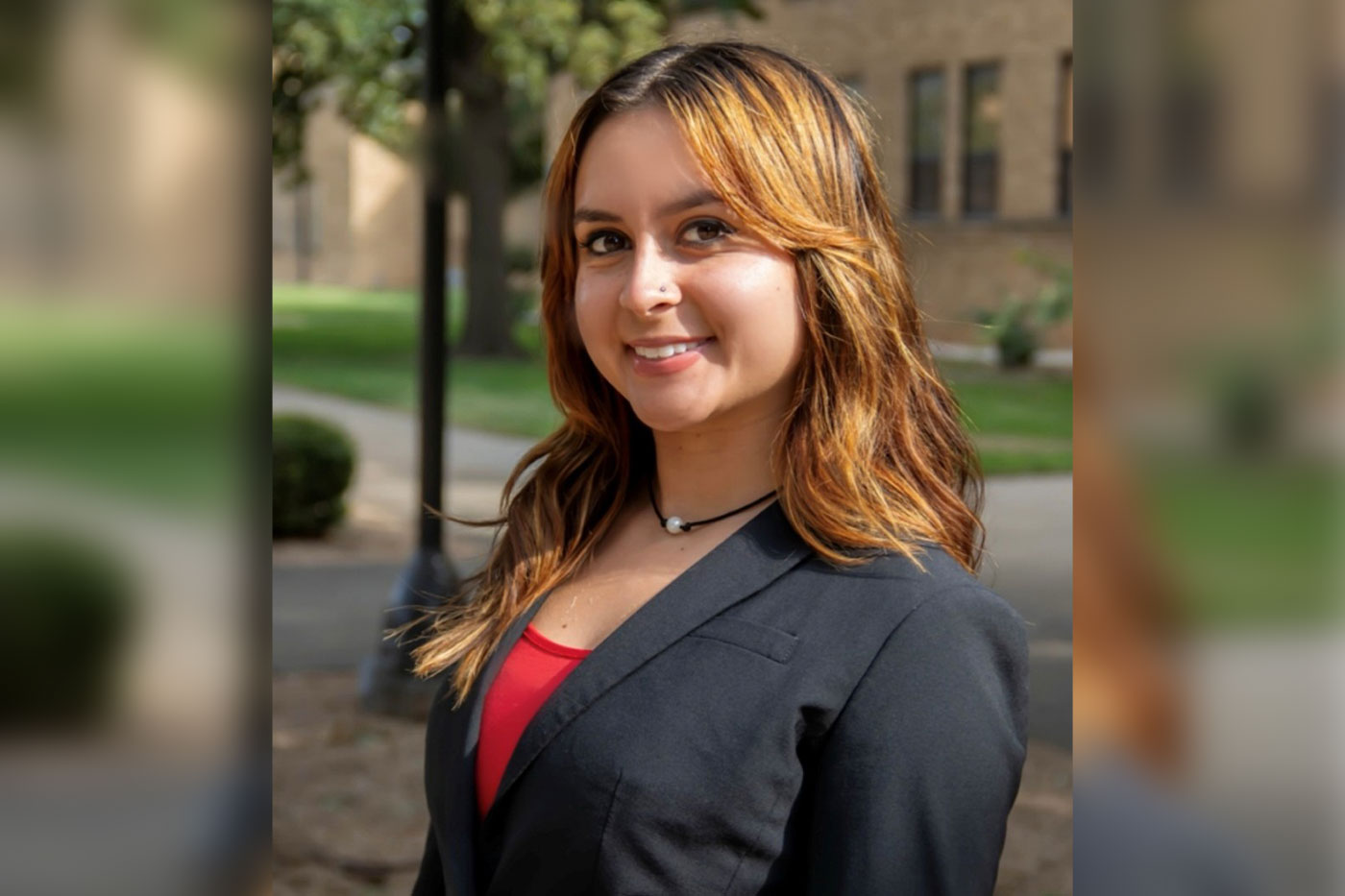 Tarali Fincke
He recruited her to help with a parent-child literacy program at the detention center in Lubbock. On one of the visits, Kyle learned a surprising
fact about Tarali’s family – her father is an astronaut currently serving on the International
Space Station.
Kyle, a self-proclaimed space nerd, struggled to contain his excitement.
The professor’s office is covered with dozens of “Star Wars” Lego sets and model rockets.
Ever since he was a child, he’s been fascinated by outer space. Kyle realized he might
have another project Tarali could work on. He explained what he was doing with the
rocket club and asked if she’d be interested.
It was an easy yes for Tarali. Space isn’t just her father’s domain; it’s the family
business.
“My parents met working at NASA,” she explained. “My dad is an astronaut and my mom
is an engineer. My older brother is in Space Force, too.”
Tarali plans to take her degree in nutritional sciences and attend medical school.
She’ll then train to be a flight surgeon for the U.S. Air Force, and eventually, NASA.
She explains how her favorite part of being at Texas Tech is getting to do real life
data collection.
“I’ve worked in other labs before and most of the time you’re working with secondary
data sets,” she said. “But here, I get to go interact with participants and collect
that data myself.”
This work is not for the faint of heart, though. Kyle and Tarali are teaching third
graders to handle every part of the rocket from the motor to the engine mount to the
shock cord.
When Kyle gives instructions, he calls out to the cadets.
“Yes sir,” they answer, as they follow directions.
Not only are the students learning more about physics than most third graders would,
but they’re also discovering careers they could have in STEM.
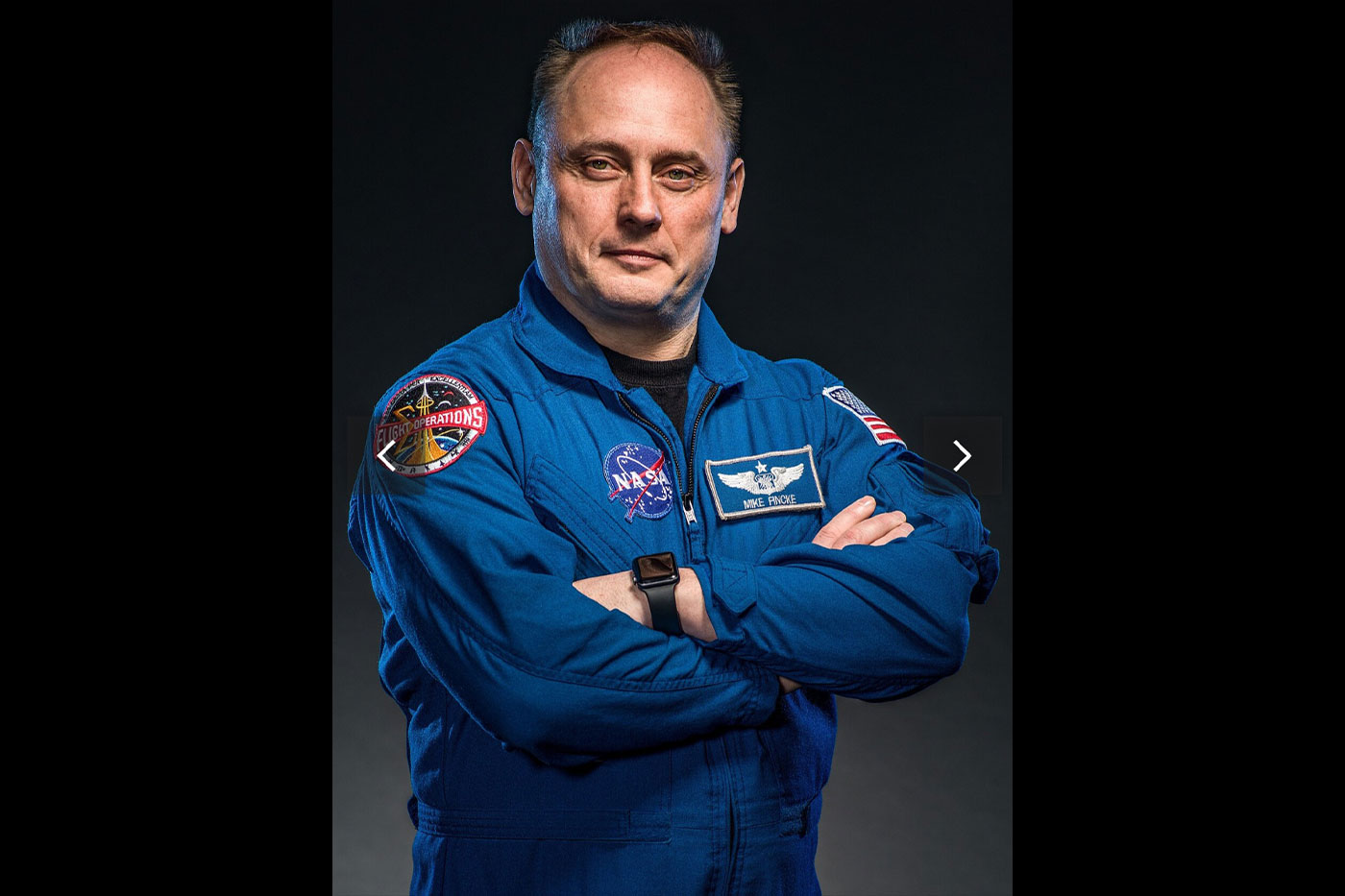 Astronaut Mike Fincke
(Photo Courtesy: NASA)
Earlier this fall, Tarali asked her father if he’d film a video for the kids. Astronaut
Fincke was happy to oblige, sending the students a message from the International
Space Station. The kids were starstruck, sending back thank you letters to their “favorite
astronaut.”
“When Astronaut Fincke talked to us, he specifically mentioned Stewart Elementary
and told us how he made rockets when he was little,” Major beamed proudly.
Clear for Liftoff
“We’re exposing the kids to things they otherwise might not see at this age,” Kyle
explained. “Many of our cadets have never visited the Science Spectrum or gone to
an event on campus. This really opens their eyes.”
The rocket club attended STEM CORE’s Family STEM Night in November, bringing parents with them. Since the program sponsors the rocket club,
Kyle wanted to ensure the kids could see the bigger picture of what happens on campus.
Most of the kids had to be dragged away at the end of the night, pleading for five
more minutes, recalls one parent.
“The last two years that Stewart Elementary has partnered with STEM CORE has been
a huge hit,” Christina said. “They’ve helped our families build community and have
allowed us to offer this at no cost to the parents.”
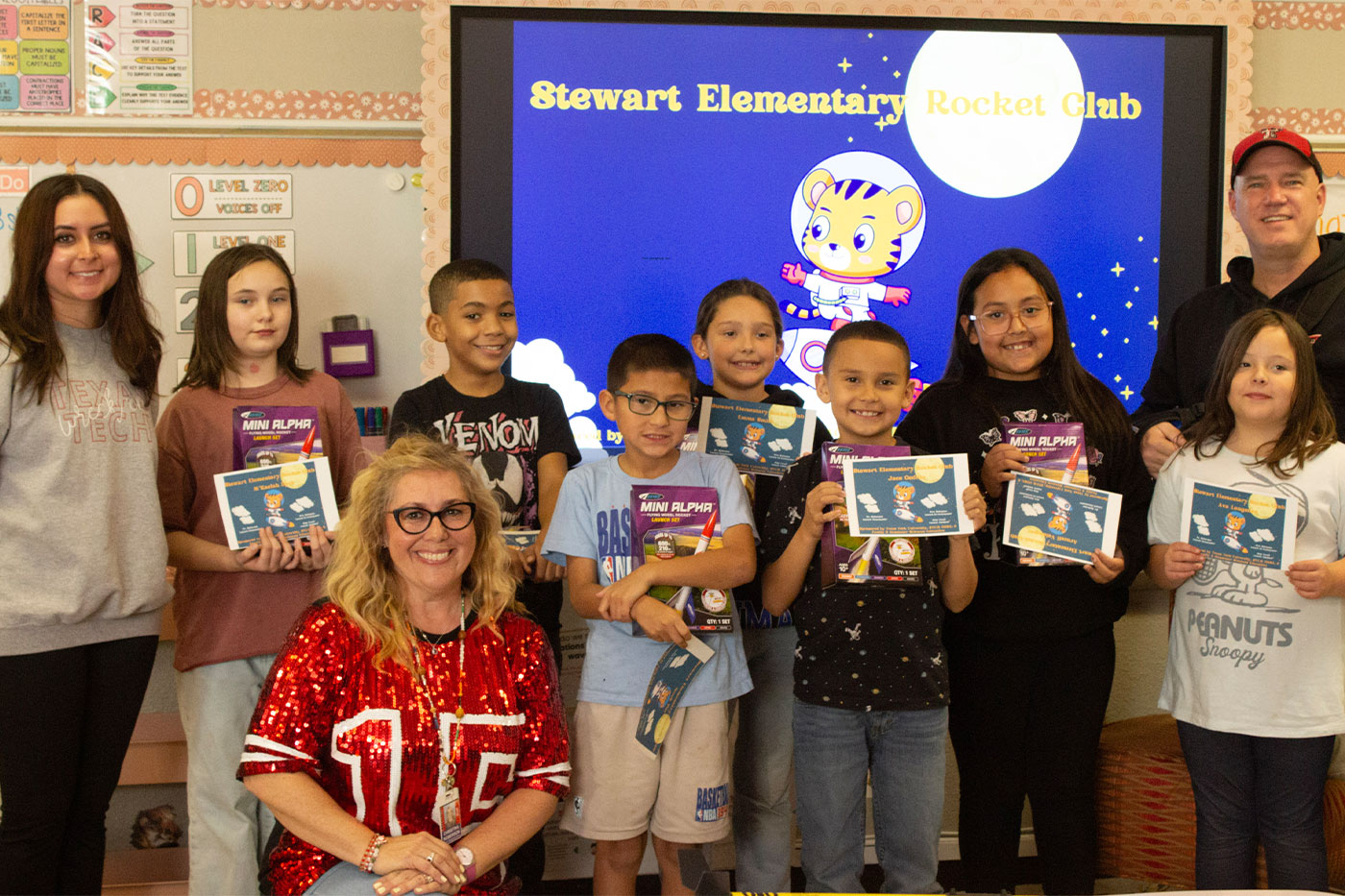 Rocket Club
(Photo Courtesy: Sarah Tapia)
On the last day of club, the seven cadets walk out south of the school onto an open
field. They line up from shortest to tallest and take turns retrieving each other’s
rockets once they’ve safely landed.
Their parents whoop and roar as each model rocket climbs and climbs and climbs into
the December sky. The rocket will be back on the ground in a few seconds, but the
lessons learned will last much longer.
To learn more about the engaged scholarship offered through STEM CORE, visit them
here.