
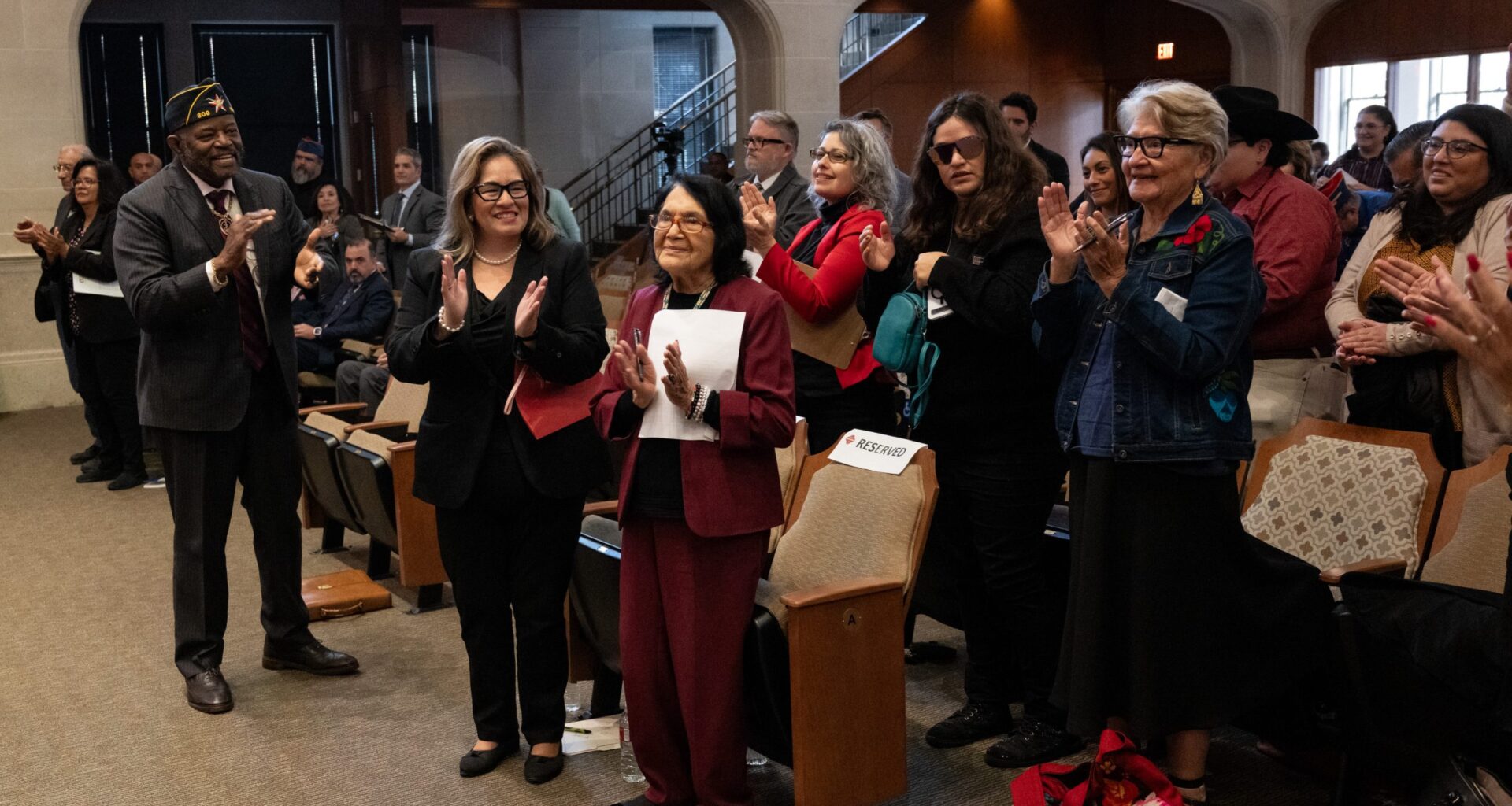
After hearing from a long list of voting advocates and civil rights leaders who sought to appeal to their sense of democratic values on Thursday, City Council approved a plan to move San Antonio’s municipal elections to November of odd-numbered years.
The proposal means that the next time the 10-member City Council and mayor will be on the ballot is November of 2029, instead of in May of that same year, with no voter approval required.
Mayor Gina Ortiz Jones brought it to the council’s attention in mid November, after reading about the state’s decision to give cities a limited window of time to enact the changes without changing their city charter.
That set off a last-minute scramble to make it happen before the Dec. 31 deadline. Even on an overwhelmingly progressive council, it faced skepticism from those who worried about making a big change with very little public input.
Councilwoman Teri Castillo (D5) and Councilman Ric Galvan (D6) in particular — two of the council’s most progressive voices — said they were reluctant to make a move they weren’t sure would significantly improve turnout, and could pressure some local school districts to move their May elections as well.
“I do find it quite ironic that we’re talking about voting, but say we don’t need to take this to a vote,” Castillo said Thursday. “I think there’s importance in ensuring that we have the conversations with residents all throughout the city about what this means to their elections.”
After a chilly reception at the idea’s first public hearing last week, voting rights groups packed the council chambers Thursday to reframe it as a civil rights milestone for San Antonio.
Dolores Huerta, a 95-year-old Chicano civil rights leader from California, told the City Council on Thursday that years of voter suppression efforts had made participating in elections less of a habit for many Texans, and they have an opportunity to help change that and allow the state to live up to its potential.
“You’re going to be able to help any of the lost voters find their way to the ballot box,” Huerta said. “I wish to ask you all to make it unanimous, put this on the record … It will be part of the history of Texas.”
It was ultimately approved 6-5 with the help of one of the council’s two conservatives, Councilwoman Misty Spears (D9), who said residents in her Northside district overwhelmingly approved of the idea.
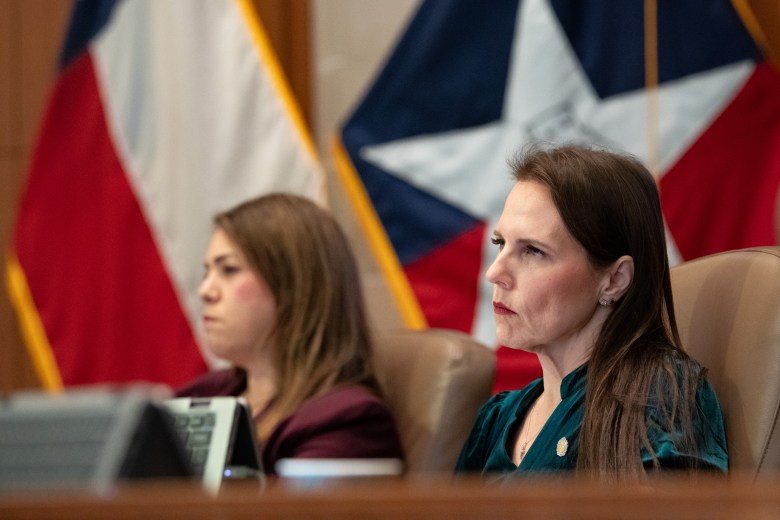 District 9 Councilmember Misty Spears, right, and District 8 Councilmember Ivalis Meza Gonzalez listen to public comment before the city council votes whether to move elections from May to November at the City Council Chambers on Thursday, Dec. 18, 2025 in San Antonio. Credit: Salgu Wissmath for the San Antonio Report
“I’m going to work tirelessly to advocate for [moving to even-numbered] years, I think that that is clearly the right move,” Spears said. “But my constituents said they want November, and this is what we can do right now.”
Galvan also came on board at the last minute, joining Jones, Spears, Jalen McKee-Rodriguez (D2), Phyllis Viagran (D3) and Edward Mungia (D4) in voting yes.
Council members Castillo, Sukh Kaur (D1), Marina Alderete Gavito (D7), Ivalis Meza Gonzalez (D8) and Marc Whyte (D10) voted no.
An unusual opportunity
Most Texas cities hold their municipal elections in May, though the state has granted several exceptions over the years to cities that wanted to move them to November, including Houston, Austin and El Paso.
In an unexpected move, this year the conservative-dominated legislature opened up permission for all cities still holding elections in May to move to November of odd-numbered years — aimed primarily at cities like Dallas, which had already taken the idea to voters for approval.
“It was for cities that were serious and determined about doing this now … but it didn’t take the lid off [for everyone else],” said state Sen. Nathan Johnson (D-Dallas), one of four Dallas-area lawmakers who sponsored the bill after the city secured nearly 70% voter support for the idea in a charter amendment election.
Though San Antonio city leaders have long talked about moving their elections as a way to boost anemic turnout in local municipal elections, they’ve been more interested in even-numbered years, and they haven’t ever taken the idea to voters for approval.
When then-Mayor Ron Nirenberg had the opportunity to include the idea in the City Charter Review last year, he didn’t do it, out of concern that San Antonio wouldn’t get permission from the state legislature to put the changes into effect.
“[The state was] actively trying to prevent us from having a say in how we managed and scheduled elections,” Nirenberg said of that decision. “So I can understand why this took everyone by surprise.”
Jones embarked on a campaign to rally support from voting rights groups like the League of United Latin American Citizens, Southwest Voter Registration Education Project and the League of Women Voters, who helped fill the council chambers with roughly 60 public speakers backing the idea on Thursday.
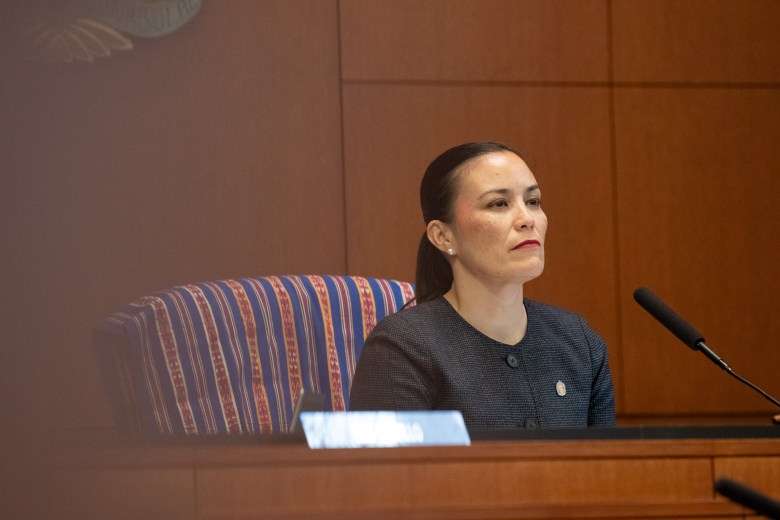 Mayor Gina Ortiz Jones listens to public comment before the city council votes whether to move elections from May to November at the City Council Chambers on Thursday, Dec. 18, 2025 in San Antonio. Credit: Salgu Wissmath for the San Antonio Report
Many of them framed the vote as an opportunity for leaders to stand in contrast to a long history of state and local policies aimed at making it harder for working-class people and people of color to vote, not easier.
“San Antonio, in my opinion, has struggled more than any other big city in Texas with releasing the grip of the big money establishment on our body of politics,” said Bexar County Commissioner Tommy Calvert (Pct. 3). “We have a community where the working class would benefit from the convenience of having more elections at the same time.”