

Image: Siemens Industry Software
Cars and trucks used to be pretty simple: Mechanics would open the hood, tinker with the engine, and you’d be good to go. But today’s vehicles are increasingly packed with software and computerized systems, with complexity rising at an unprecedented rate. Plano-based Siemens Digital Industries Software says a new solution was needed to help manage the system-level interdependencies of advanced driver-assistance systems, autonomous driving, and in-vehicle infotainment systems.
The company’s answer: its newly launched PAVE360 Automotive technology, a new category of digital twin software that’s pre-integrated and designed as an off-the-shelf offering to address the escalating complexity of automotive hardware and software integration.
Siemens said PAVE360 Automotive empowers automotive manufacturers and suppliers to speed the development of software-defined vehicles with early full-system, virtual integration that mirrors real vehicle hardware and accelerates both application and low-level software development for those key ADAS, AD, and IVI systems mentioned above.
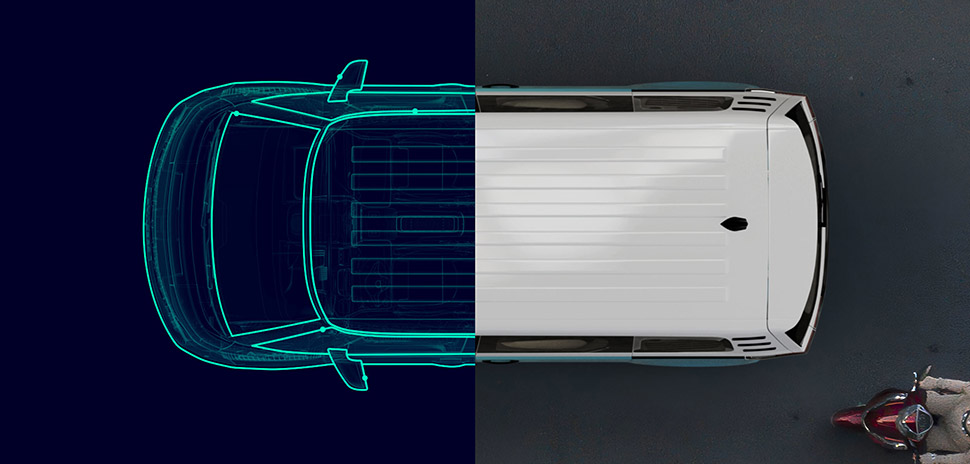
Image: Siemens Industry Software
Speeding. time-to-market ‘from months to days’
The “virtual blueprint for digital twin development” removes the need for customers to build their own digital twins before testing software, Siemens said—significantly reducing time to market for critical applications “from months to days.”
“The automotive industry is at the forefront of the software-defined everything revolution and Siemens is delivering the digital twin technologies needed to move beyond incremental innovation and embrace a holistic, software-defined approach to product development,” Tony Hemmelgarn, president and CEO of Siemens Digital Industries Software, said in a statement.
“PAVE360 Automotive will empower automotive companies to innovate with confidence, agility and scale, to realize the full potential of the SDVs and set the standard for what’s possible across all industries,” he added.
Collaboration with U.K.-based Arm
Siemens cited its prior collaboration with British semiconductor and software design company Arm Holdings, which resulted in accelerated virtual environments for its Arm Cortex-A720AE in 2024 and Arm Zena Compute Subsystems in 2025. Siemens said it’s now further integrating Arm Zena CSS with PAVE360 Automotive to enable the industry to start building on Arm “faster and more seamlessly than ever before.”
Access to Arm Zena CSS in a digital twin environment like PAVE360 Automotive “accelerates the development of software by up to two years,” Siemens said.
“As vehicles become increasingly AI-defined, automakers and silicon partners need new ways to manage rising complexity without slowing innovation,” said Suraj Gajendra, VP of products and solutions, physical AI business unit at Arm.
“With Arm Zena CSS available inside Siemens’ pre-integrated PAVE360 Automotive environment, partners can not only customize their solutions leveraging the unique flexibility of the Arm architecture,” Gajendra added, “but also validate and iterate much earlier in the development cycle, helping them get to market sooner.”
Don’t miss what’s next. Subscribe to Dallas Innovates.
Track Dallas-Fort Worth’s business and innovation landscape with our curated news in your inbox Tuesday-Thursday.
R E A D N E X T

“Effective timing constraints management is crucial for the overall success of semiconductor system-on-chip designs,” said Mike Ellow of Plano-based Siemens Digital Industries Software. The acquisition will enable Siemens to deliver what it calls “an innovative approach” to both implementation and verification flows.

Here’s your guide to life in Dallas-Fort Worth. You’ll find a big-picture look at communities, culture, jobs, schools, entertainment, and the great outdoors. Discover why Dallas-Fort Worth is one of the fastest-growing regions in our digital edition.
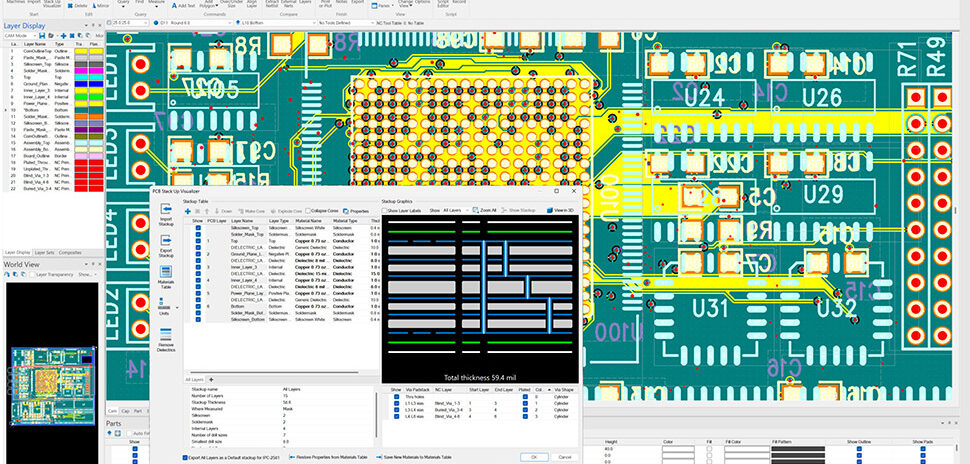
Plano-based Siemens Digital Industries Software said the acquisition strengthens its PCB design portfolio and expands its footprint in the electronics small and medium-sized business market.

Digital marketing veteran James Loomstein shares why startups need to focus on core business problems, not quick-fix marketing tactics. Here are key insights from 10 years teaching at SMU Cox.

With support from UTA’s Research Enhancement Program, assistant professor Mahmoud Bayat is developing a digital twin platform to help officials adjust evacuation routes on the fly. The platform could inform future systems across cities, counties, and states for what he calls “truly resilient communities.”