
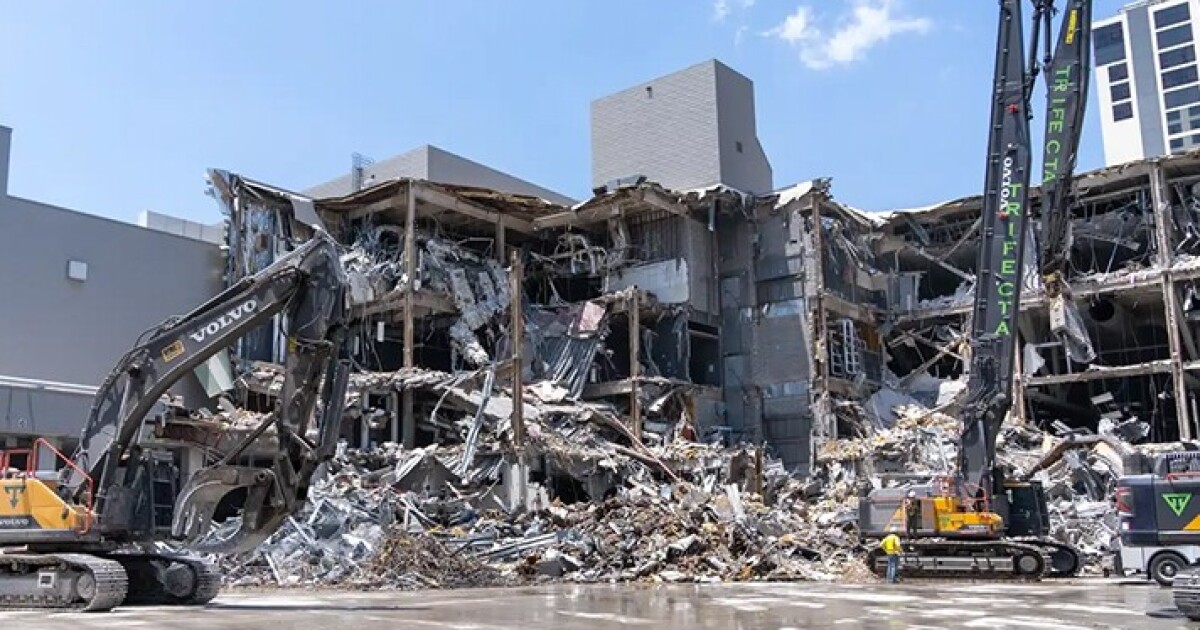
Austin Convention Center
Backers of a petition drive to halt a mostly bond-financed convention center project in Austin, Texas, filed a challenge in state court to the petition’s rejection.
Processing Content
The request for a writ of mandamus and permanent injunction relief filed this week by Austin United Political Action Committee and others in Travis County District Court seeks to reverse Austin City Clerk Erika Brady’s determination in November the petition drive fell 494 signatures short of a requirement for 20,000 valid signatures of registered voters.
The group submitted more than 25,000 signatures to the clerk’s office in October to put a proposed ordinance on the May 2026 city ballot to stop the demolition and reconstruction of the convention center for seven years — or until the project is approved by voters — and prioritize city funding for local live music, arts, cultural, and outdoor tourism.
“In disqualifying the signatures of these voters, respondent city clerk exceeded ministerial duties by introducing additional requirements not found under the city charter or state law,” the filing stated.
An emailed statement from a city spokesperson said: “The clerk’s office has a thorough and reliable process to review petitions that it has used for more than 20 years, and we look forward to presenting our case in court.”
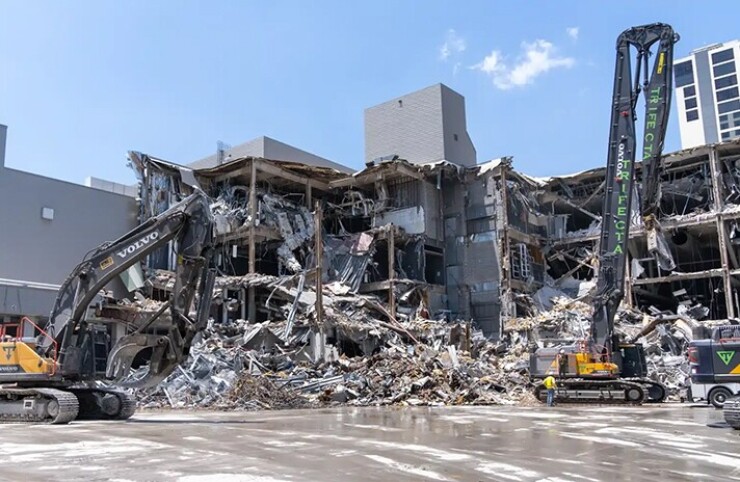
In April, the city began demolition of the existing convention center, which opened in 1992, to make way for a substantially larger facility.
The Austin City Council in October approved the initial issuance of up to $650 million of revenue bonds for a $1.6 billion replacement facility.
The up to $525 million of senior lien special tax revenue bonds and up to $125 million of junior lien bonds are to be issued within a year of approval, according to a city staff memo.
About $1.2 billion of the project’s cost will be financed with bonds backed by revenue from the city’s hotel occupancy taxes and incremental state tax revenue generated within a project finance zone the city established in 2024, the memo added.
Austin United has also raised concerns about the city’s $5.6 billion “all-in” cost estimate from January for the project over a 32-year debt financing period, according to Bill Bunch, an attorney representing the group.
“Besides having a terrible track record of rejecting voter petitions and being forced to hold elections upon being sued, the city has an even worse track record of grossly underestimating the actual costs of major construction projects,” he said in an email on Thursday.