
Bianca Seward/Houston Public Media
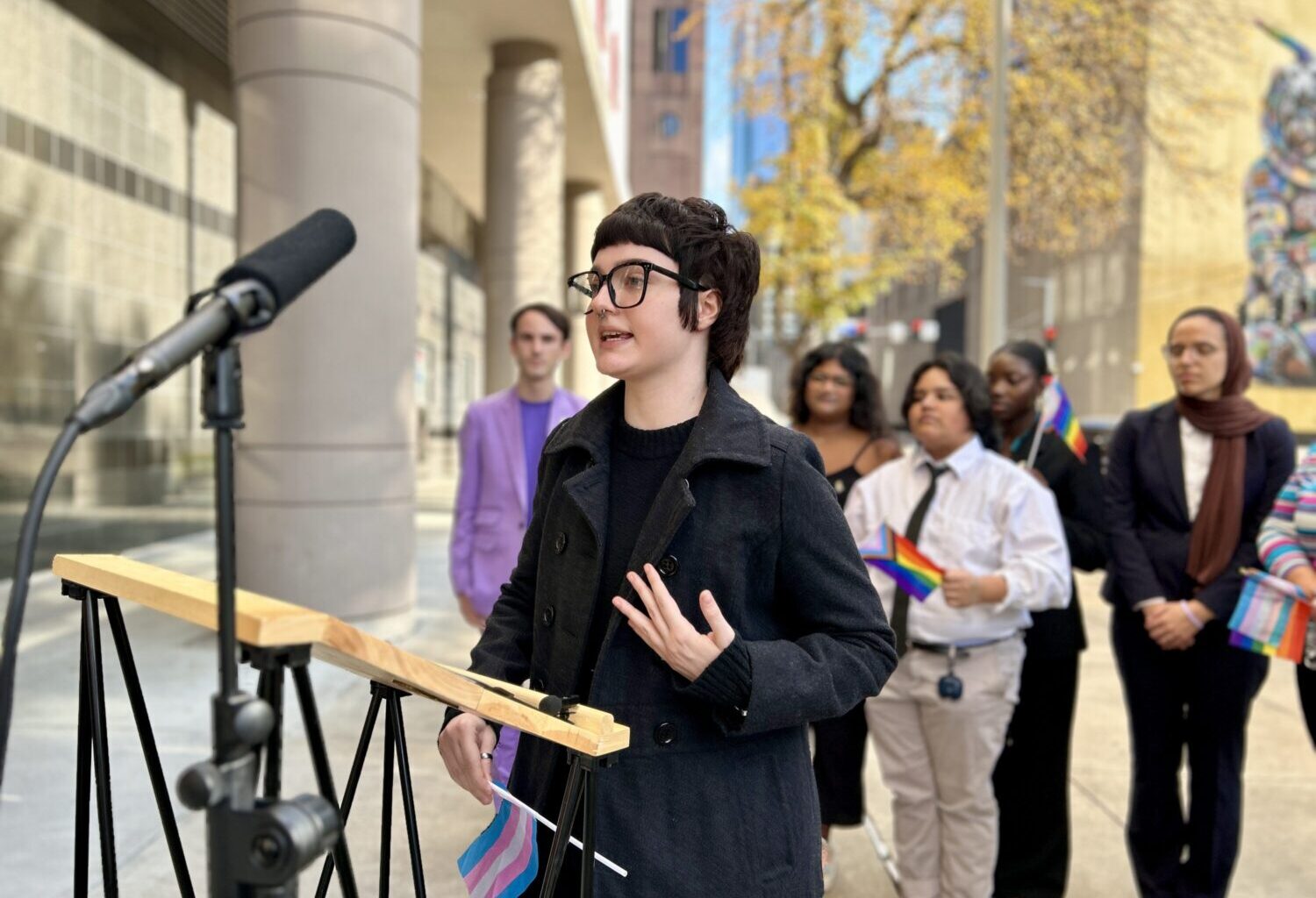
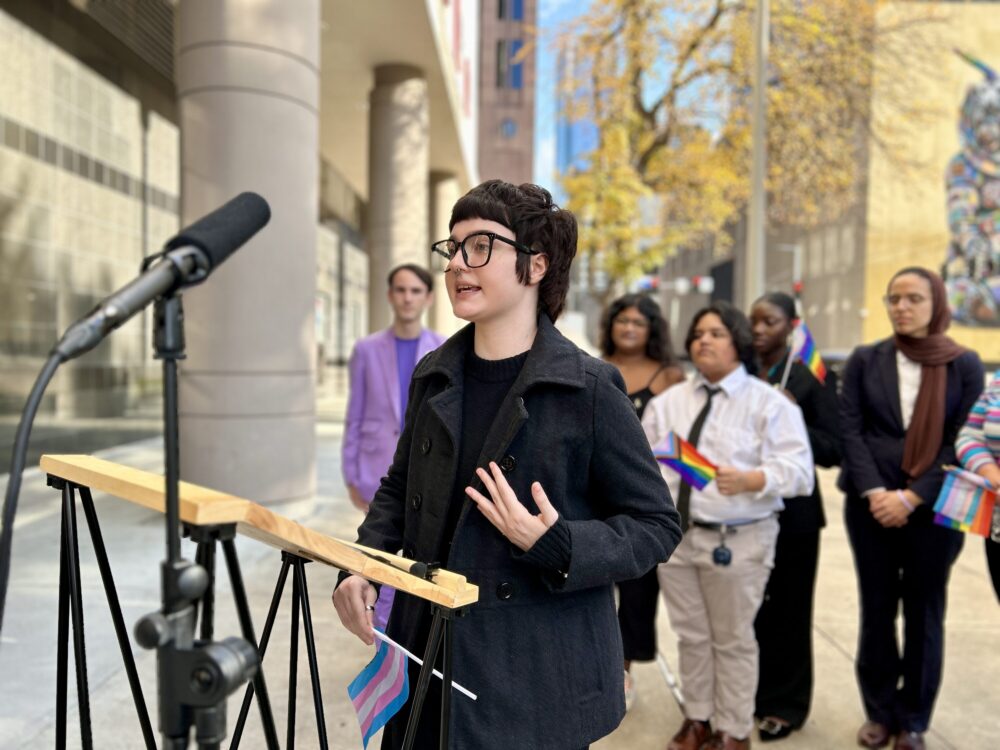
Adrian Moore, a student at Morton Ranch High School in Katy, speaks against Senate Bill 12, a new Texas law prohibiting student clubs based on sexual orientation, outside a federal courthouse in Houston on Thursday, Dec. 18, 2025.
The American Civil Liberties Union (ACLU) and others were in a federal court Thursday in Houston, seeking a preliminary injunction that would block Texas from enforcing four key provisions of Senate Bill 12.
The expansive “parental rights” law was signed by Gov. Greg Abbott this summer. In part, it effectively bans all programming related to diversity, equity and inclusion (DEI), prohibits employees from discussing gender identity and sexual orientation and bars student clubs based on gender identity and sexual orientation in public schools.
The law also requires schools to take disciplinary action against employees who provide health services against the wishes of students’ parents or guardians. That aspect of SB 12 has sparked confusion among school nurses and districts across the state.
Sign up for the Hello, Houston! daily newsletter to get local reports like this delivered directly to your inbox.
A key question raised by U.S. District Court Judge Charles Eskridge, who did not immediately issue a ruling Thursday after hearing arguments for more than three hours, centers around who exactly is charged with enforcing the new law. Attorneys for two of the defendants, Katy ISD and Texas Education Commissioner Mike Morath, argued they should not be included in the suit because they are not enforcers of consequences for not following SB 12.
When asked in court who the defendants thought the enforcer would be if not Morath or the three districts that were sued, Katy ISD attorney Christopher Gilbert said it was a good question and speculated it might be Texas Attorney General Ken Paxton.
“I am surprised to hear that that is a good question for the court to ask,” Eskridge said.
RELATED: New state law banning LGBTQ clubs in schools undermines support for students, advocates say
The lawsuit was filed in August by the ACLU, Gender & Sexuality Alliance (GSA) and others against Morath and three school districts: Houston ISD, Katy ISD and Plano ISD. This lawsuit attempts to stop four specific aspects of SB 12 from going into effect statewide, characterized by the plaintiffs as the GSA club ban, the inclusivity ban, the social transitioning ban and the ban on discussion of LGBTQ+ identities.
In court, the plaintiffs argued each of these provisions is unconstitutional, impermissibly discriminates based on viewpoint, is vague and overbroad, and has a chilling effect on the constitutional rights of students, parents, educators and others across the state.
In a news conference after the hearing, ACLU attorney Brian Klosterboer called the law “one of the most extreme censorship education bans in the entire country.”
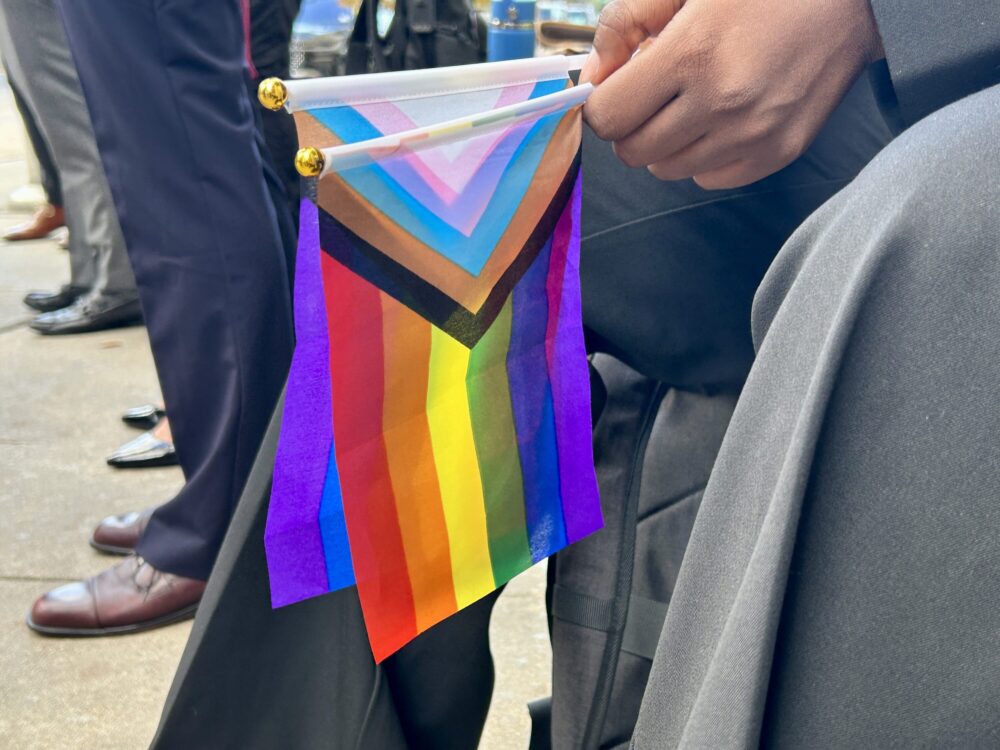 Flags in support of the LGBTQ+ community are held outside a federal courthouse in Houston on Thursday, Dec. 18, 2025.
William Farrell, an attorney representing Morath, argued the education commissioner has sovereign immunity and should not be included in the suit because he doesn’t enforce SB 12. Gilbert also argued Katy ISD is not an appropriate party to bring the suit against, because it is following the law and cannot choose whether to adopt the resolutions objected to by the plaintiffs.
Attorneys for Houston ISD and Plano ISD did not make arguments during Thursday’s hearing.
Supporters of SB 12 say it preserves parental rights in students’ education and curbs DEI indoctrination.
Adrian Moore is a senior at Morton Ranch High School in Katy ISD west of Houston. Since seventh grade, Moore has used he/him pronouns and the name Adrian without issue. That all changed in August.
“It’s been rough,” he said. “It’s definitely brought a lot of tension among both students and staff. My relationship with staff members at the schools has been incredibly strained.”
Moore says that when the law went into effect Sept. 1, it shut down the school’s GSA chapter.
“If trans students don’t feel safe and supported at school, they’ll stop showing up,” Moore said. “Whether that be physically dropping out – switching to online schools and skipping school – or mentally checking out and stop participating.”