
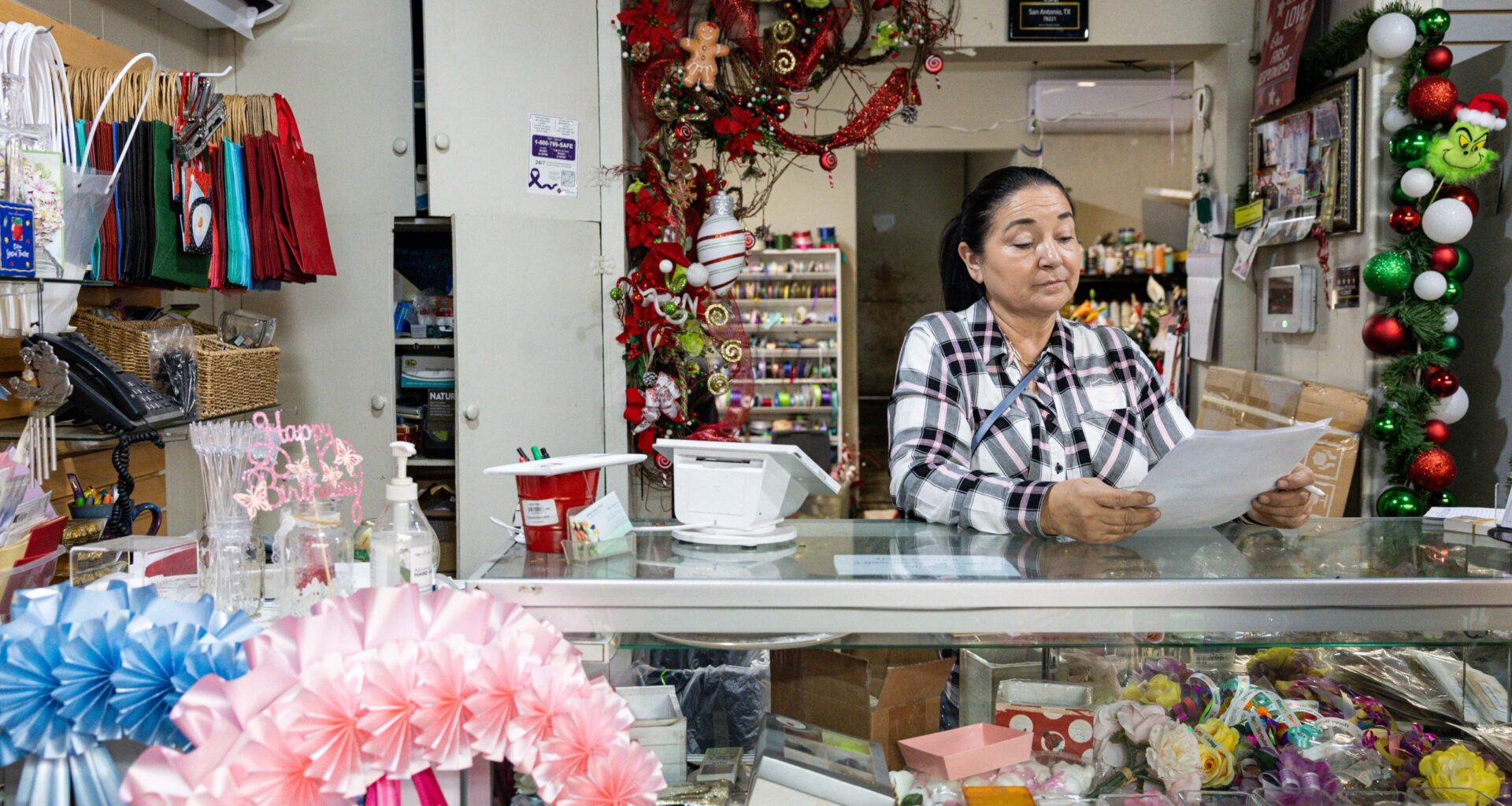
Betty Dovalina was sending credit card companies $2,500 a month from her small business, a flower shop on Southwest Military Drive, before she decided she could no longer afford the various processing and swipe fees that come with accepting credit cards.
Now, a sign on her counter tells customers she’ll charge them a little bit more if they choose to pay with a credit card. She resisted the change for a long time, she said, but finally decided to pass on those fees after sending thousands to credit card companies after the past Valentine’s Day and Mother’s Day holidays.
Her wholesalers were charging her credit card fees and tariff fees. She felt like she didn’t have a choice.
“I didn’t do it for the longest time, but we just started. The fees were getting [high],” Dovalina said. “I’ve been doing business for 40 years. I didn’t want to, but I had to.”
Signs like the one in Dovalina’s Southside store, Betty’s Flower Shop, are becoming increasingly common in San Antonio.
Credit card companies, banks and the electronic services that process cards at checkout all charge percent fees for their services. Those fees can vary wildly, from small fees for standard credit cards to higher percentages for premium rewards cards.
Rules on credit card fees could be set to change. Visa and MasterCard have proposed a settlement to end a 20-year-old federal antitrust lawsuit over interchange fees. But major retailers like Walmart are objecting to the deal, saying the compromise to counter attempted government mandates allows these companies to keep charging merchants excessive fees on transactions.
The Electronic Payments Coalition, an industry group that represents Visa, MasterCard and the banks they work with, say the payments are necessary to maintain and secure credit networks.
Meanwhile, local restaurants, stores and shops are grappling with complicated fee structures and expensive payments when customers choose to pay with plastic.
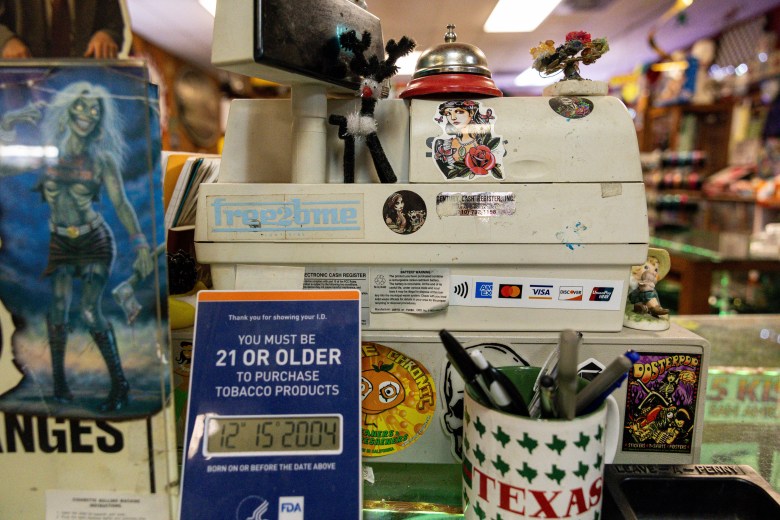 A sticker advertising the types of payments accepted is attached to the register at the store’s checkout counter at Flip Side Records on the South Side. Credit: Amber Esparza / San Antonio Report
Making business decisions
Restaurants have been particularly impacted by credit card fees. Blanca Aldaco owns Aldaco’s, a Mexican restaurant in Stone Oak. She has yet to pass on the fees to her customers, but she’s coming close.
She sends an average of $18,000 a month to credit card companies — more than $200,000 a year.
“I’m about to pass it on. To continue to maintain my pricing, I’m about to add a credit card fee,” she said. “I guess it’s a trend. Everyone’s charging it.”
It’s frustrating for her, she said. She wants to reinvest the money in her restaurant and in her workforce. Instead, she feels punished for doing well. When her sales go up, so do her payments.
Business owners, including Aldaco, say their margins are already tightening due to tariffs and inflation. Paying 3% of profits in fees eats into that. Aldaco makes about $0.08 for every dollar spent at her restaurant.
“When you have $0.08 and $0.03 goes to the credit card company, you go ‘Ahhh!’” she said.
Credit card companies argue that increased use of credit cards is driving fees, not the companies themselves.
“The fee hasn’t increased, the percentage has stayed the same, but what has increased is the revenue,” said Nicklaus Simpson, managing director of public affairs at the Electronic Payments Coalition.
Simpson said major credit card companies Visa and MasterCard run the networks that move credit between banks, businesses and customers. They use the fees to invest in fraud protection from hackers and scams. Visa, for example, has invested $12 billion in fraud protection in the last five years, Simpson said.
Aaron Selinkoff owns Specht’s Texas, a restaurant located between San Antonio and Bulverde that has been serving American comfort food since 1890. He said credit card usage has gone up in the last five years. Now, it’s around 90% of Selinkoff’s business.
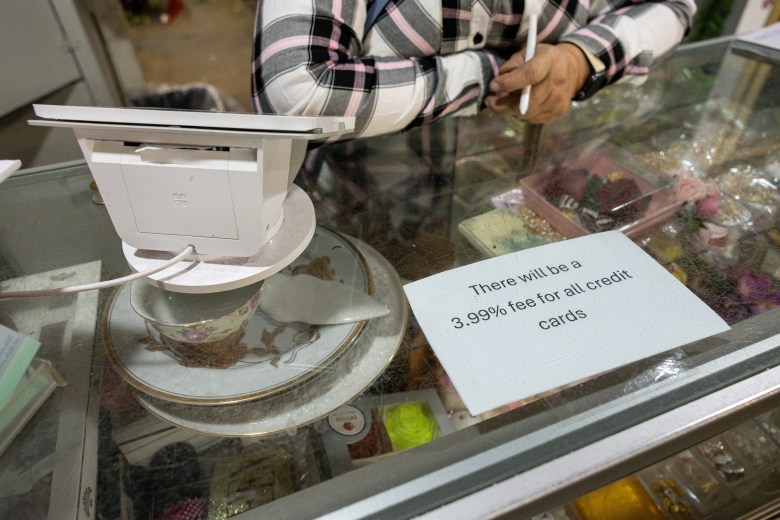 A sign notifying customers of a 3.99% fee for all credit card transactions is taped to the counter at Betty’s Flower Shop. Owner Betty Dovalina says the extra fees for those customers paying with credit cards at her store began earlier this year. Credit: Amber Esparza / San Antonio Report
Selinkoff and Aldaco noted that rewards or premium credit cards are being used more often and have higher fees.
“Those rewards you get are awesome,” Selinkoff said. “But someone has to pay for them and it’s typically not the credit card company.”
Selinkoff also made the decision to add a fee for credit card usage, he said. Businesses are allowed to pass on their costs through their own small, limited fee. Customers are more and more understanding of that additional charge, Selinkoff said, but there are other ways the credit card fees add up.
He noted that he collects tips and taxes from customers. If a customer pays with card, he said, he’s charged credit card fees on transactions which he is not a part of.
A 20-year lawsuit
In 2005, a group of businesses launched a class action lawsuit against Visa and MasterCard.
In November, the plaintiffs and the credit card companies proposed a settlement agreement.
The proposal allows businesses to reject or charge their own fees on a credit card by credit card basis. It also allows businesses to negotiate in buying groups, where they can come together to lobby for particular fee rates.
Visa and MasterCard would reduce the fees banks can charge on credit cards for five years and cap growth of those fees for a further eight years.
Simpson said the settlement checks the plaintiffs’ boxes and gives businesses more flexibility.
Some business associations don’t think the settlement goes far enough, though. Kelsey Erickson Streufert is the public affairs officer for the Texas Restaurant Association.
“It’s not a good offer, not a good deal for a vast majority of businesses and really consumers,” Streufert said.
The TRA estimates the fees cost American households roughly $1,800 a year and are higher than in other places, like in Europe and Canada, where credit card fees are more tightly regulated.
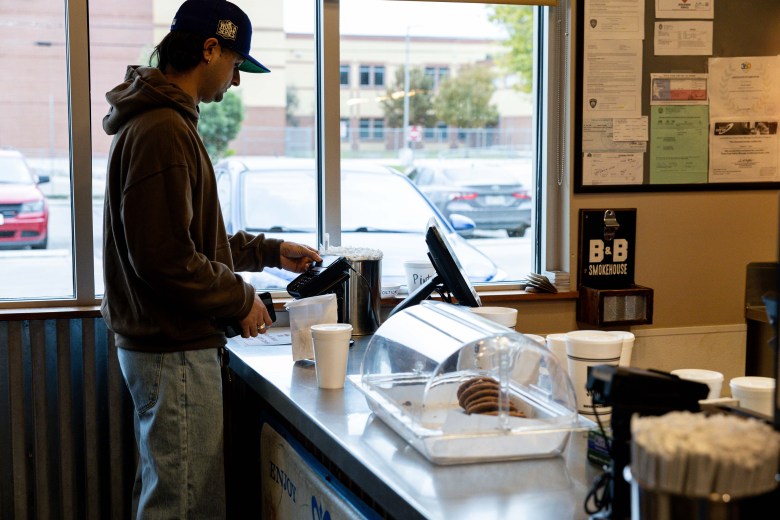 A customer uses tap to pay with a card when paying for their meal at B&B Smokehouse on Tuesday. Credit: Amber Esparza / San Antonio Report
Streufert also noted that the settlement only applied to the fees banks charge on credit cards, also known as interchange fees, not to the card companies themselves. The settlement would also not apply to other credit card companies, like American Express and Discover, though Visa and MasterCard make up over 80% of the credit card market.
Large retailers have also argued the settlement proposal does not consider national store chains. Walmart filed an objection on Dec. 12 urging the federal judge to reject the settlement arguing that the reforms don’t go far enough.
Selinkoff said he would like to see changes to the fee structures, but he’s not sure that’s realistic. Visa and MasterCard are massive corporations with expensive lobbies. Selinkoff is focused on more local changes.
He hopes local and state governments take steps to stop credit card fees on sales taxes.
Business owners also repeat the old adage: cash is king.
“If you don’t want to pay fees, pay cash,” Selinkoff said.
Small percentages may seem small with small purchases, but they add up. Dovalina said when she gets large orders for events like funerals or weddings, she almost always gives customers the option to pay with cash and avoid fees.
Paying cash helps small businesses keep more of their profits, Dovalina said, but she also understands that today’s economy is based more and more in credit. It’s a cycle. She even uses her own rewards cards to help pay business expenses — and then uses the rewards to pay off her own credit card fees.
“I didn’t like to do it, but I had to join the train,” she said. “It’s part of doing business.”