
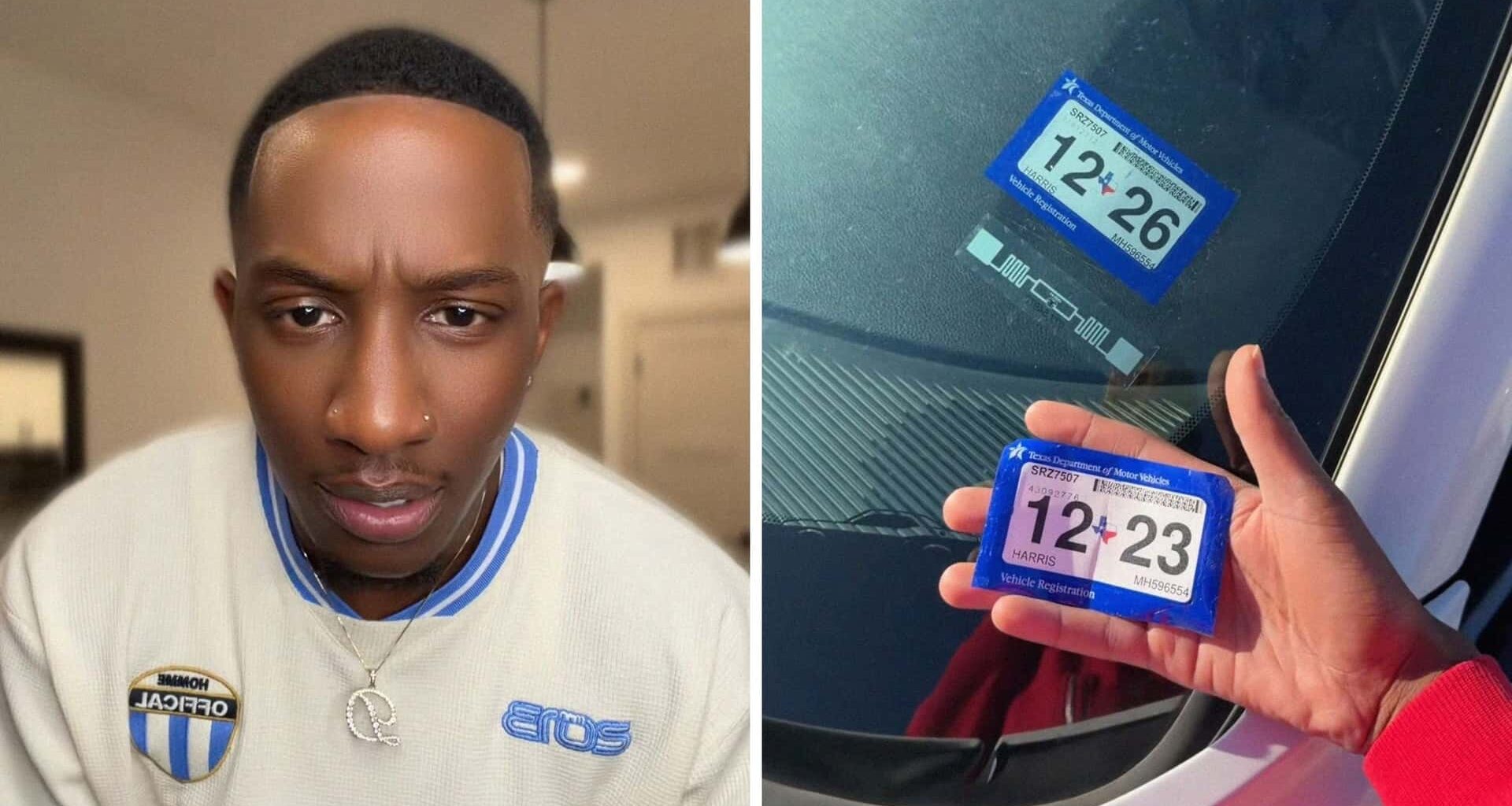
A Texas man’s casual approach to vehicle registrations has struck a chord with hundreds of thousands of social media users who recognize themselves in his procrastination. His cheery confession about registering his car three years late has sparked a wave of similar admissions from fellow Texans who’ve been putting off their own automotive responsibilities.
TikTok user devinaire_ shared his registration experience in a 14-second video that has garnered more than 560,000 views since it was posted on Dec. 16. The Houston-area TikToker held up a 12/23 Texas registration sticker while his vehicle displayed a fresh 12/26 inspection sticker on the windshield.
“So, I did a thing today,” devinaire_ says in the video. “Y’all, I would say I’m embarrassed, but I’m really not. Because I know I’m not the only person. I know I’m not the only person. We had fun, though.”
The video’s caption revealed the full scope of his automotive procrastination: “This light work in Houston…I saw 2016 the other day.”
Understanding Texas Vehicle Requirements: Registration vs. Inspection
In Texas, mandatory vehicle registration costs drivers a base fee of $50.75 for passenger vehicles. It typically totals $70-90, with local fees and inspection-related charges depending on the county, and is used to prove ownership and the vehicle’s legal operation.
A separate inspection requirement changed significantly in 2025—most non-commercial vehicles no longer need annual safety inspections, though owners pay a $7.50 inspection program replacement fee at registration.
In this case the stickers tell the story—devinaire_’s expired registration sticker from December 2023 shows he drove for three years without current registration.
Driving with expired registration can result in fines up to $200, depending on how long the registration has been expired and the jurisdiction. Unlike inspection violations, registration issues can also complicate interactions with toll road authorities. While insurance coverage typically remains valid if premiums are paid on time—insurers generally cannot cancel policies mid-term solely due to expired registration—the situation can complicate claims processing if an accident occurs, with insurers potentially viewing expired registration as a sign of negligence that could affect settlement amounts.
Why Drivers Delay Registration Renewal
Registration renewal is mostly straightforward—it doesn’t require a physical inspection of the vehicle and can often be completed online or by mail. However, several factors can cause drivers to delay renewal beyond simple procrastination.
Outstanding tickets, liens, or other legal issues can complicate the registration renewal process. Some drivers discover they owe fees or fines that must be resolved before they can renew, leading them to postpone. When drivers receive citations for expired registration, they must pay a 20% penalty fee in addition to the standard registration cost to qualify for ticket dismissal.
Financial constraints also play a role. While registration fees aren’t enormous, they represent an annual expense that some drivers defer when money is tight. Additionally, if a vehicle needs repairs to pass inspection, some drivers let both registration and inspection lapse rather than address the underlying issues.
For drivers who use their vehicles infrequently, the immediate consequences of expired registration may seem minimal, making it easy to continue postponing renewal.
A Wave of Confessions
The video resonated with many viewers, some of whom shared their own experiences with registration procrastination. Many admitted to similar or even more extreme situations, with some taking dramatic steps to avoid dealing with expired paperwork altogether.
Tami, “It got so bad I just went and got a new car,” which prompted devinaire_ to respond, “Omg you lying.”
Several other commenters reported taking the same approach. “Saaaaame mine expired 2021 and I finally got a new car in July. I’m staying my [expletive] off the tolls this time,” wrote Amber B.
CLAR shared an even more extreme situation, “No literally mine were expired since 10/2020!! Car still had Covid.”
The pattern continued throughout the comments, with users like “LilCourttCourtt” writing: “Lmao with 2017 still. Let me go to this dealership,” and “cdot_txdot” sharing: “I had a good 10yr stint where I never got a new sticker bc I wrecked a car or just got a new car. When it came time to finally get a new sticker I was completely oblivious on the process.”
Multiple commenters specifically mentioned toll roads as a motivating factor for finally addressing their expired registration stickers. Texas toll authorities can access vehicle registration information through habitual violator programs that allow them to place registration blocks on vehicles when drivers accumulate 100 or more unpaid tolls within a year. These registration blocks prevent renewal until outstanding toll debts and administrative fees are resolved.
When Avoidance Becomes More Expensive
The comments revealed an interesting pattern: multiple drivers found it easier to buy new cars than to address expired registrations. While this might seem extreme, it can make sense in certain situations when accumulated penalties exceed a vehicle’s value.
If a vehicle has accumulated tickets, fees, or other complications related to expired registration, starting fresh with a different vehicle might be more economical than resolving all the outstanding issues. Additionally, car purchases often include dealer assistance with registration and titling, streamlining the process.
This strategy typically works best for drivers who can afford to purchase a vehicle and who haven’t incurred significant penalties or complications due to their expired registration.
Practical Advice: Getting Back on Track
For Texas drivers in similar situations, renewing expired registration is generally more straightforward than catching up on inspections. Most counties allow online renewal even for expired registrations, though additional fees may apply.
Before attempting renewal, drivers should verify they don’t have outstanding tickets or other issues that might complicate the process. Clearing any holds or liens on the vehicle is typically necessary before registration can be renewed.
The process usually requires proof of insurance, so ensuring current coverage is active before starting the renewal process can prevent delays.
For vehicles that have been undriven for extended periods, it’s worth checking that insurance coverage is still active and that any inspection requirements are also current, as some counties won’t renew registration without a valid inspection.
What makes devinaire_’s video particularly engaging is his good-humored approach to what could be an embarrassing situation. His casual acknowledgment that he’s “not the only person” and that “we had fun, though” transforms a potentially stressful automotive requirement into a relatable shared experience.
Sometimes it takes a viral moment and the realization that “everyone does this” to finally motivate action on tasks we’ve been putting off for years.
Motor1 contacted devinaire_ via Instagram direct message. We’ll be sure to update this if he responds.
We want your opinion!
What would you like to see on Motor1.com?
– The Motor1.com Team