
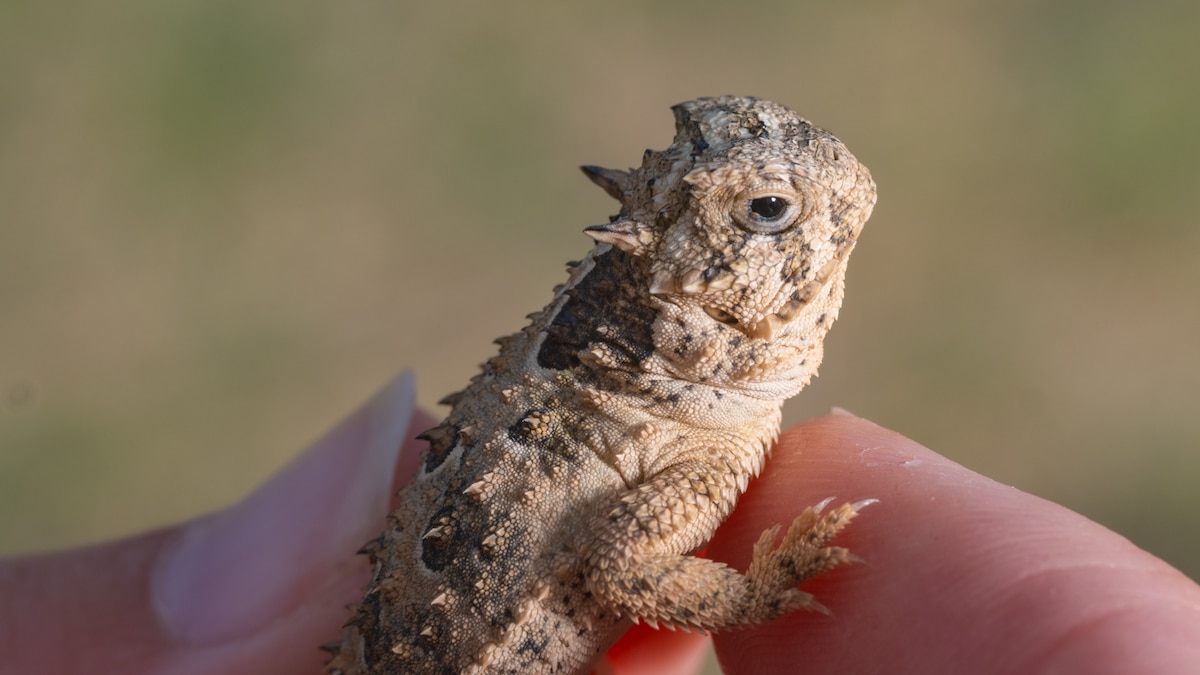
By keeping the lizards indoors under ultraviolet light and matching individuals carefully based on genetics to avoid inbreeding, Barber can now reliably hatch hundreds in a year. She’s helped by the fact that females can lay 13 to 45 eggs at a time and sometimes produce multiple clutches, which take about two months to hatch, in a year. Baby horned lizards, she’s learned, are a bit particular. They require temperatures in the mid-80s, need to be fed four times a day, and are surprisingly prone to dehydration, so their tanks must be misted regularly.
The hatched horned lizards, about as big as a penny, stay at the zoo for several weeks until they’re mature enough to be released at the Mason Mountain Wildlife Management Area, a stretch of government-owned prairie land in central Texas. The 5,500-acre property, about a three-and-a-half-hour drive southwest from Fort Worth, is a postcard come to life, with ancient oak groves and giant pink granite outcrops.
The horned lizards are less interested in the view and more appreciative that the area is filled with their favorite food: red harvester ants. Also native to the region, harvester ants help aerate the soil with their extensive tunnels and send foraging caravans to collect (and in the process, disperse) the seeds of native grasses that become coveted horned lizard habitats. Over the years, the ants’ numbers have declined across the state due in large part to invasive fire ants, but Mason Mountain’s control program aims to grow the population—which means happier horned lizards.
Barber’s exactingly bred and painstakingly nurtured lizards don’t get sent out into the wild completely naked. Researchers from TCU’s biology program glue harmonic tags onto the backs of the lizards, making it easier to locate them in the wild and determine the most viable areas for reintroduction. “When you’re a small lizard, you need to be put in the right spot early on,” explains Kira Gangbin, a Ph.D. student studying horned lizard ecology. Gangbin and her fellow researchers will wander the grounds of Mason Mountain with radio receivers, playing a game of hot and cold with the little lizards until they finally find one.