
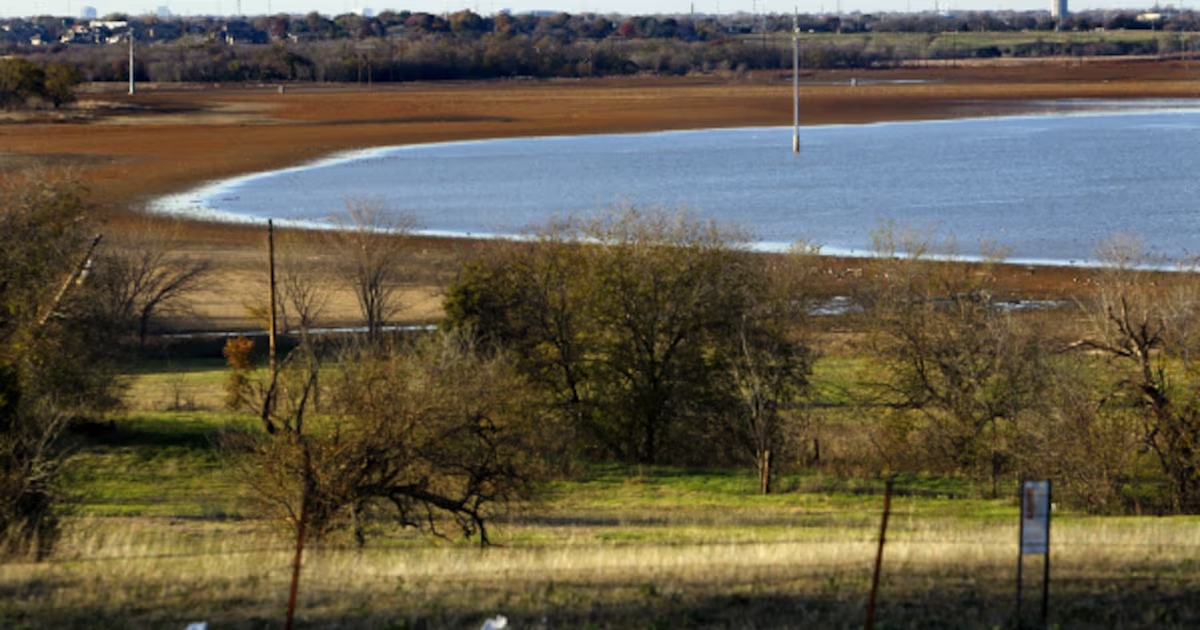
About 2.6 million Dallas residents and businesses primarily obtain their drinking water from six major lakes in North Texas.
All of Dallas’ water supply comes from Grapevine, Lewisville, Ray Roberts, Ray Hubbard, Tawakoni and Fork. Of the six lakes, Dallas owns and operates Lake Ray Hubbard. Dallas does not use groundwater.
Related

Dallas is in the process of connecting Lake Palestine, approximately 90 miles southeast of the city, to its water system. It’s estimated to be completed in 2028.
Breaking News
Is Dallas’ drinking water safe?
To ensure the water is safe, the Dallas Water Utilities Department tests the water 40,000 to 50,000 times per month, according to its website. The department provides water, wastewater and storm drainage services to the city and Dallas County.
Related

The water undergoes extensive treatment, including chemical treatment: chlorine, ammonia, settling, filtering and disinfection before it reaches homes and businesses.
Chlorine and ammonia are used to disinfect the water, while lime and iron sulfate are employed to remove suspended solids and control corrosion. Activated carbon is used to control offensive tastes and odors, and fluoride helps prevent tooth decay.
Dallas water is considered non-corrosive, meaning it is less likely to leach lead from pipes than corrosive water, according to the city.
Where does it go after it is used?
Used water, also known as wastewater or sewage, is pumped through the wastewater system to one of the city’s two wastewater treatment plants.
Related

The water is cleaned and returned to the Trinity River, where it continues to flow downstream and is used by other cities.
If residents are concerned about water quality, they can request more information or a free water quality test by calling 311.