
By Rabbi Levi Greenberg
On Sunday, Dec. 14, the world went dark. When I heard of the barbaric terror attack on thousands gathered at one of the world’s first public menorah lightings for 2025, at Bondi Beach in Sydney, Australia, I was crushed. Anger, grief, sadness and, oh, so many questions came crashing all together inside of me.
 Rabbi Levi Greenberg
But there was no time to process. I knew what needed to be done. I knew we had to move forward with our celebrations and public menorah lightings. But the jarring realization that the “festival of lights” had just gone dark, and a holiday of joy had been shattered by unimaginable sadness, made it feel so surreal.
The rest of the week continued in the same way. As more details of the tragedy emerged, my personal sadness intensified, but our efforts in spreading the message of light and joy of Chanukah reached peak success.
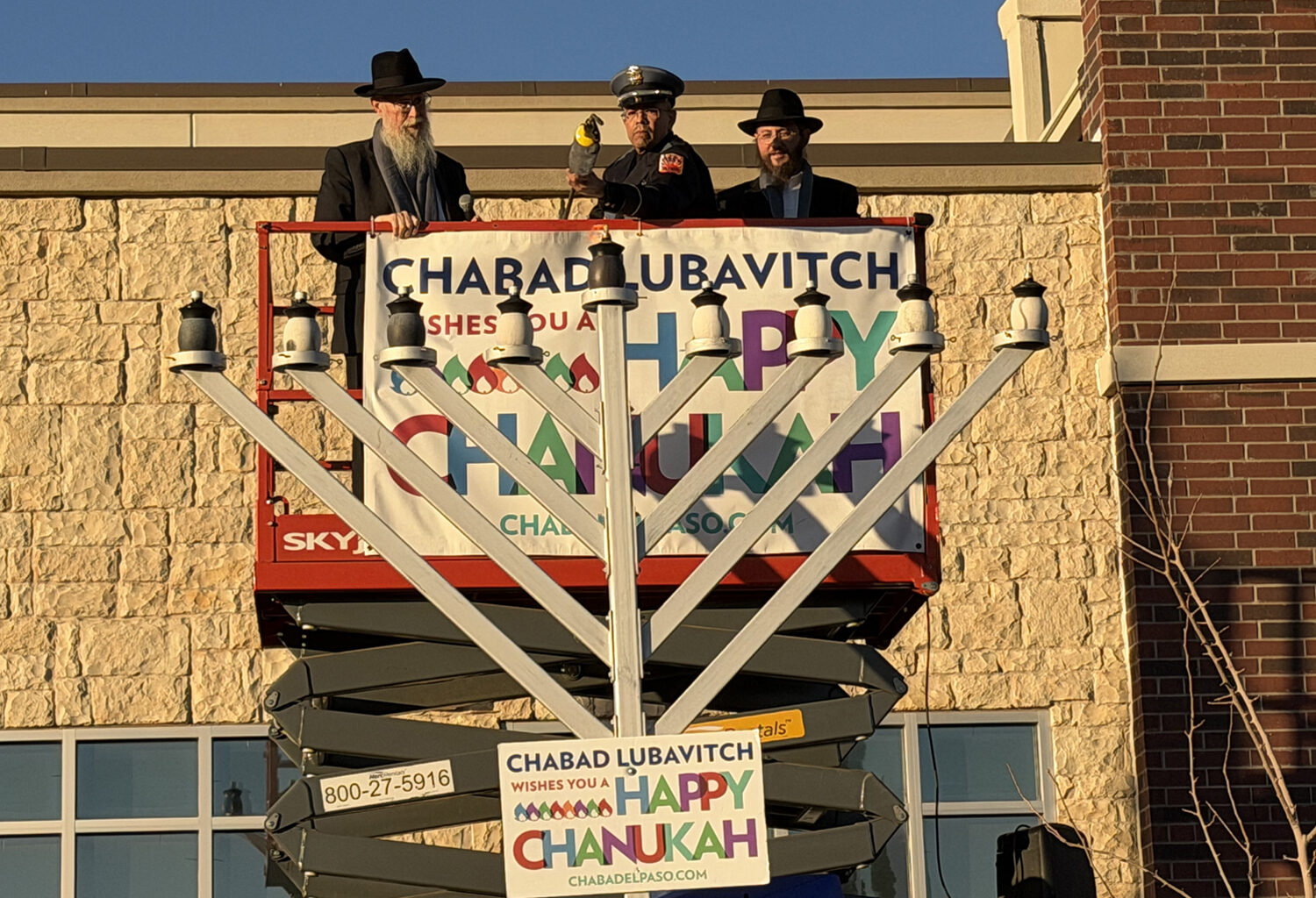
In the span of two days, three new public menorah displays were arranged and installed in the El Paso County Courthouse, El Paso City Hall and at El Paso High School. Dozens of Jews have reached out to procure menorahs and candles, and based on the news from around the world, public menorah lightings are happening like never before. How does this make sense?
Although I have learned and taught the Chanukah story for years, and projected its message of light overcoming darkness and goodness overcoming evil countless times, this week, I finally understood what it is all about.
The central observance of Chanukah, the nightly kindling of the menorah, commemorates the miracle of the one-night’s supply of pure olive oil that burned for eight nights in the seven lamps of the menorah of the Holy Temple. However, there are fundamental differences between the way we light the menorah on Chanukah today and the way it was done every day in the Holy Temple in Jerusalem.
In the Holy Temple, the same number of flames were lit in the menorah every day, well before nightfall, inside the sanctuary. On Chanukah, we light an increasing number of candles every successive night, specifically in the evening, by a door or window to project the light outward.
The reason for these differences is that the two menorahs represent two different eras. The Holy Temple generally signals a time of Jewish independence, success, security and peace. The eight, ever-increasing flames of our Chanukah menorahs emerged from an era of persecution, terror and darkness.
The analogy is clear. When life is good and the world is bright, there is no need to increase light or make an effort to project it outward, because all is normal. A flame in the sunlight is unnecessary. But when life is turbulent, evil is on the rise, and the world becomes very, very dark, we must increase in light and project it outward as well, because even one small flame in darkness can make a world of a difference.
Although the Maccabees heroically fought their enemies with weapons and military maneuvers, they focused the commemoration of their salvation on the miracle of the menorah lights because they understood their struggle as one of good over evil, morality over depravity, and light over darkness. Their victory was symbolized by the flames of the menorah, miraculously fueled by a tiny amount of ritually pure olive oil.
“Light overcomes darkness” is not a cliché punchline to wish away reality. It is the greatest acknowledgement of the overwhelming darkness so pervasive in our world today, and an urgent call for all humanity to uproot it at its core by responding to evil with ever-increasing goodness.
The horrors that shook the world from Sydney, Australia, on Sunday, Dec. 14, 2025, brought the urgent message of Chanukah into sharper focus. When the world goes darker, we must make more light.
Levi Greenberg is associate rabbi at Chabad Lubavitch of El Paso.
This <a target=”_blank” href=”https://elpasomatters.org/2025/12/22/opinion-when-the-world-went-dark-chanukah-make-more-light/”>article</a> first appeared on <a target=”_blank” href=”https://elpasomatters.org”>El Paso Matters</a> and is republished here under a <a target=”_blank” href=”https://creativecommons.org/licenses/by-nd/4.0/”>Creative Commons Attribution-NoDerivatives 4.0 International License</a>.<img src=”https://i0.wp.com/elpasomatters.org/wp-content/uploads/2020/01/cropped-epmatters-favicon2.png?resize=150%2C150&ssl=1″ style=”width:1em;height:1em;margin-left:10px;”>
<img id=”republication-tracker-tool-source” src=”https://elpasomatters.org/?republication-pixel=true&post=109252″ style=”width:1px;height:1px;”><script> PARSELY = { autotrack: false, onload: function() { PARSELY.beacon.trackPageView({ url: “https://elpasomatters.org/2025/12/22/opinion-when-the-world-went-dark-chanukah-make-more-light/”, urlref: window.location.href }); } } </script> <script id=”parsely-cfg” src=”//cdn.parsely.com/keys/elpasomatters.org/p.js”></script>