
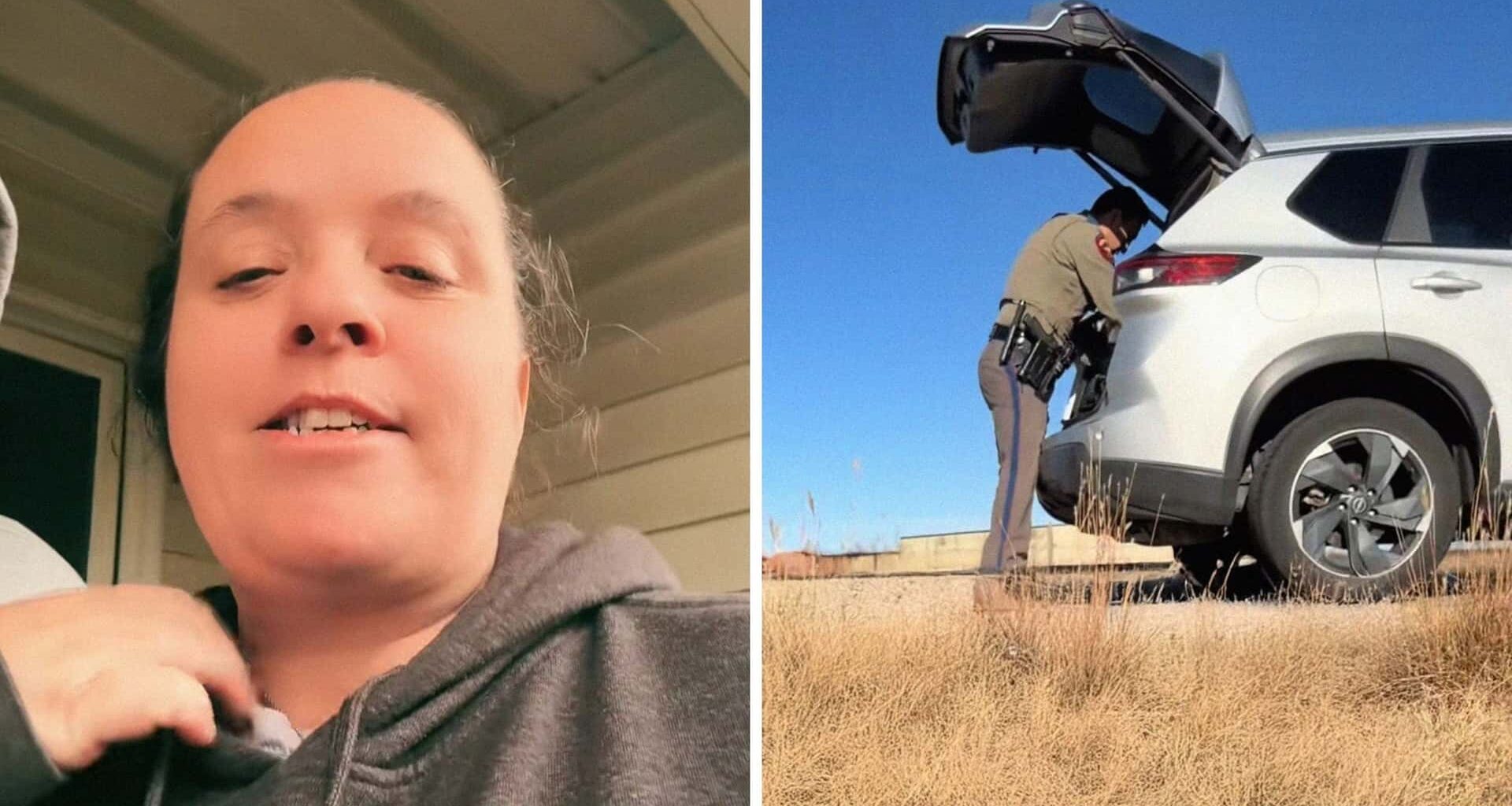
A viral TikTok video showing a Texas traffic stop has sparked heated debate about police authority and Fourth Amendment rights during routine vehicle searches. The incident, which occurred near Lubbock, has drawn more than 184,400 views and hundreds of comments debating the legality of the stop and search.
The Heards (@the_heards) posted a 30-second video on Dec. 16, showing one half of the couple filming their rental car pulled over on a Texas highway. In the footage, a police officer is seen rummaging through the rear hatch of their vehicle, while another patrol car sits behind them, with a second officer standing nearby on a bright, clear day.
What Led to the Traffic Stop
According to Heards, the incident began when they were “passing through that stupid [expletive] county” while traveling from Oregon. The couple described how a Texas state trooper passed their rental car, turned around, got behind them, and followed them for approximately three miles before initiating the traffic stop.
“The cop passed us, turned around, got behind us, followed us for about 3 miles then decided to pull us over. Asked for my husband’s drivers license,” the Heards wrote in a detailed comment. “My husband handed him his Oregon driver’s license then before he even went to run my husband’s name told him to step out of the car.”
The situation escalated quickly when the Heards questioned the officer’s commands. “I said we didn’t have to get out of the car because we didn’t do nothing wrong,” they explained. “Then the cop pulled his gun and forced us out of car, then proceeded to [expletive] search our car. That’s what happened.”
The couple maintains they were driving a rental car with California plates, which they believe was the primary factor in the traffic stop. “Hell no they assumed that we were transporting drugs cause our rental had California plates,” the Heards responded to one commenter.
The Legal Issues: Fourth Amendment Rights
The incident raises several important questions about police authority during traffic stops and drivers’ constitutional rights. Under the Fourth Amendment to the US Constitution, Americans are protected against unreasonable searches and seizures. Police generally need probable cause or consent to search a vehicle, established through the automobile exception first recognized in the 1925 Supreme Court case Carroll v. United States.
Several knowledgeable commenters weighed in on the situation. “Having California plates is not reasonable suspicion to pull someone over,” wrote RHG. Legal precedent supports this position—while officers can run license plates without cause, simply having out-of-state plates does not constitute reasonable suspicion for a traffic stop. Atticus Peppermint emphasized the constitutional issues: “It’s I L L E G A L for them to search!!! It’s also a 4th Amendment Violation. Every attorney on the planet will tell you: Don’t answer questions. No permission for searches. Zero field sobriety tests, EVER!!”
Another provided additional legal context, writing, “Police cannot lawfully arrest you solely for refusing consent to search. Consent obtained through coercion or threats can be ruled invalid. Saying ‘you’ll go to jail if you don’t consent’ may violate the Fourth Amendment. Speak to attorney immediately.” Legal experts generally agree that consent obtained through coercion is invalid, and threatening arrest to obtain consent may constitute a Fourth Amendment violation.
The Heards confirmed they did not consent to the search, stating, “Our rights were violated. He forces [us] out of our car. We refused him to start our car because he had no reason to search our vehicle, [he] threatened us to go to jail if we did not allow him to search.”
Out-of-State Plates: A Common Target?
The comments section revealed that targeting vehicles with out-of-state plates, particularly from California, may be common in certain regions. “Arkansas pulls over almost all California plates because of drugs,” wrote Wendall, “My brother-in-law was in a rest area waiting on my sister and the state police pulled in behind him and searched their truck because of the California tags.”
Recent investigative reporting has documented these practices extensively. A Houston Chronicle investigation revealed how surveillance networks in Texas use license plate readers to flag vehicles based on travel patterns, with interdiction teams targeting drivers for searches. Similarly, NewsChannel 5 investigations documented drug interdiction practices along I-40 in Tennessee that target out-of-state drivers, particularly those from western states. One former New York police officer acknowledged that out-of-state plates can draw extra attention, though often because officers suspect suspended licenses rather than drug trafficking.
However, other commenters disputed this. “I guarantee they didn’t stop you because of the plates. You were speeding or violating some other law. We have tons of California plates in Texas,” one wrote.
Kristina Lynn Lovela agreed, “The state is literally filled with California plates!!!!”
The video has attracted political commentary from both sides of the spectrum, with some defending aggressive law enforcement tactics as necessary for drug interdiction. In contrast, others criticize what they see as constitutional violations.
When Can Police Search Your Vehicle?
Generally, police can search a vehicle without a warrant in several specific circumstances:
With the driver’s consent—though consent obtained through threats or coercion can be ruled invalid;
If they have probable cause to believe the vehicle contains evidence of a crime;
During a search incident to arrest—when the search is contemporaneous with a lawful arrest;
If items are in plain view—contraband or evidence visible to the officer;
Under exigent circumstances—emergency situations requiring immediate action.
Simply having out-of-state plates, even from states along drug trafficking corridors, does not constitute probable cause for a search according to established legal precedent. The automobile exception requires actual probable cause—not just suspicion based on license plate origin.
Legal experts generally advise drivers to:
Remain calm and polite during traffic stops
Provide required documents (license, registration, insurance)
Clearly state if you do not consent to searches—drivers have the constitutional right to refuse consent
Avoid arguing with officers at the scene
Document the interaction if possible—federal courts have upheld the right to record police
Seek legal counsel if you believe your rights were violated
The Heards clarified they are Oregon residents, not from California as some commenters assumed, but were driving a rental car with California plates at the time of the incident.
According to the Heards, the extensive search yielded no contraband. “That is exactly what happened with us and they searched five times and took the entire car apart and didn’t find a [expletive] thing,” they wrote in response to commenters suggesting drugs were involved.
Motor1 reached out to the Heards via TikTok direct message and Texas State Police via email for additional comment. We’ll be sure to update this if they respond.
We want your opinion!
What would you like to see on Motor1.com?
– The Motor1.com Team