
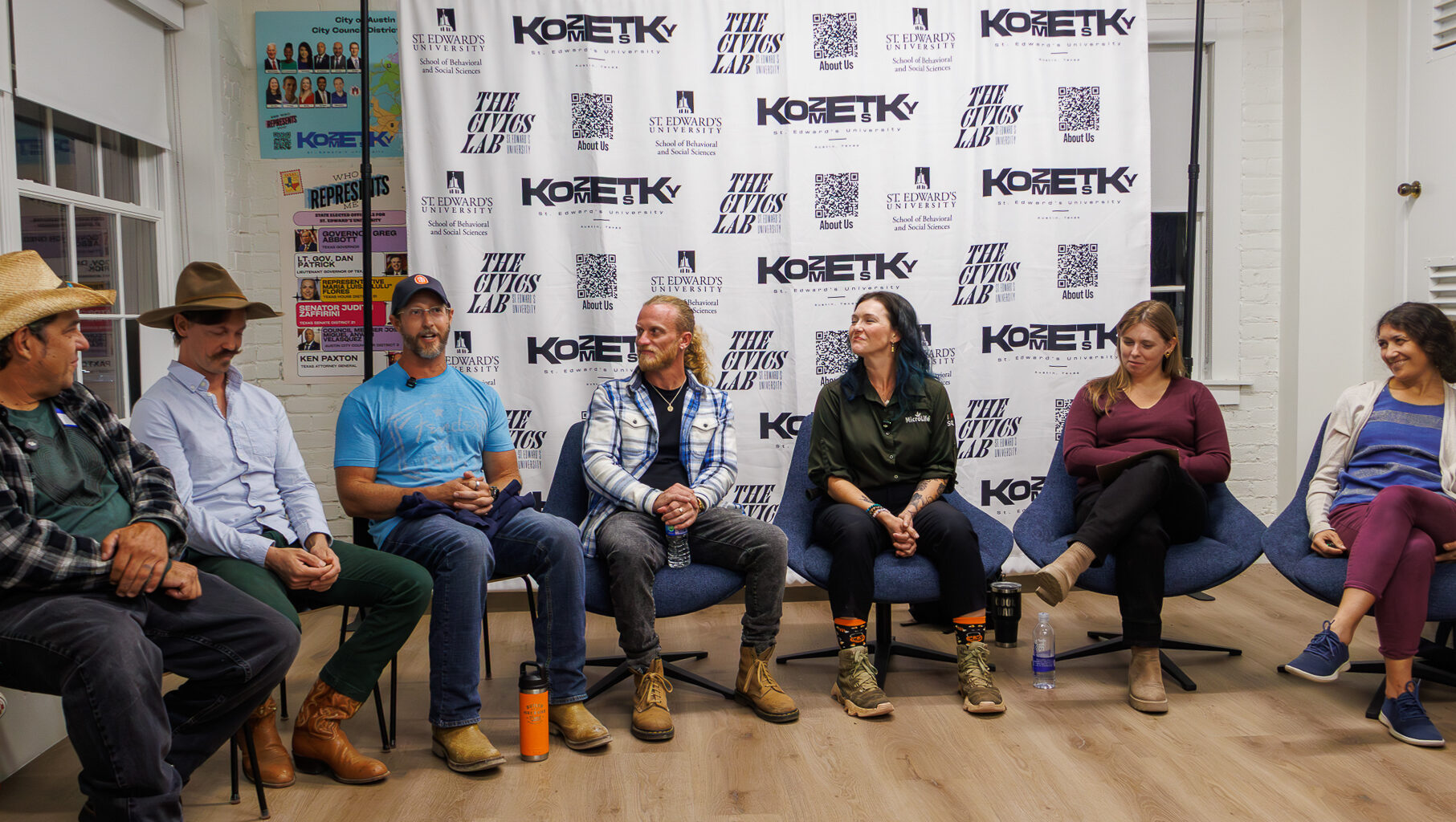
The Kozmetsky Center for Civic Engagement and The Civics Lab hosted a town hall at Carriage House on Oct. 30 to promote the Get Fertilizer Wiser program. The event began with different organizations tabling, followed by an in-depth conversation between panelists (left) Roy Johnson, campus arborist and sustainability coordinator, Micah Sutton from the Great Outdoors Garden Center, Justin Hayes from the Trail Conservancy, Justin Ory from Skyline Trees, Nessa Spence from MicroLife, Ashley Waggoner from Native American Seed and Amy Concilio, St. Edward’s University professor of environmental science and policy and various community members.
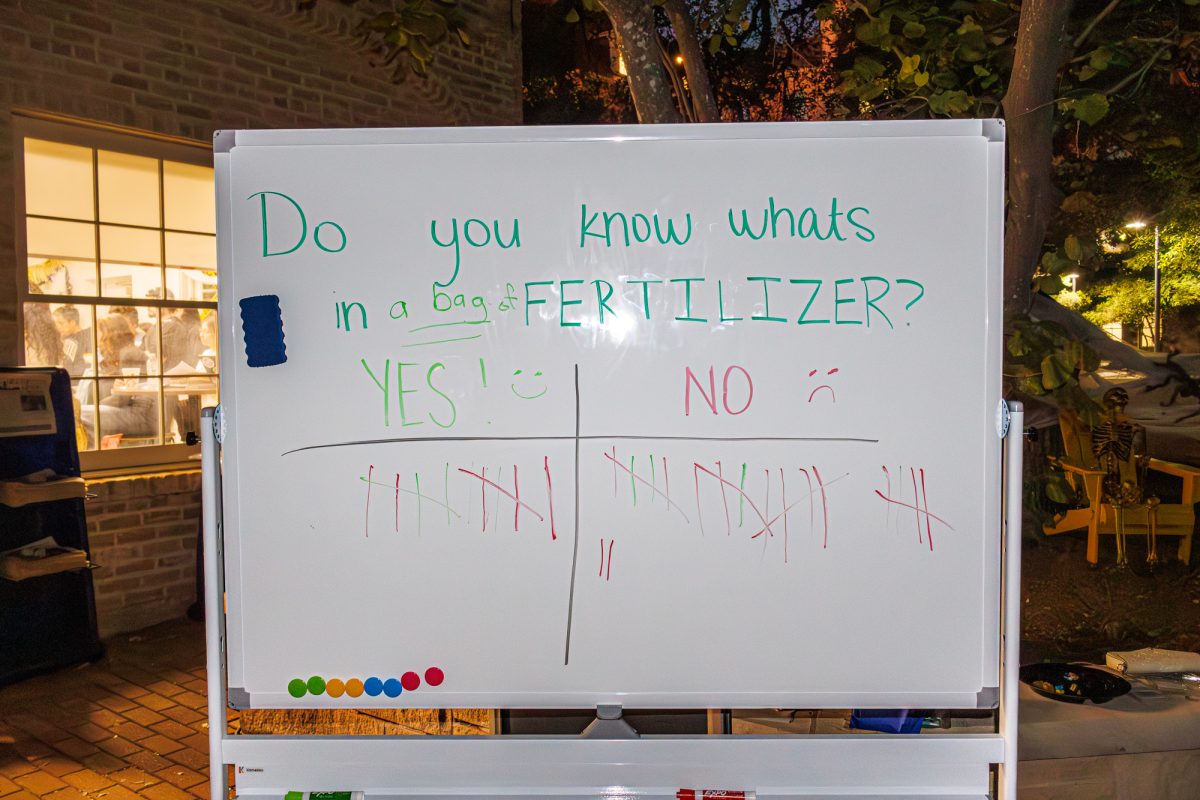
When asked if people know what is in their fertilizer, more answered no than yes. “Get Fertilizer Wiser is all about educating our surrounding communities about the effects of synthetic chemical runoff from fertilizer, pesticides, herbicides and fungicides, and how that affects our ecosystem, our human health and our water security,” Spence said. “Everything that’s put out into the ecosystem doesn’t just stay where we’re at. It’s going to run off and go places. So we’re trying to advocate for our younger generations to learn what is beneficial for the ecosystem, humans and our water systems by choosing things that are going to be regenerative and also rebuild soil, retain soil structure and not poison our water, our animals and ourselves, of course.”
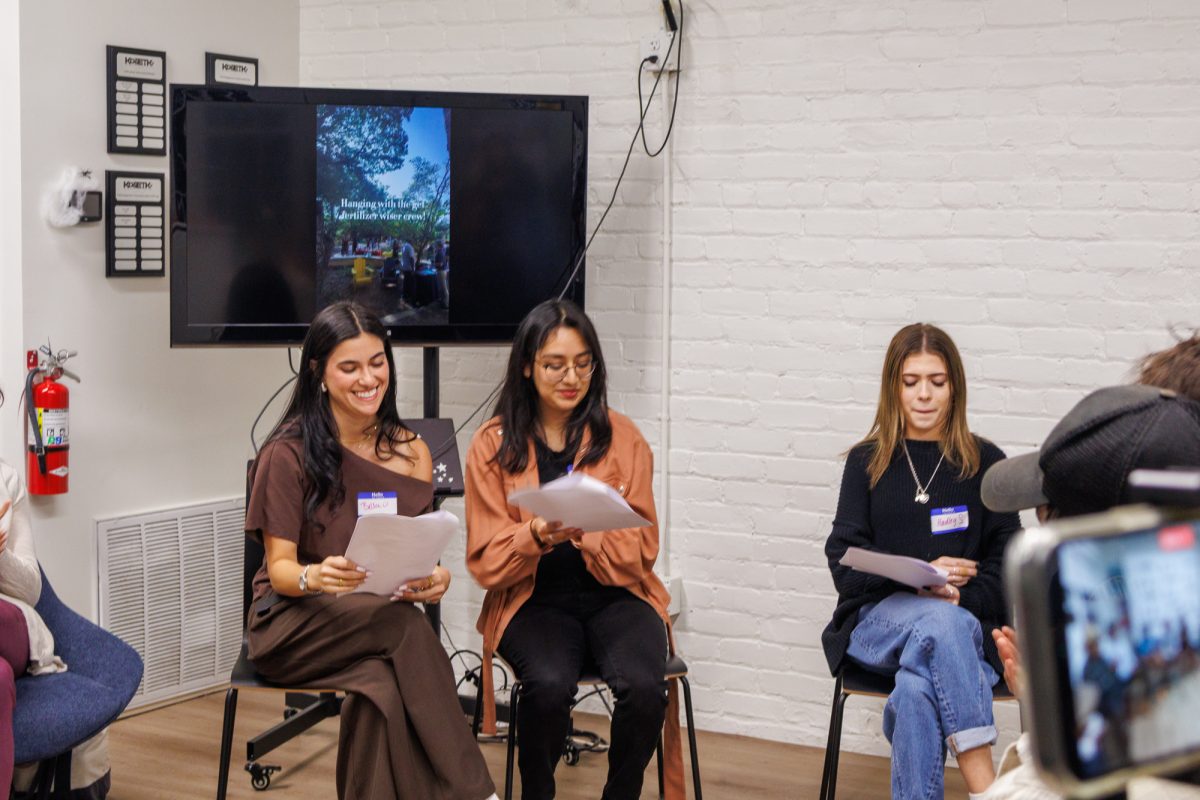 Moderating the panel were students (left) Bella Rodriguez, Maya Nunez and Hadley Stickland. “We can sometimes feel like we are too small to make an impact in protecting our environment, but this is one real actionable step each of us can take to keep our cities and our water beautiful,” Stickland said. “These chemicals wash off your lawn into our waters in Austin, creating algae blooms, which destroy the ecosystem of our rivers and make them progressively uninhabitable and unsafe for us … Get Fertilizer Wiser is truly about protecting our home, keeping our Austin environment a safe place for us and ensuring that the future generations get to enjoy the same vibrant environment that we have.”
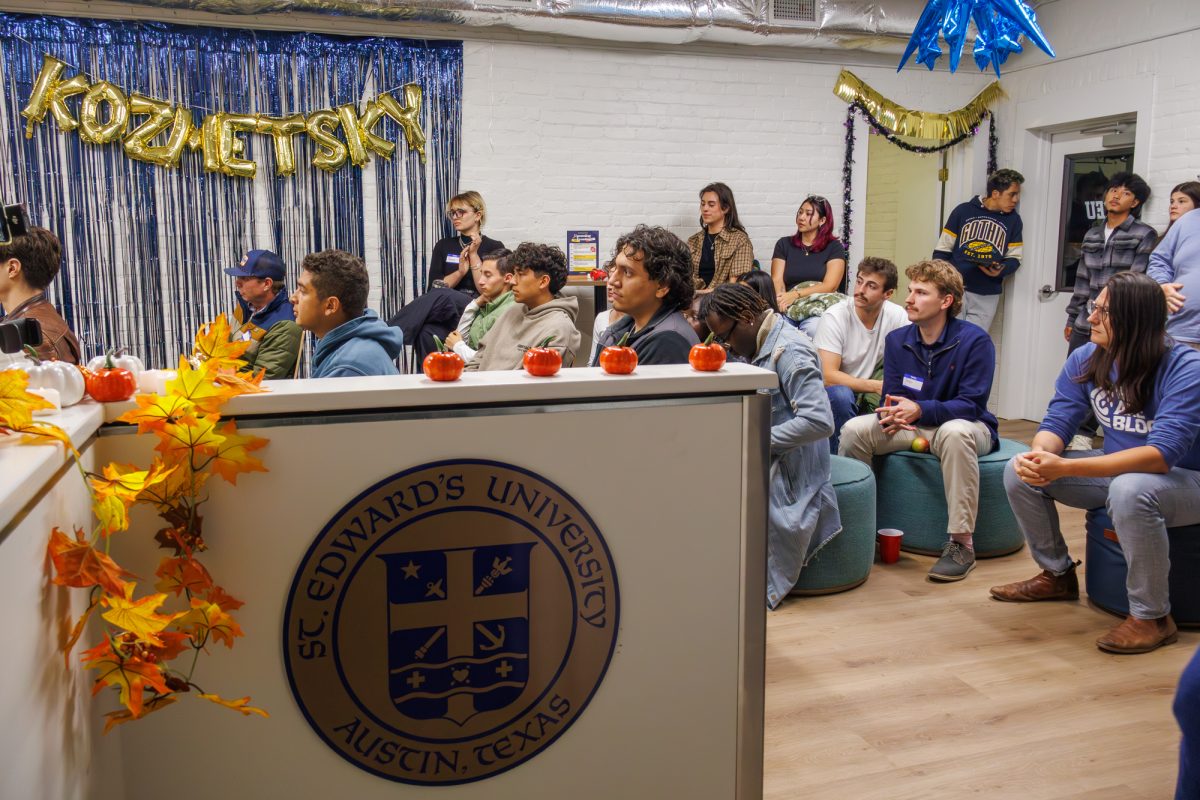
Professor David Thomason, a former lobbyist, teaches The Civics Lab, a class where students learn how to engage with civic issues on a local and national level. According to Rodriguez, a couple students began the Get Fertilizer Wise project, and this semester, The Civics Lab students took it back on. “We really want to illustrate to the public that this is a public health crisis,” Nunez said. “People don’t really think twice about what they’re putting on their lawn, but it really does impact our public health.”
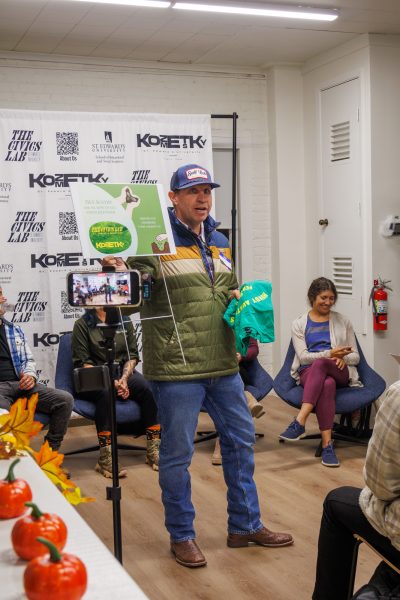
Before the town hall, Thomason held up a sign that neighbors receive when they join Get Fertilizer Wiser and explained the next steps. “This is an ongoing project, and the goal is to create a pilot that will generate interest in the immediate neighborhood around St. Ed’s,” Thomason said. “Ultimately, our next step will be to go to the city and watershed protection program and LCRA (Lower Colorado River Authority), which we already have that relationship to create a citywide project, but we want to do a proof of concept first that generates data, shows it works and shows that people will, if given the opportunity, make the right choice.”
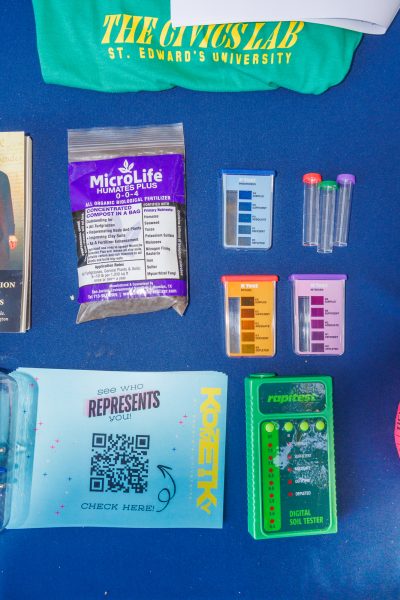
Instead of using synthetic fertilizers, The Civics Lab recommends using an organic fertilizer like MicroLife. “MicroLife is an all organic biological living fertilizer inoculated with living microbes that help rebuild and clean our ecosystem and feed our native microbes,” Spence said. “There is Bacillus megaterium, which is a beneficial bacteria that consumes glyphosate, which is a huge issue in our ecosystem. The Bacillus megaterium consumes the glyphosate, which is in Roundup, which is heavily used, that runs off and gets into our waterway. So using something like MicroLife helps mediate any of that. If someone does choose to use a chemical or poison that runs off, we can add something in there that protects our waterways.”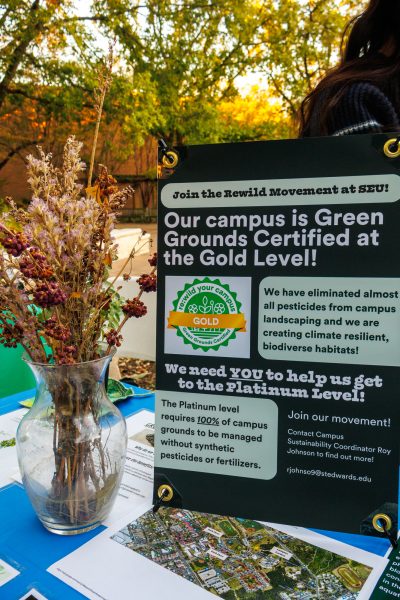
Last spring, St. Edward’s received the Green Grounds Certification at the gold level from Re:wild Your Campus, which states that 95% of the grounds on campus don’t use synthetic pesticides or fertilizers. St. Edward’s and the University of Texas at Austin Dell Medical School are the only campuses in Texas that have this certification. “I think it shows a good example of what you can have without using synthetic pesticides or fertilizers,” Office of Sustainability natural resources intern Veronica Chavez said. “I think it also shows how much it matters to people because there is a whole campus of students who care about this and are happy to sacrifice perfectly looking lawn for safer and better for the environment grounds.”
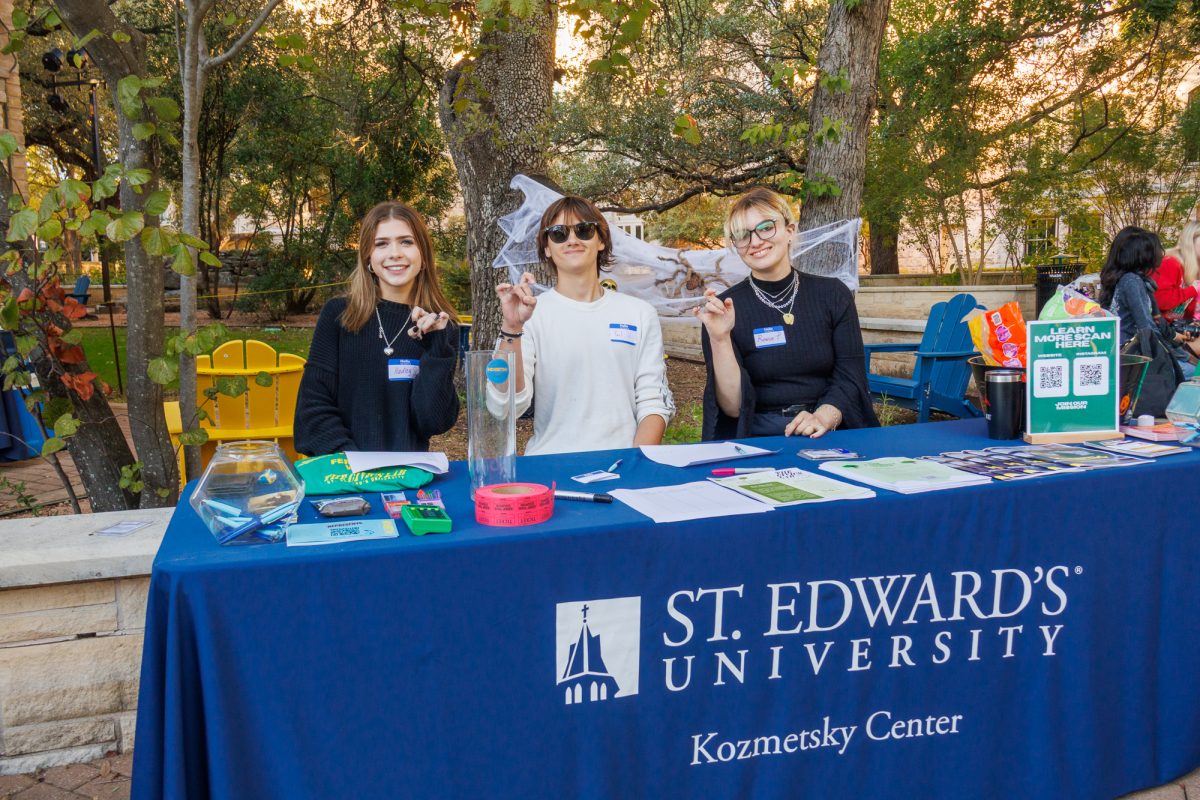
The Civics Lab marketing team, (left) Strickland, Paul Volek and Reece Perez, tabled before the event. “I’m super proud of the team and all the teams coming together,” Volek said. “I think (The Civics Lab) has taught us all about how, in politics, it’s important to be a part of the team. It’s not about me as an individual or anybody as an individual. It’s about how well we can get us working as a team in order to get other people to operate in such a manner that we can get this pilot really off the ground and doing well.” When asked about the Re:wild Your Campus certification St. Edward’s received, Strickland talked about how it ties to the Get Fertilizer Wiser campaign. “It’s nice to be in an environment where our school really truly cares about practicing what they preach.”
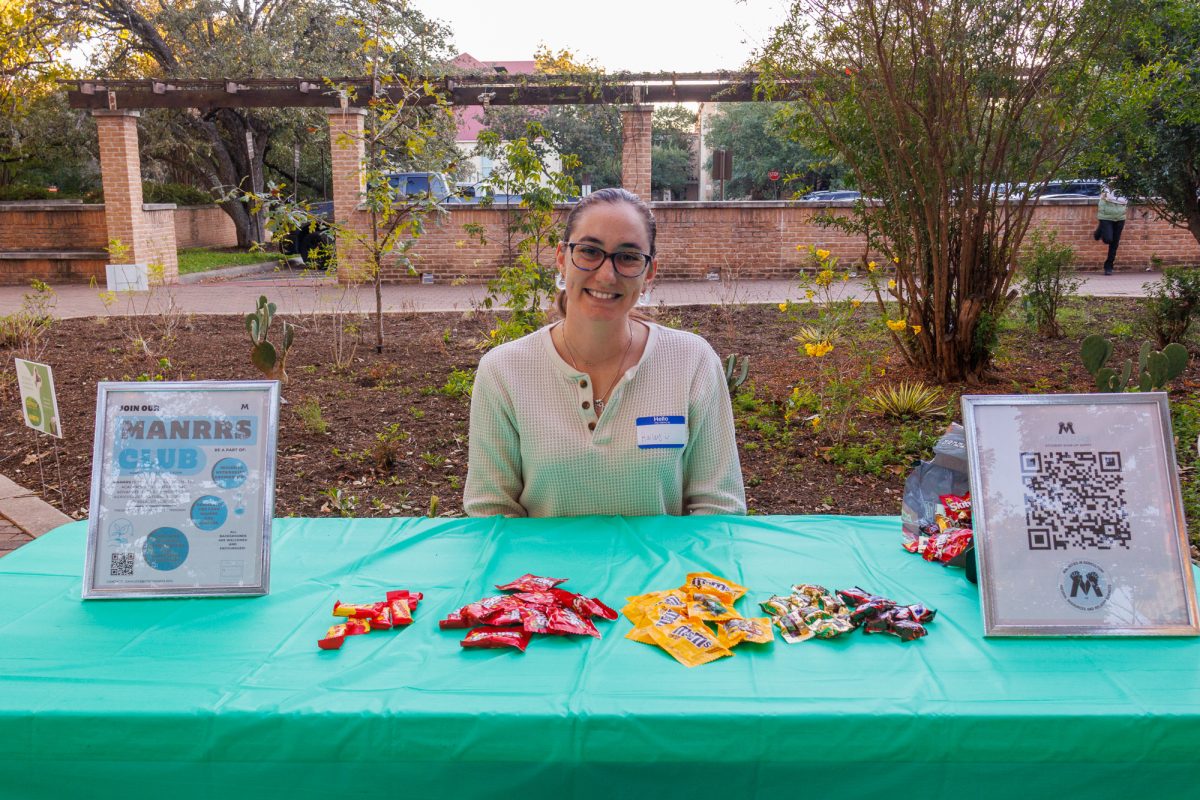
“MANRRS (Minorities in Agriculture, Natural Resources, and Related Sciences) is a student organization with the E3 (From Education and Experiential Learning to Employment: Cultivating the NEXTGEN of Natural Resources and Food Science Leaders) grant, and we focus on agricultural practices, how it can impact the earth, how the earth feeds us, and we feed the earth and kind of that relationship and how we can impact it,” Hailey Sonka, vice president of MANNRS, said.
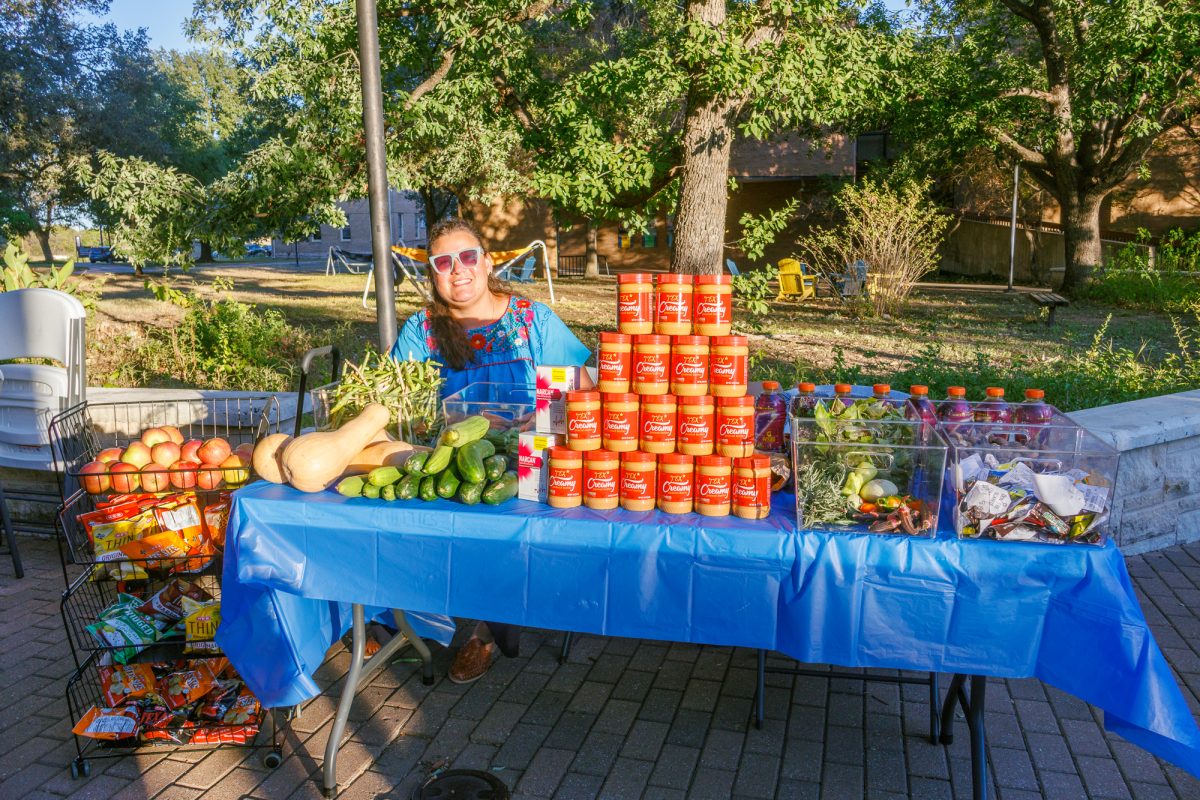
The Huddle is a food pantry, clothing closet and lending library on campus. Liza Manjarrez, senior associate director of Campus Ministry, had shelf-stable items and produce on the table for anyone to take and show some options community members have to help meet their food insecurity needs. Some of the produce came from the usual Tuesday morning delivery from the Central Texas Food Bank. The other part came from a program called Ample Harvest, which allows local and home growers to share their produce with food pantries and other social service organizations. “This came from someone’s garden right here in the neighborhood,” Manjarrez said. “It’s a cool way to just get another source of food for our campus and also try some different produce that doesn’t normally come from the food bank. We’re really thankful to that neighbor right here in 78704.”