
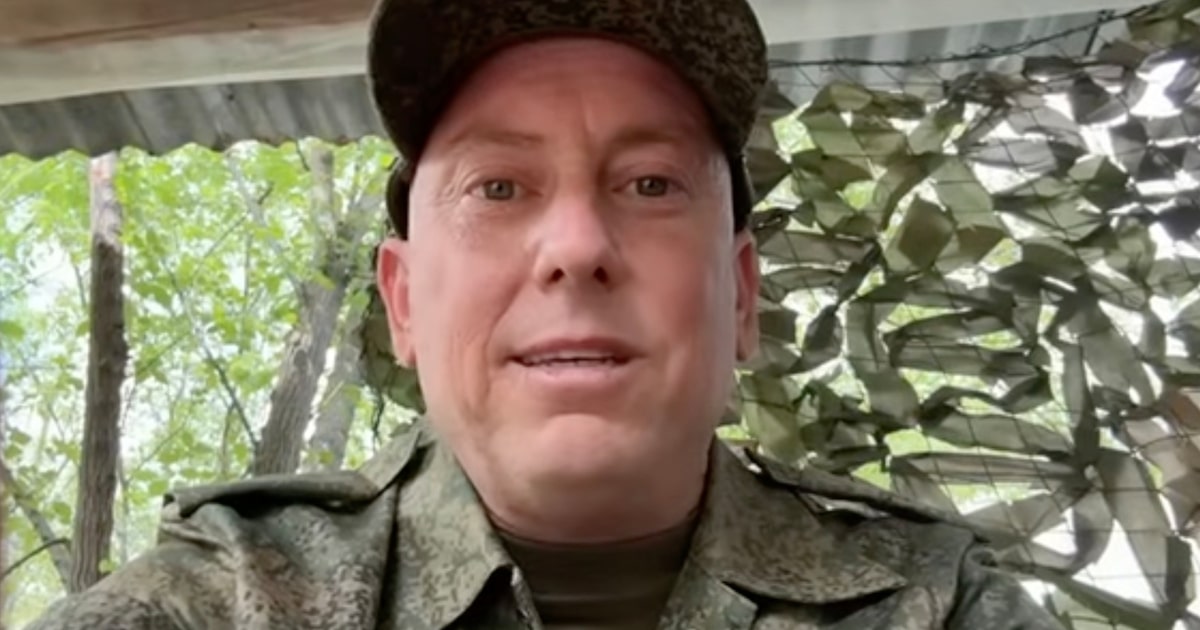
Derek and DeAnna Huffman worried that American culture was poisoning their three daughters. Desperate, they left Humble, a suburb of Houston, earlier this year and moved to Russia.
The family settled into their new home outside Moscow, detailing their lives on a YouTube channel. After DeAnna shared that her husband was sent to the front line in Russia’s war against Ukraine, the family’s story went viral.
“He feels like he’s being thrown to the wolves right now, and he’s kind of having to lean on faith, and that’s what we’re all doing,” DeAnna said, adding that he did not speak Russian and had not received pay from the military yet.
What happened to Derek Huffman?
Breaking News
According to the family’s YouTube channel, Derek Huffman spent two weeks at home this fall on vacation from the Russian army.
A video shared in late October showed Huffman signing documents for his Russian citizenship, which the government expedited in exchange for his military service. He said his wife and daughters would apply for citizenship in the coming weeks.
“I’m happy that I’m still alive and doing what I can to survive, and be of service to Russia,” he said. “I’m so thankful to all the Russian people who have reached out and helped my family while I’ve been gone.”
Related

In an email to The Dallas Morning News, Deanna Huffman said the family is not doing interviews at this time.
“All our thoughts feelings and journey is on our YouTube channel,” she wrote. “Thank you for your understanding.”
Videos shared on YouTube show Huffman taking his daughters out for ice cream, eating fried rice and chicken with his family and wandering around a mall in Moscow, which he said was “absolutely beautiful” and “unlike anything you see in America.”
In one video, Huffman said that he could not provide information on his previous deployment for safety reasons, but that he was learning the Russian language and was proud to have shot down a drone.
“That’s a drone that might have killed one of my brothers,” he said before thanking Russian President Vladimir Putin.
Roughly 1 million Russian soldiers have been killed or injured in the country’s full-scale invasion of Ukraine, launched in 2022, according to various reports. Of those, as many as 250,000 are dead. Roughly 400,000 Ukrainian troops have been killed or wounded since the war began.
Huffman said he was returning to service in a video shared in November, and that his next break would be in six months.
“I miss my girls and wife so much,” he said. “I even miss the dog.”
‘Idealogical immigrants’
The Huffmans are among thousands of so-called “idealogical immigrants” who have moved to Russia in recent years. Another Texas family, the Hares, who lived in Abilene, moved to the country in 2023 to seek what they called “traditional values.”
Like the Huffmans, Leo and Chantelle Hare detail their family’s life on a YouTube channel. Also like the Huffmans, they said they left the United States because they worried their children were being indoctrinated to support LGBTQ rights.
Russia has adopted a slew of laws targeting gay and transgender people and banned public displays of LGBTQ identity, including rainbow flags.
In 2024, Putin signed a decree for a “shared values” visa for people from 47 countries Russia considers unfriendly, including the United States, Britain and much of Europe. The decree provides humanitarian support and a residency permit to people who “share traditional Russian spiritual and moral values.”
“When we left, it was final,” Chantelle Hare said in a video. “We don’t plan to come back. There will not be anything to come back to.”
In a video posted in November, Huffman shared a clip of an interview he did with a Russian state media outlet discussing why his family left the United States.
“They want to take God out of everything,” he told the outlet. “It’s very dangerous for children, especially in the big cities. A lot of crime, homelessness, drugs. We wanted a safe place to raise our children.”